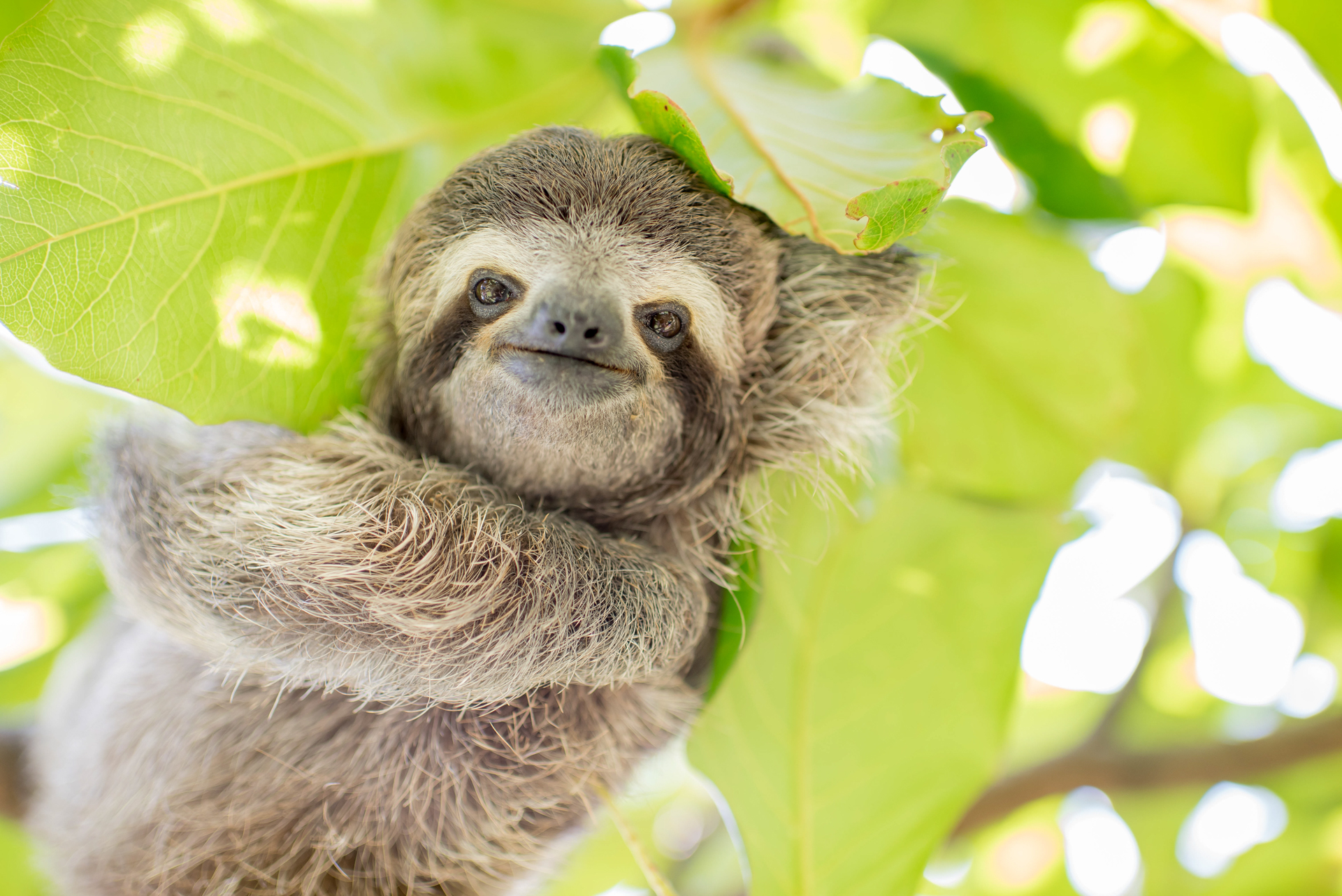
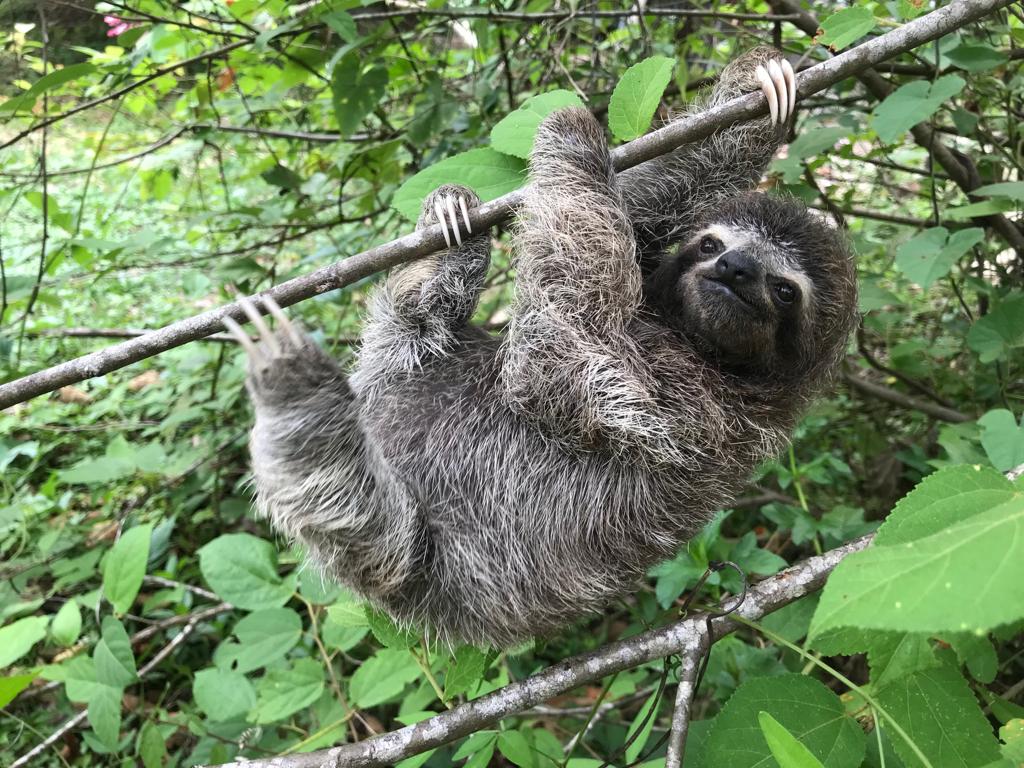
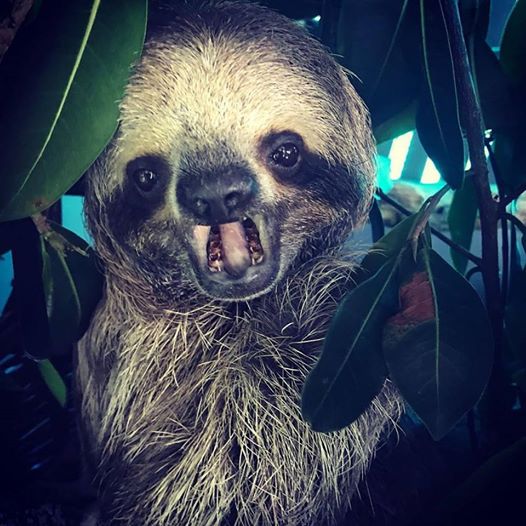
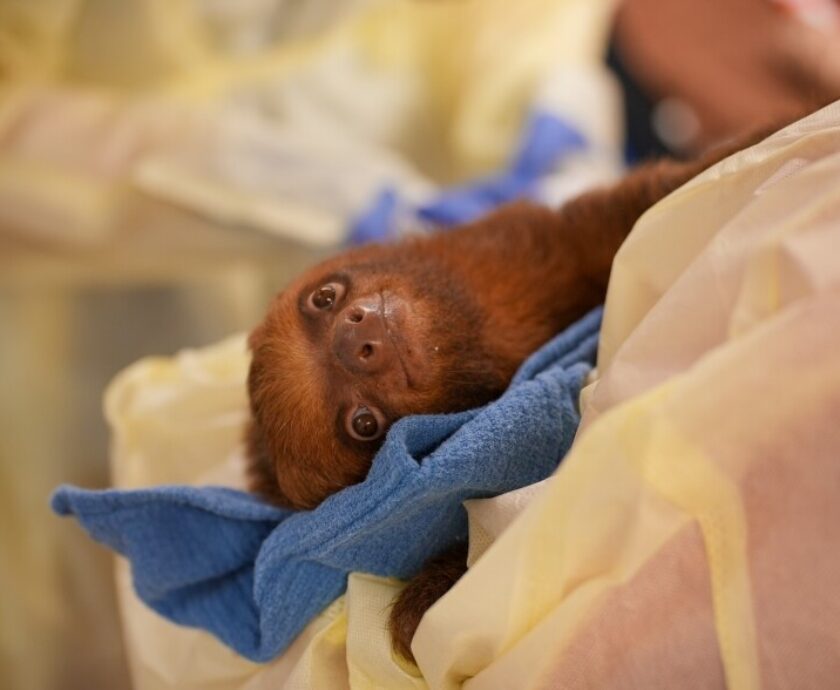
At The Sloth Institute, we spend a lot of time educating people about the surprising adaptations that make sloths so unique. One of the most fascinating and least understood features of sloths is their teeth.
Unlike many mammals, sloths have an extremely specialized dental structure that is perfectly adapted for their slow lifestyle and leaf-heavy diet.
Sloths Have No Incisors
One of the first things that surprises people is that sloths do not have incisors, the front teeth most mammals use for biting and cutting food.
Instead, sloths rely entirely on premolars and molars to process vegetation. Their teeth are simple in structure but highly effective for grinding leaves, shoots, and other plant material. Sloth teeth continuously grow throughout their lives to compensate for constant wear from tough plant matter.
Unlike human teeth, sloth teeth also lack enamel, the hard outer coating found in most mammals. This gives sloth teeth their distinctive darker appearance and softer texture.
Two-fingered Sloths Have “Pseudo-Canines”
One particularly interesting feature is found in two-fingered sloths.
At The Sloth Institute, we often explain that two-fingered sloths possess “pseudo-canines.” These are elongated premolars that resemble canine teeth in both appearance and function, even though they are not true canines anatomically.
These specialized teeth can help two-fingered sloths defend themselves when threatened. While sloths are generally calm animals, they can deliver surprisingly strong bites when stressed or threatened.
This is one reason why wild sloths should never be touched or approached too closely.
Why Sloth Teeth Matter
Sloth teeth are a perfect example of evolution shaping an animal for survival in a very specific environment.
Because sloths feed primarily on fibrous leaves that are difficult to digest, their teeth must endure constant grinding and wear. Continuous tooth growth helps ensure they can keep eating throughout their lives.
Their dental structure also reflects just how specialized sloths truly are. Everything about a sloth’s anatomy, from its metabolism to its claws to its teeth, has evolved to support life high in the rainforest canopy.
THE SLOTH SCIENCE JOURNAL
At The Sloth Institute, one of our goals is helping people understand that sloths are far more complex than the internet stereotype of a sleepy animal hanging in trees.
Their unique teeth are just another reminder that sloths are highly adapted survivors with remarkable biological traits that continue to fascinate researchers around the world.
The more we learn about sloths, the more we realize how perfectly designed they are for life in the rainforest.