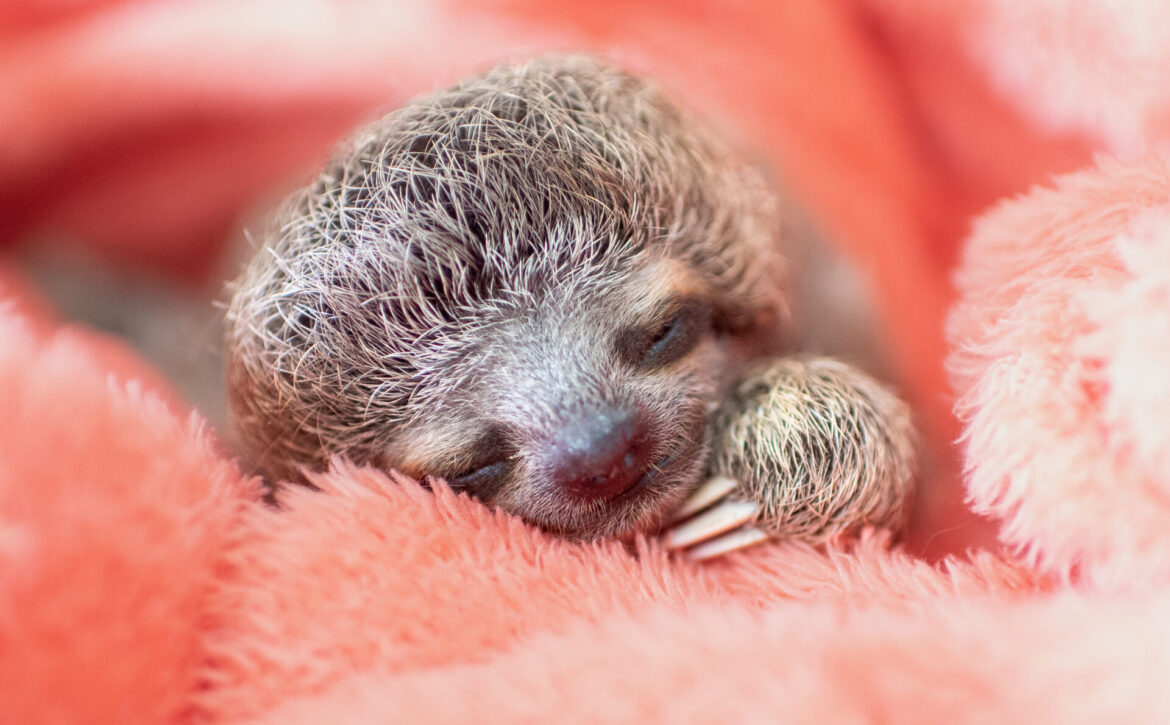
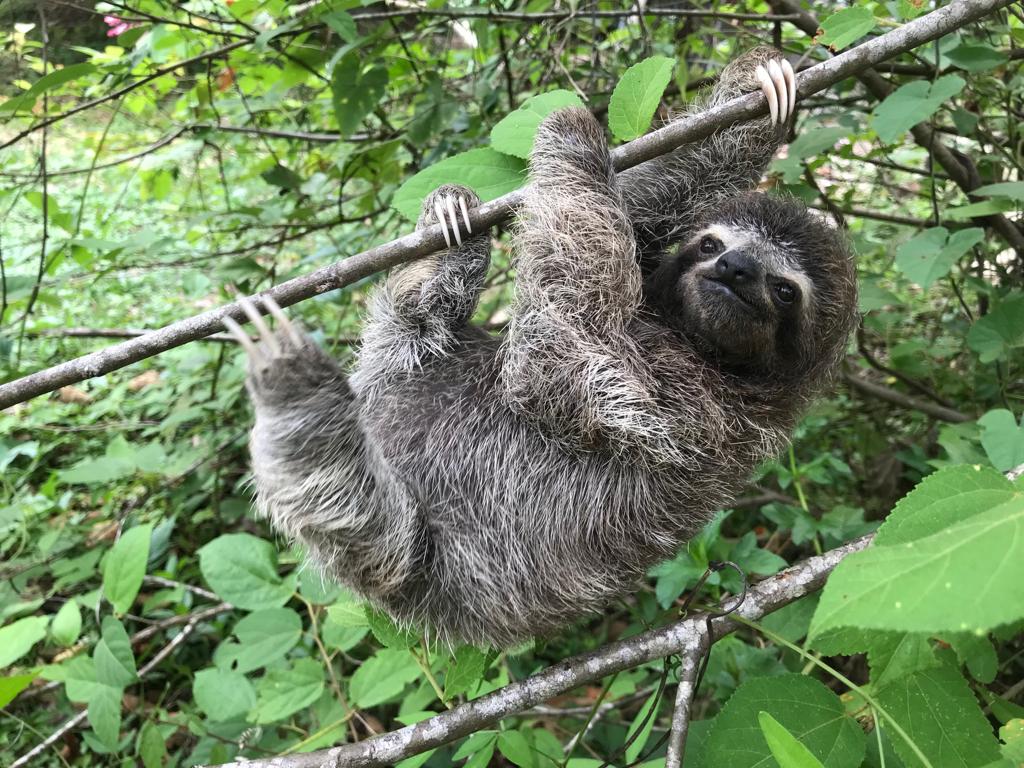
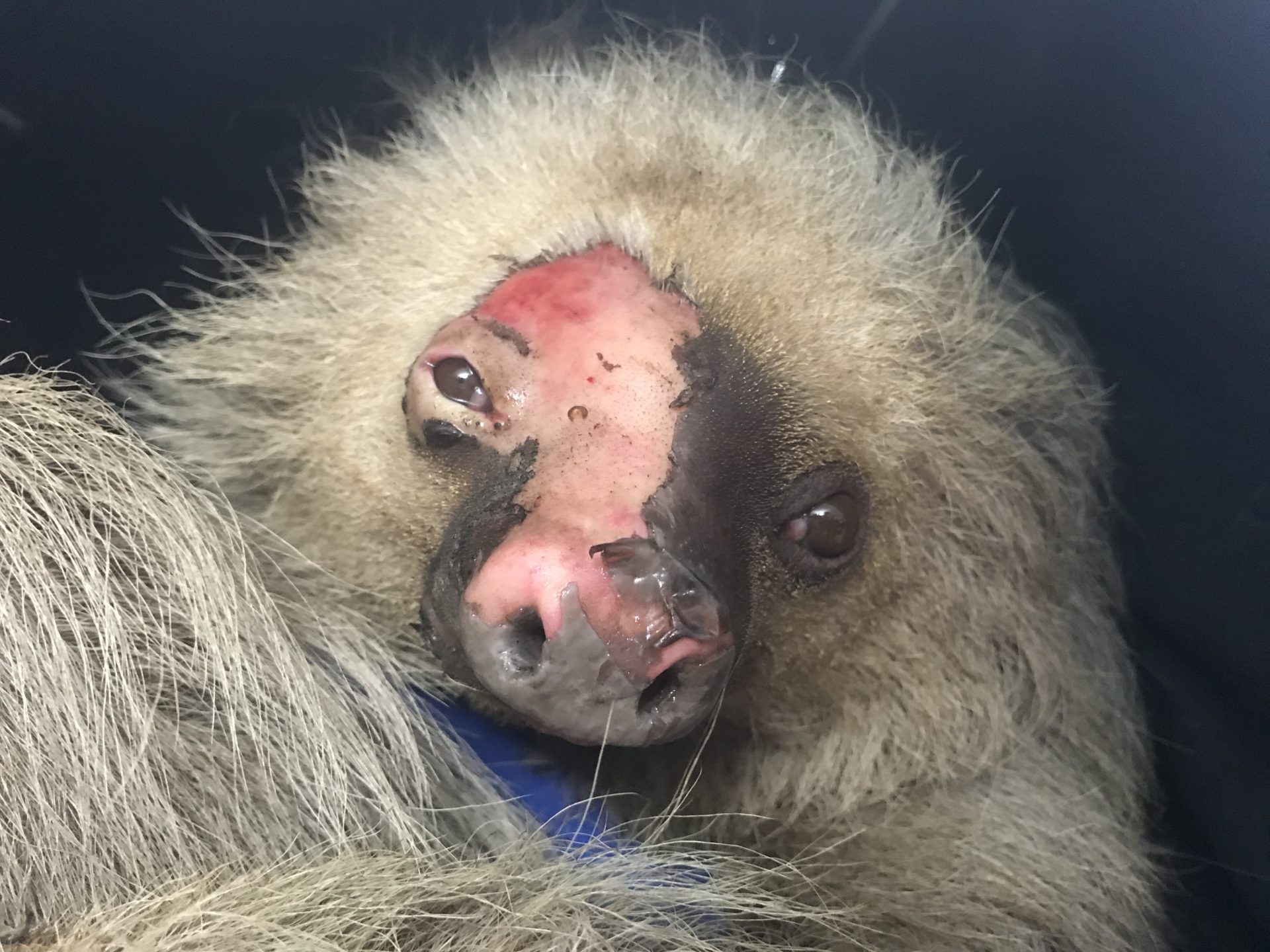
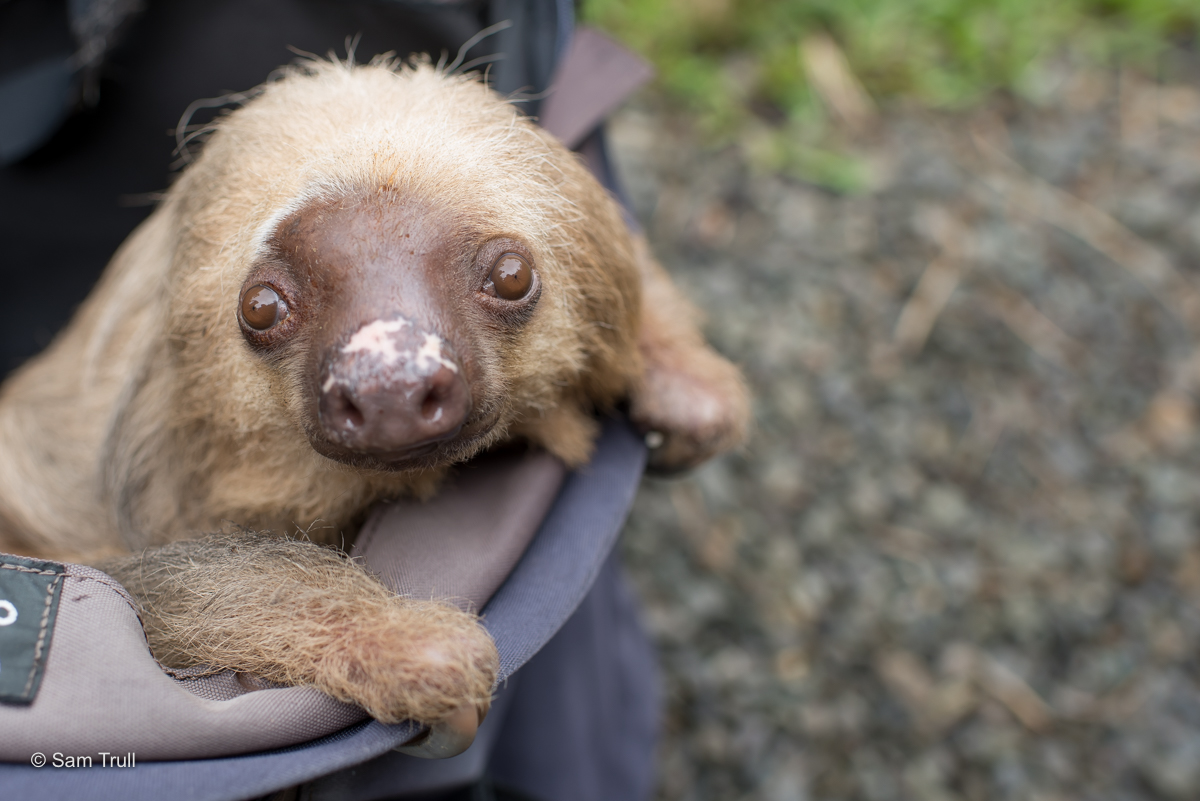
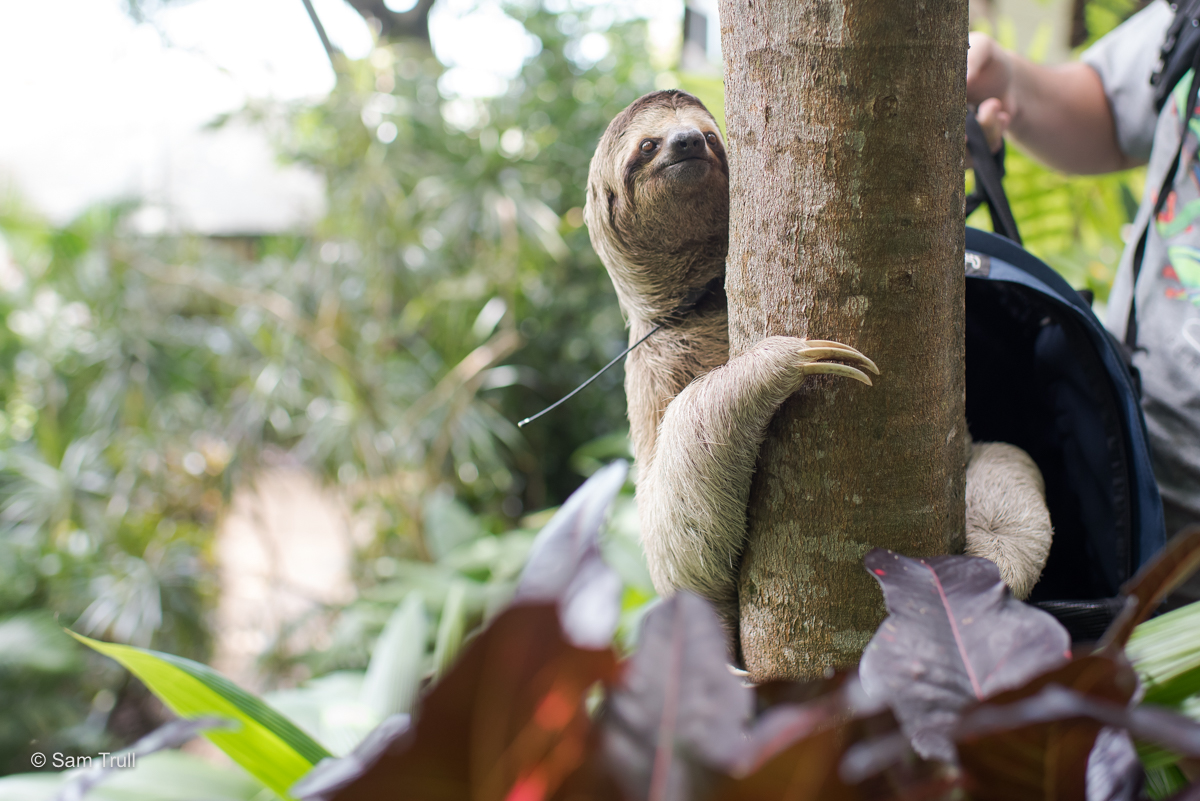
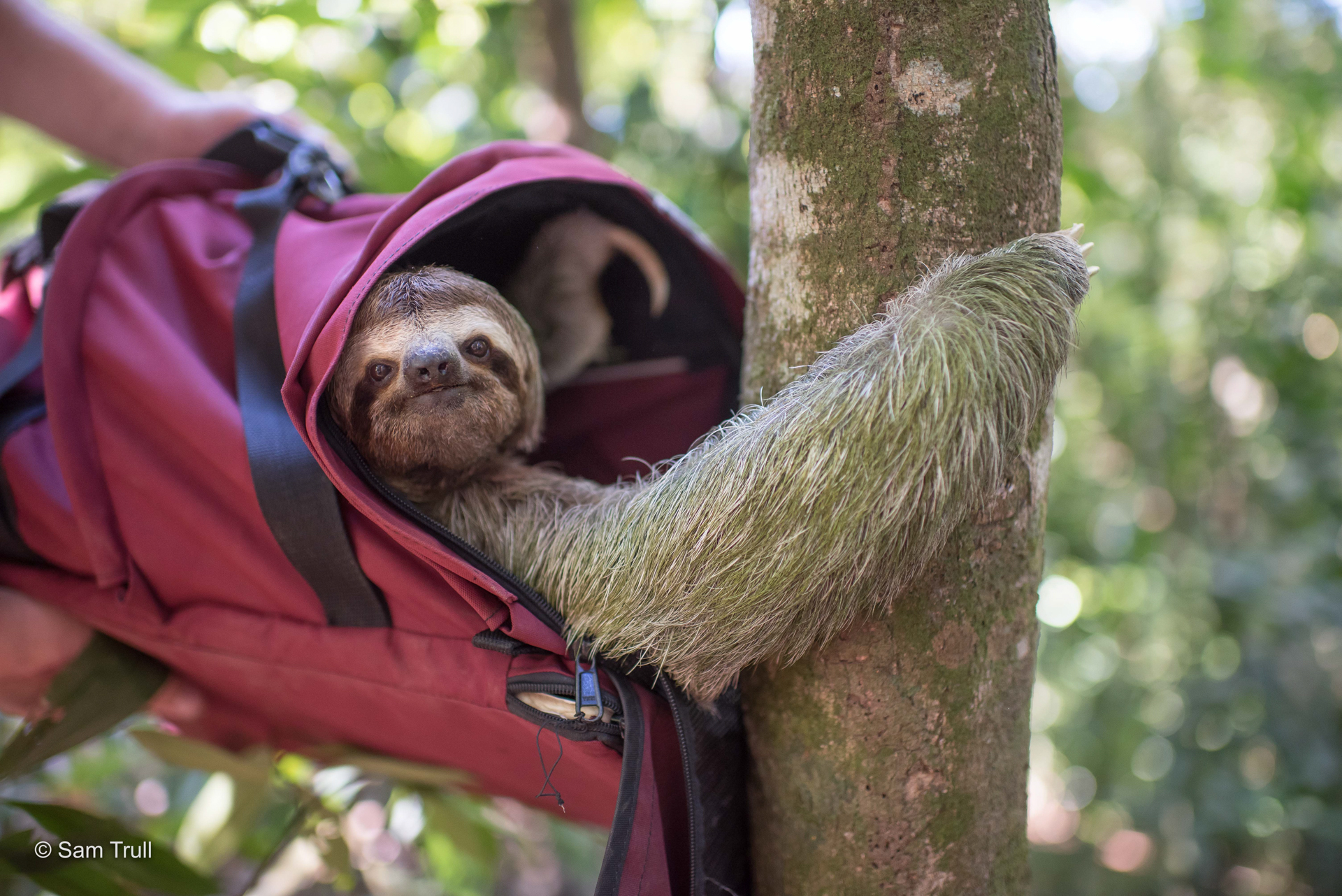
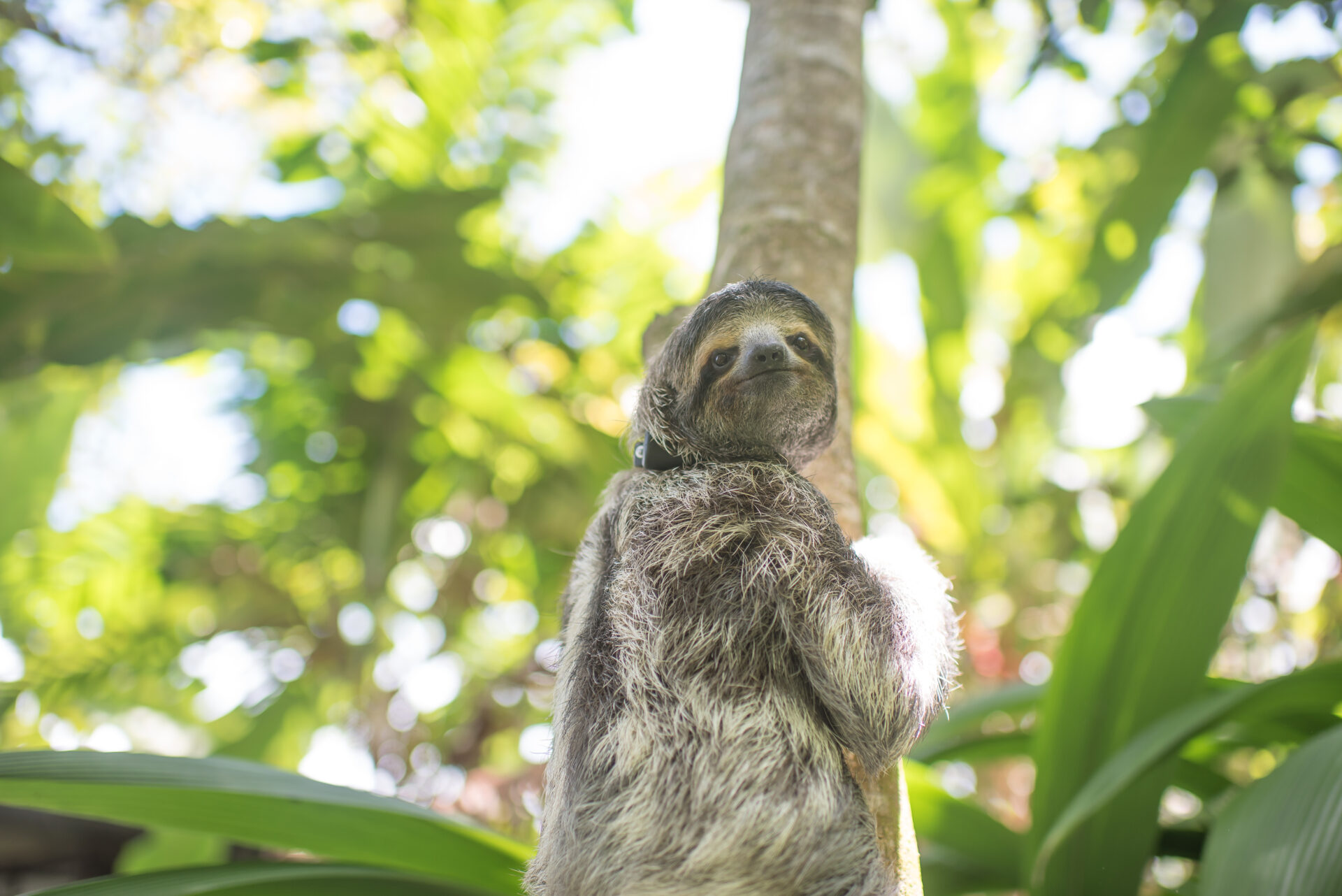
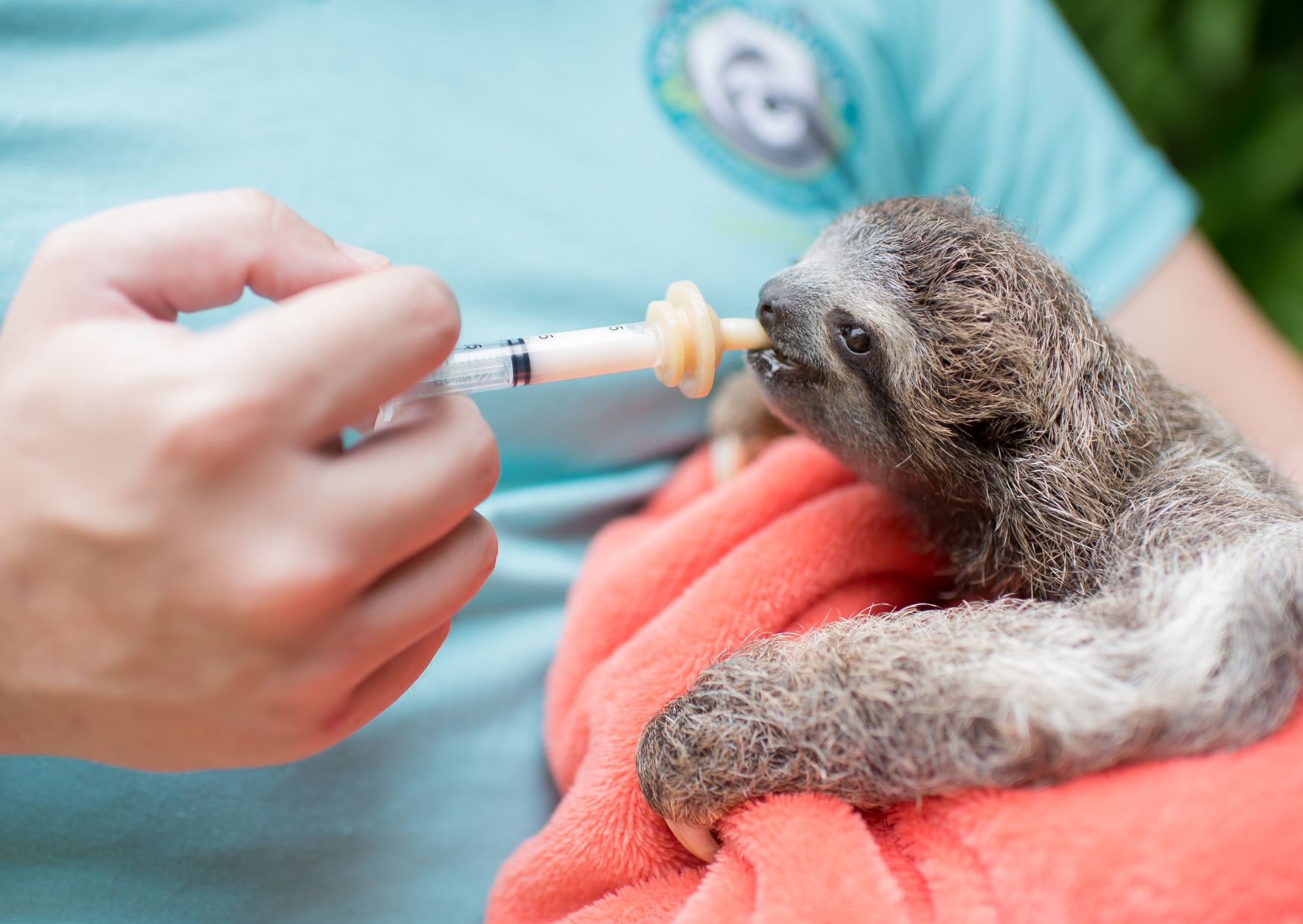
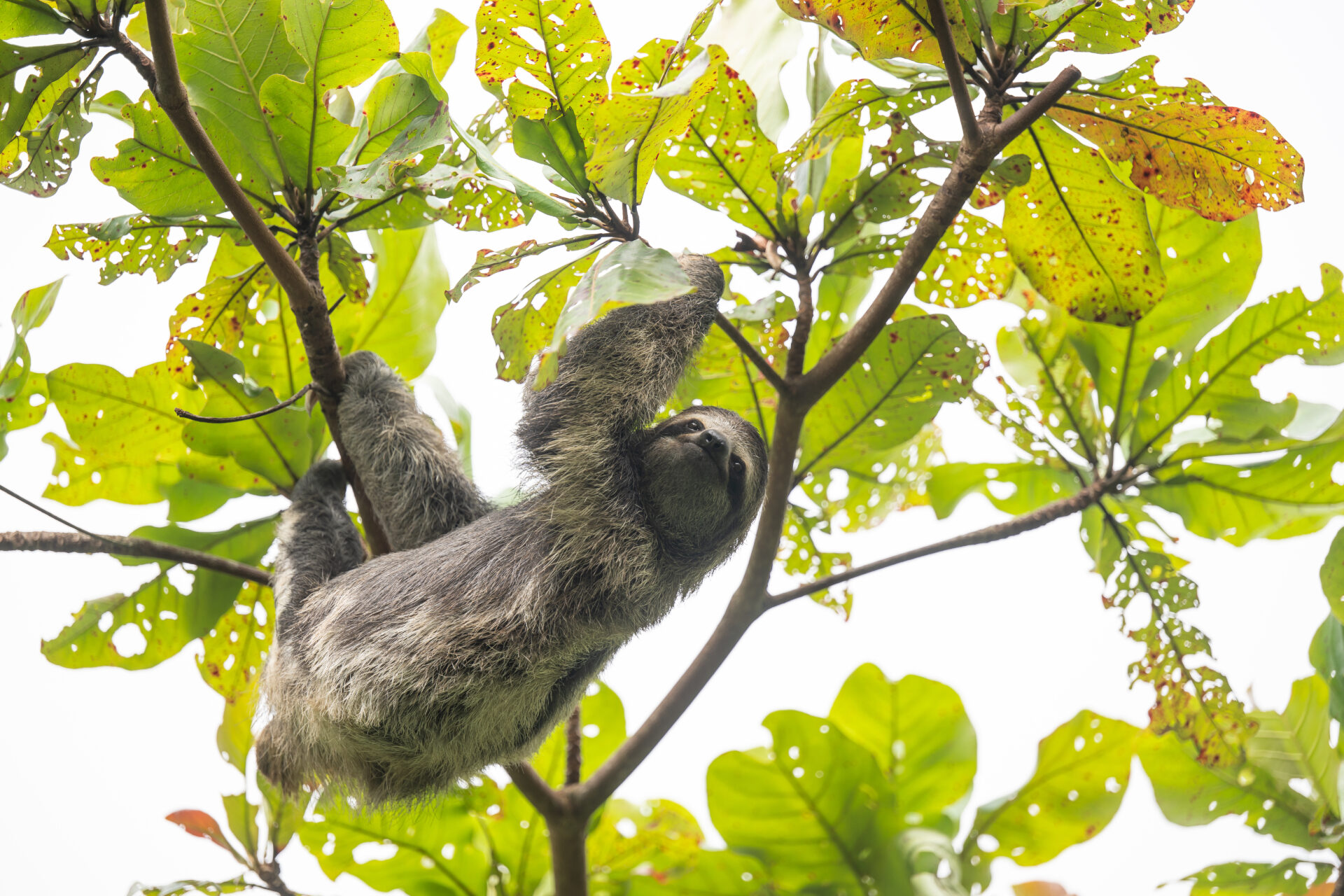
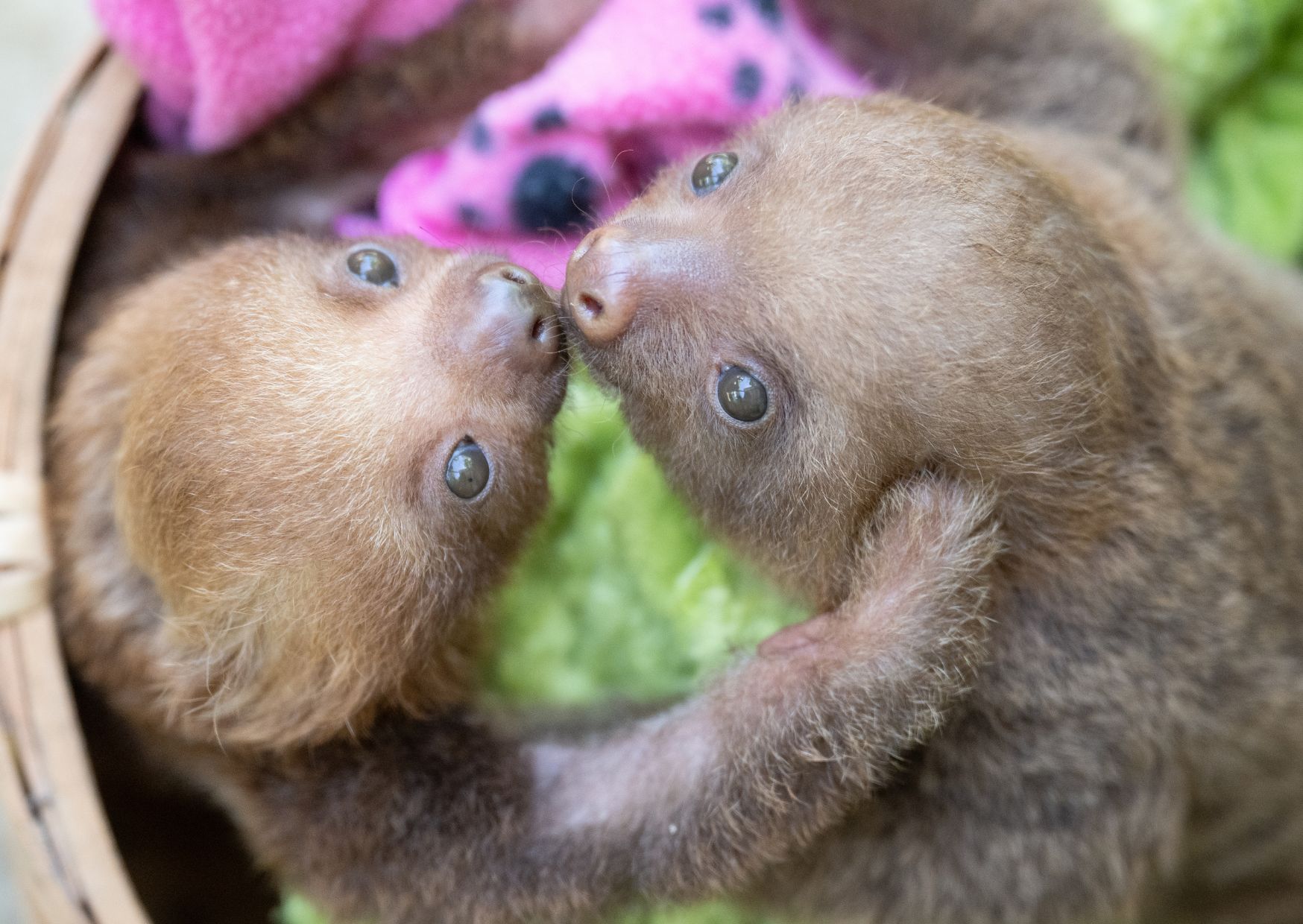
Rescuing sloths in need and properly rehabilitating them so they can return to the wild is essential to conserving wild sloth populations, alleviating suffering and protecting a species that needs every individual it has left.
Success rate of rescued sloths are successfully returned to the wild through our rescue, rehab, and release program.
Orphaned sloths move through four stages on the way back to the wild: Elementary, Middle, High School, and University, based on weight and skill milestones. Two-fingered and three-fingered sloths are tracked on different weight scales at every stage. Select a stage to see what it takes to advance.
CLICK THROUGH OUR INTERACTIVE SLOTH SCHOOL FLOW CHART BELOW
Choice of sleep locations, graceful toileting, and appropriate reactions to threats and inclement weather.
WHEN A SLOTH IS RELEASED
Sub-Adult Size
Exact target weight depends on intake weight and how the sloth is doing in captivity.
Soft Release vs. Hard Release
The release approach is chosen on a case-by-case basis. A soft release is done in stages, with supplemental feeding provided once the animal is in the wild. A hard release is when the animal is put in a wild environment without any human intervention.
Location
The release site is matched to the region the sloth originally came from.
A closer look at every rescue that came through our doors that year, broken down by cause and by species. Toggle a species below to see how the breakdown shifts. Click through our interactive graphic below to learn more.
Sloths Helped
0
Rehab/Release Success Rate
0%
Rescue Breakdown Graph — The Sloth Institute
Electrocution / Electric Wires18
6
12
Human Habitat (Roads, Houses, etc.)13
10
3
Orphans / Juveniles32
12
20
Sick or With Trauma19
8
11
Subtracting the 12 sloths who were dead on arrival or required euthanasia, and including the 15 still in rehab at year’s end, the 2020 rehab and release success rate was 90%.