


Sloth FactsSloth Science
THE SLOTH SCIENCE JOURNALSLOTH FACTS
Why Do Sloths Have Algae in Their Fur? Inside the Tiny Ecosystem Living on a Sloth
One of the most fascinating things we study at The Sloth Institute is that sloths are far more than just animals living in the rainforest. In many ways, sloths are actually entire ecosystems.
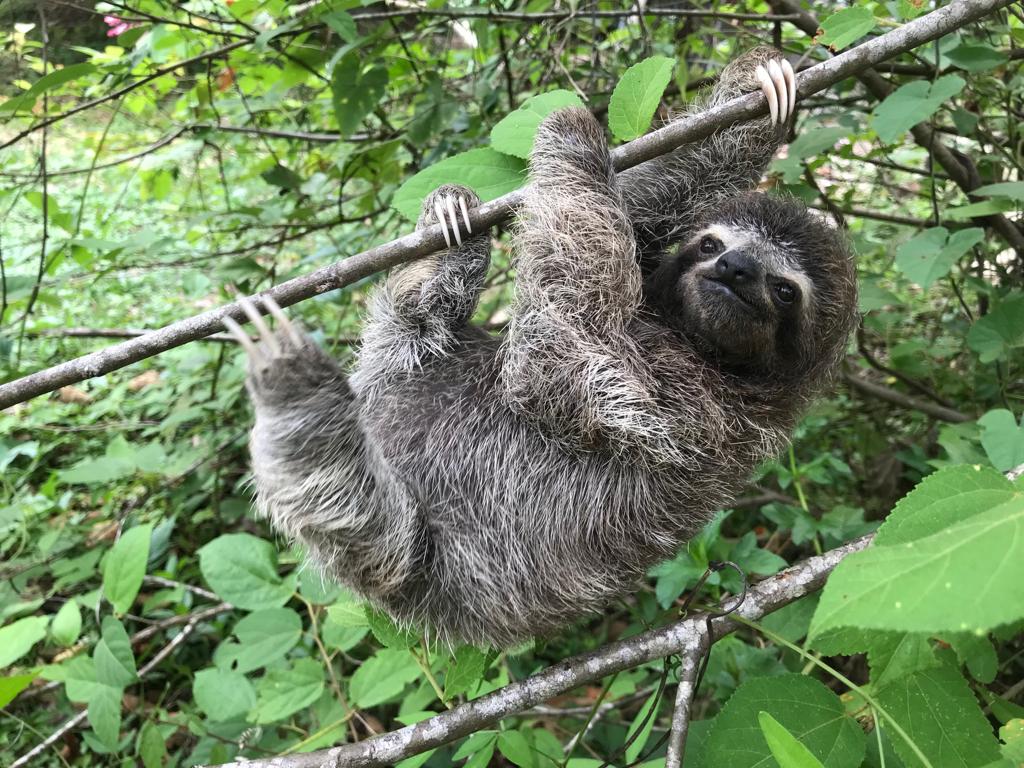
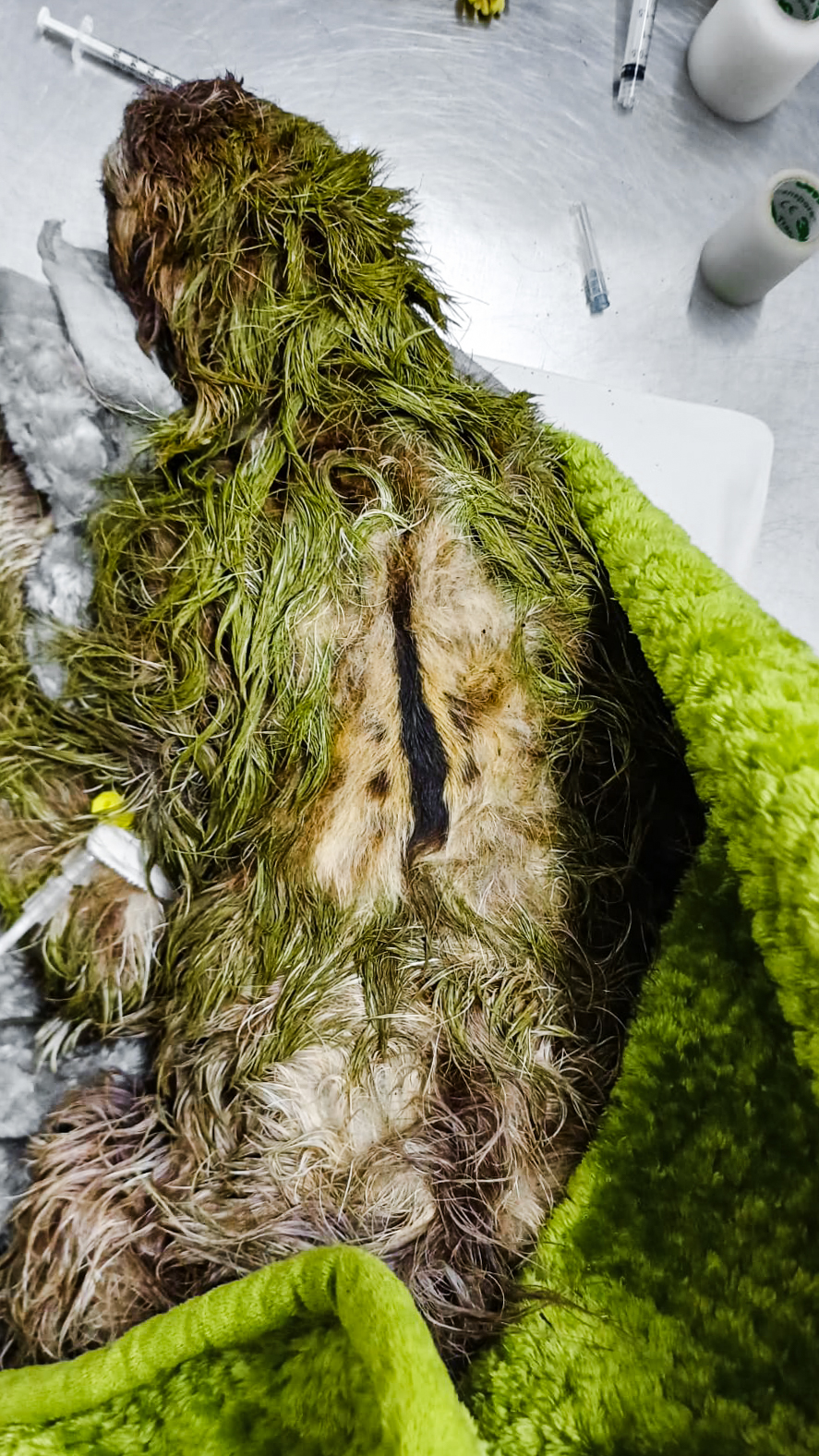
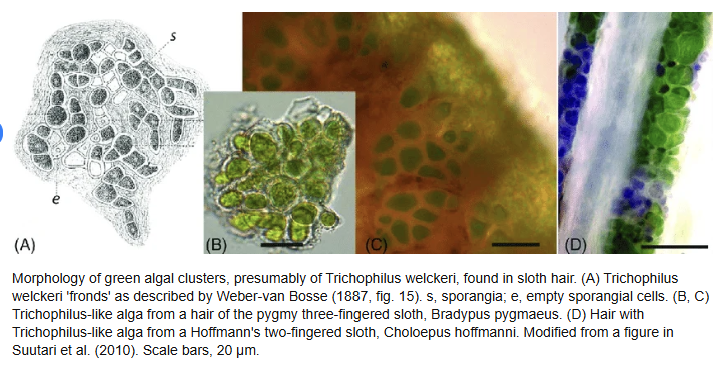
Because of the unique structure of their fur and their slow-moving lifestyle, sloths can grow algae, fungi, cyanobacteria, bacteria, and even arthropods directly in their hair. These organisms, known as epibionts, create one of the most unusual biological communities found on any mammal.
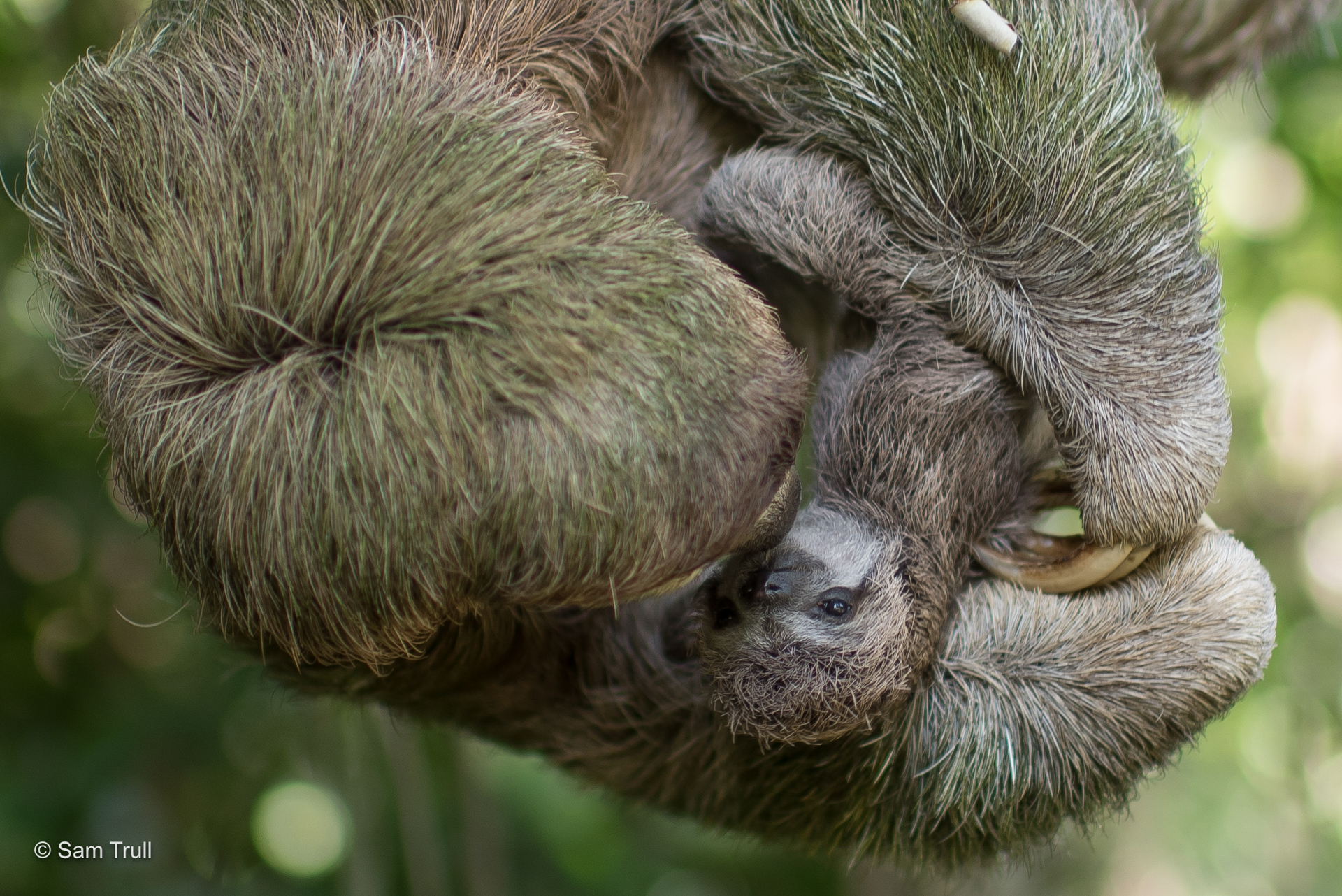
We have even described sloths as “mobile ecosystems” due to the incredible biodiversity living within their fur.

What Makes Sloth Fur So Special?
Sloth hair is very different from the fur of most mammals.
At The Sloth Institute, our research has explored how the outer structure of sloth hair contains grooves and microscopic cracks that trap moisture in tropical rainforest environments. These humid conditions create the perfect habitat for algae and microorganisms to grow.
Over time, algae can give sloths a greenish appearance that helps them blend into the rainforest canopy.
More Than Just Algae
Although algae is the most visible epibiont, sloth fur supports an entire microscopic community.
We wrote a scientific paper examining sloth epibionts that have been identified:
- Algae
- Fungi
- Cyanobacteria
- Bacteria
- Arthropods such as sloth moths
Researchers suggest sloths may even act as reservoirs of unexplored biodiversity because many of these organisms remain poorly studied.
This makes sloths incredibly important not only for rainforest ecology, but also for scientific research into microbiology, symbiosis, and evolution.


Why Does This Ecosystem Matter?
We continue to study the relationship between sloths and the organisms living in their fur, but several theories already exist.
One of the leading ideas is camouflage. The algae growing on sloths may help them blend into the rainforest canopy by mimicking moss and leaves, helping them avoid predators that rely heavily on sight.
Other researchers are exploring whether microorganisms in sloth fur may contribute to skin health or provide additional ecological benefits.
At The Sloth Institute, understanding these epibiont communities helps us better understand sloth health, rainforest biodiversity, and the complex ecological relationships that have evolved over millions of years.
Sloths as “Mobile Ecosystems”
One of the most remarkable conclusions from scientific reviews is that sloths are not simply individual animals. They function as moving habitats supporting entire communities of life.
As sloths slowly travel through the rainforest canopy, they transport microorganisms and arthropods throughout the ecosystem, potentially influencing biodiversity in ways we are only beginning to understand.
At The Sloth Institute, we believe this highlights an important reminder: protecting sloths means protecting far more than a single species. It means protecting entire ecological systems that still hold many unanswered scientific questions.
The more we study sloths, the more extraordinary they become.