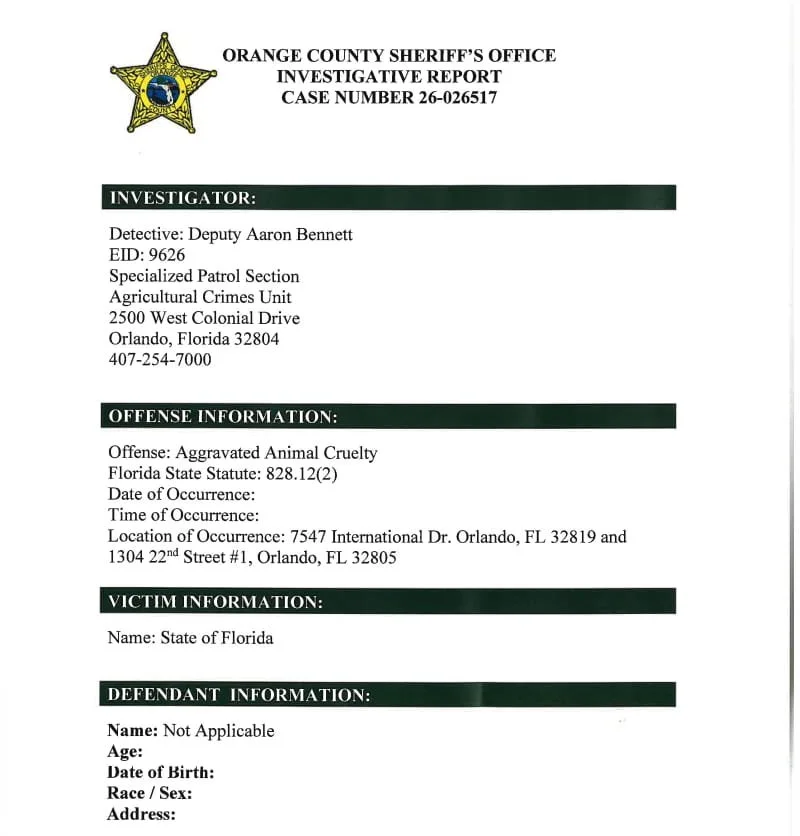
After a three-month investigation into the deaths of dozens of sloths connected to Sloth World Orlando, the Orange County Sheriff’s Office (OCSO) has concluded that it found no evidence of criminal neglect or other criminal activity by facility personnel.
The investigation examined records from the Florida Fish and Wildlife Conservation Commission (FWC), veterinary and necropsy reports, facility documentation, photographs, videos, and testimony from people involved in the operation, former employees, veterinarians, zoo personnel, pathologists, and a sloth husbandry expert.
We recognize the time and resources OCSO dedicated to investigating this case, but we have now reviewed the investigative report ourselves.
And we are struggling to understand how the evidence documented within its own pages ultimately resulted in a finding of no criminal neglect, because the report tells a deeply disturbing story.
Sloth World Orlando owners Ben Agresta and Pete Bandre were interviewed during the investigation, but neither is listed as a defendant in the OCSO report.
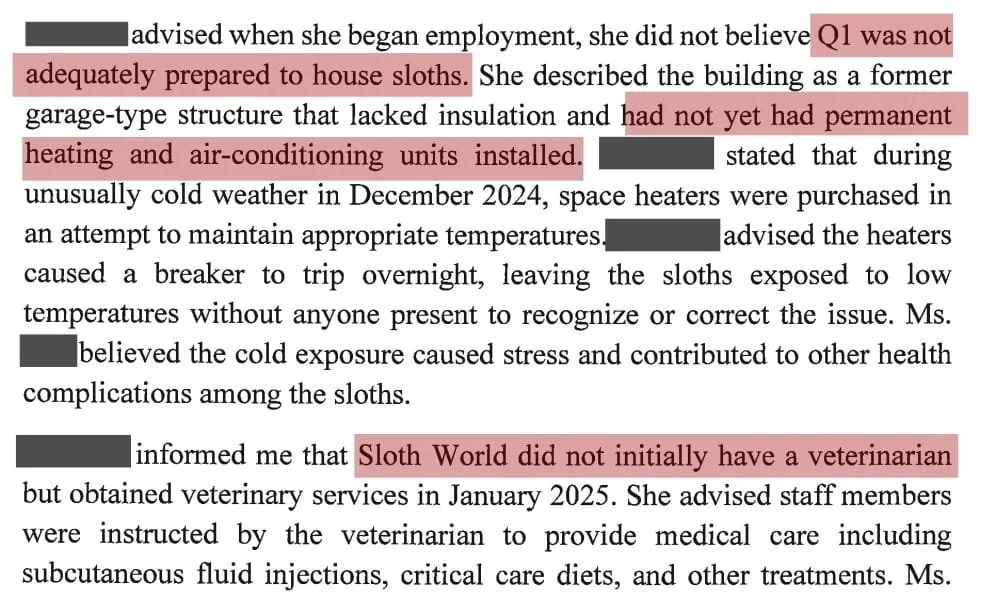
According to the investigation, the first shipment of wild-caught sloths from Guyana arrived in December 2024. Peter Bandre, who was responsible for animal care and importing the sloths, told investigators that the animals were received before the facility was adequately prepared.
The building reportedly lacked permanent electrical service, running water, and sufficient heating. A former animal caretaker provided investigators with further details. The quarantine building was described as a former garage-type structure that lacked insulation and did not yet have permanent heating and air conditioning.
During unusually cold weather, space heaters were purchased in an attempt to maintain adequate temperatures. According to the caretaker’s statement, those heaters repeatedly caused an electrical breaker to trip.
During one overnight incident, the breaker tripped and the heaters stopped working, leaving the sloths exposed to low temperatures without anyone present to recognize or correct the problem. The caretaker believed the cold exposure caused significant stress and contributed to subsequent health complications.
The same testimony indicates that Sloth World did not initially have a veterinarian, with veterinary services only being obtained later.
How can a wildlife facility NOT have a veterinarian in charge? The ‘staff members’ instructed by the veterinarian services were unexperienced people, hired online. The job advert stated that ‘no experience was needed´.
THESE DETAILS MATTER.
Sloths are tropical mammals with an extremely limited ability to regulate their own body temperature. Maintaining appropriate environmental conditions is therefore fundamental to their care.
The report does not describe a fully established specialist facility experiencing one entirely unpredictable event. It documents wild tropical animals arriving at a facility that people involved in the operation themselves acknowledged was not adequately prepared to receive them.
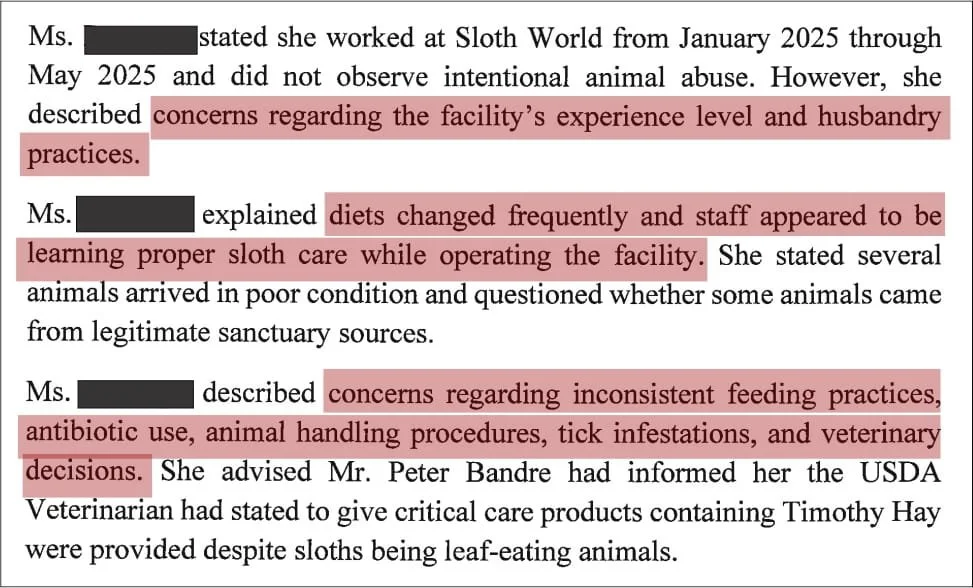
Another former Sloth World caretaker told investigators that she did not witness intentional animal abuse, but her statement describes significant concerns about the operation’s preparedness and experience.
According to the investigative report, diets changed frequently, husbandry practices were inconsistent, and untrained staff appeared to be learning how to properly care for sloths while animals were already being housed at the facility.
She raised concerns involving feeding practices, antibiotic use, handling procedures, tick infestations, veterinary decisions, and the condition of animals arriving at the facility.
She believed that those operating the facility cared about the animals, but became overwhelmed and began the operation before they were fully prepared. She also believed they lacked the knowledge and experience necessary to properly manage the number of sloths in their care.
Sloths are complex animals and require highly specialized husbandry.
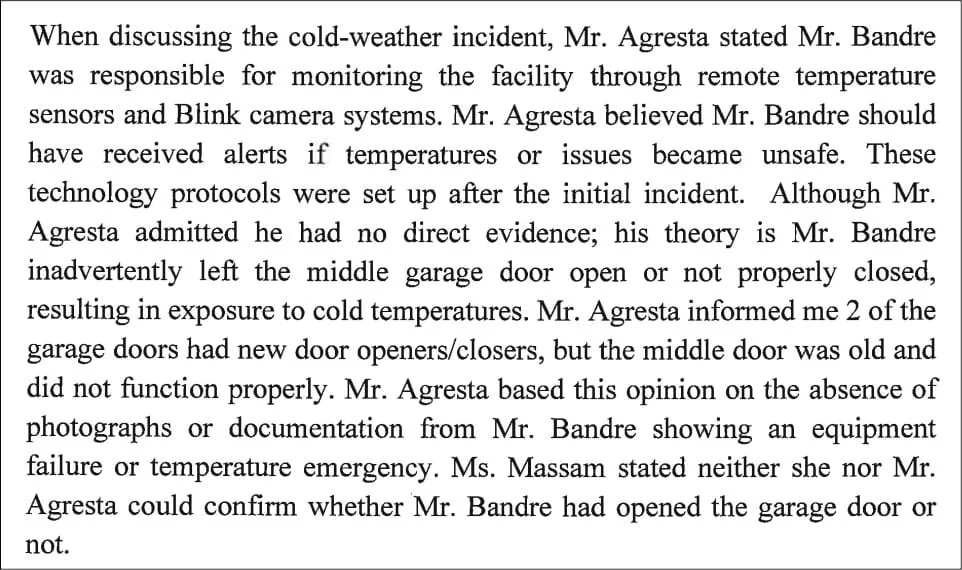
Sloth World owner Andrew Agresta offered investigators his own theory about what happened during the cold-weather event. According to the report, Agresta suspected that Bandre may have left a middle garage door open, or failed to close it properly, allowing cold air into the building. 21 sloths died after this incident.
21 sloths died for an alledgelly GARAGE DOOR malfunction!
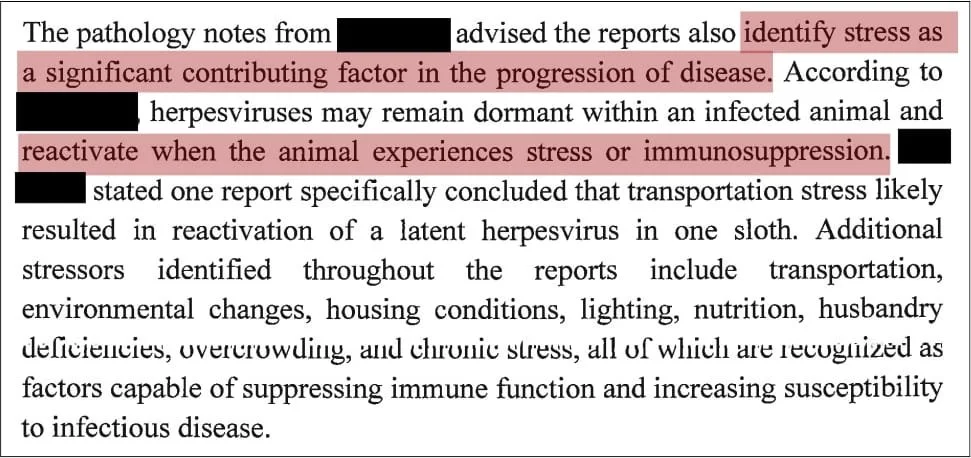
The medical picture documented in the investigation was complex. A veterinary forensic pathologist reviewing the evidence identified a pattern consistent with a systemic infectious disease process, most likely viral.
Recurring abnormalities were identified across numerous organ systems, including gastrointestinal, respiratory, immune, and neurological systems. But the significance of those findings was not completely resolved, and the pathology evidence did not separate infectious disease from the conditions surrounding the animals.
Stressful conditions were also identified as potentially contributing to disease susceptibility and progression.
And another expert consulted during the investigation questioned whether viral disease was actually the primary explanation.
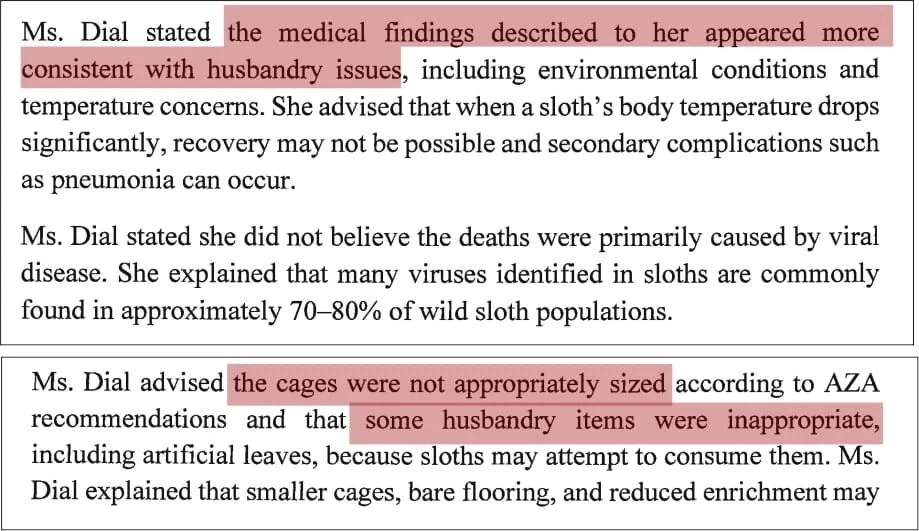
OCSO interviewed Debra Dial, an experienced sloth husbandry specialist and coordinator of the AZA Sloth Species Survival Plan. Dial reviewed information relating to the pathology findings and did not believe viral disease was the primary cause of the mortality event.
She noted that some of the viruses identified can occur in wild sloth populations and questioned whether a conventional viral outbreak adequately explained similar disease progression among animals of different ages, origins, and shipment groups.
Instead, she believed the pattern appeared more consistent with an acute event involving environmental or husbandry conditions.
After becoming involved with the surviving animals, Dial assessed aspects of their housing and husbandry. According to the investigative report, she found that cages did not meet AZA size recommendations and identified inappropriate husbandry items.
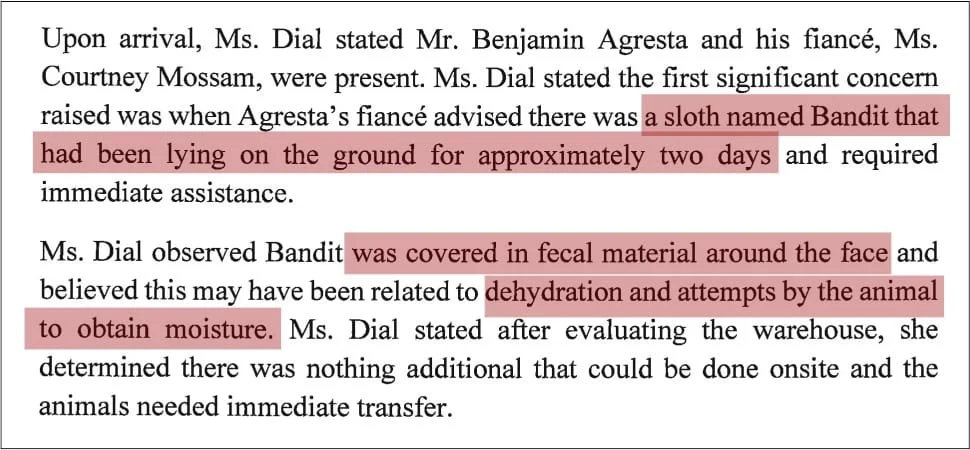
Her testimony also describes the condition of one particularly sick sloth, who had reportedly been lying on the ground for approximately two days before the animals were transferred.
Dial ended her interview with a question that deserves serious attention.
According to the report, she:
“did not understand why Sloth World was permitted by FWC to continue importing additional sloths after losing so many.”
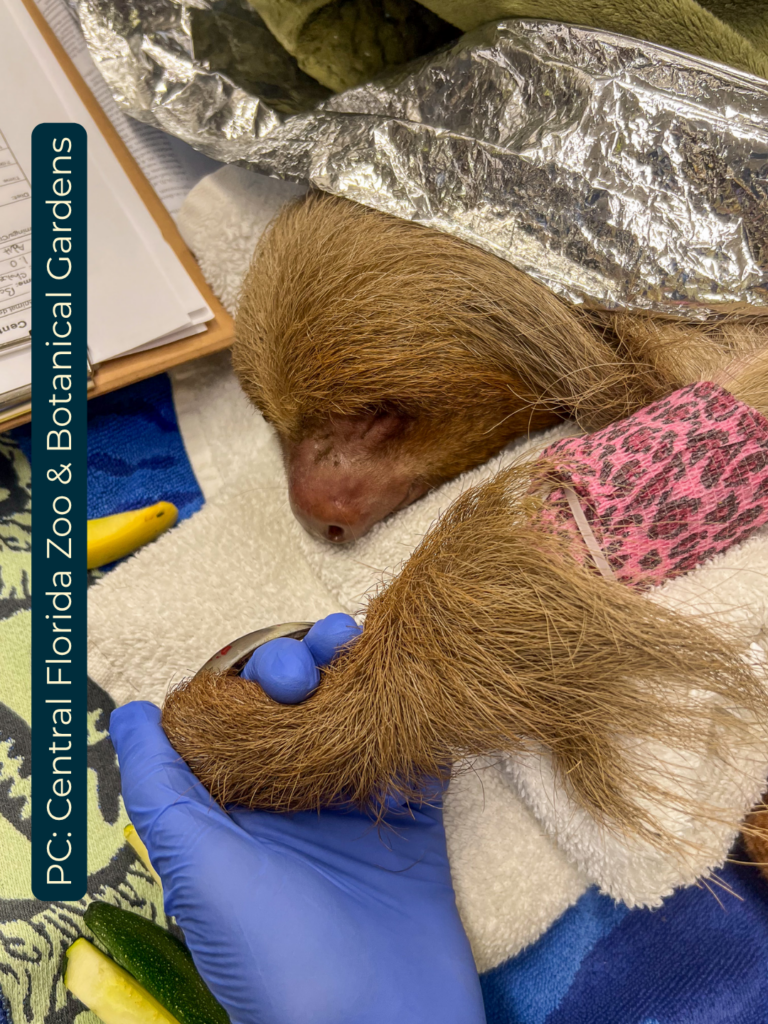
When the remaining animals were finally surrendered, 13 sloths were transferred into the care of the Central Florida Zoo. The condition in which some of those animals arrived is among the most disturbing evidence documented in the investigation.
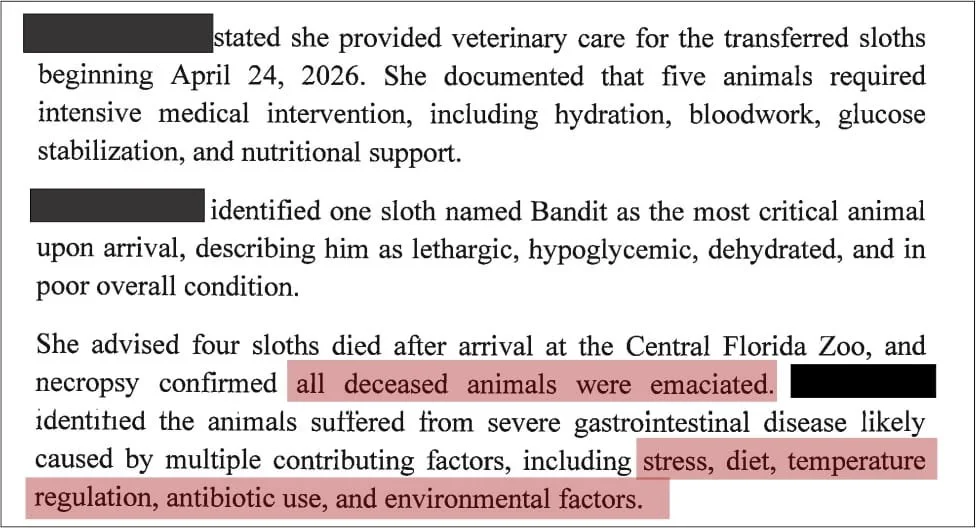
The Zoo’s Chief Veterinarian reported that the majority arrived in poor condition. Five arrived with liquid diarrhea, and four of those five subsequently died. Those four animals were confirmed to be emaciated.
Another veterinarian reported that five of the animals required intensive medical intervention, including hydration, bloodwork, glucose stabilization, and nutritional support. The most critical animal arrived lethargic, hypoglycemic, dehydrated, and in poor overall condition.
Other zoo personnel described animals that were extremely thin, dehydrated, lethargic, experiencing diarrhea, or lying on the ground.
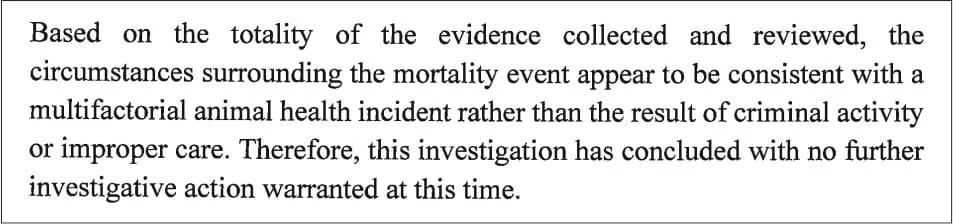
After documenting all of this, OCSO concluded that:
“No evidence was discovered indicating intentional harm, abuse, criminal neglect, failure to provide necessary care, or any deliberate act or omission…”
The report instead characterized what happened as a “multifactorial animal health incident.”
And this is where we struggle to reconcile the conclusion with the evidence documented throughout the investigation.
Nobody is suggesting the 57 sloths were deliberately killed. But these animals were imported and held for commercial exploitation, and the absence of malicious intent does not erase the documented failures that preceded their deaths.
Their suffering does not become acceptable simply because death wasn’t the intended outcome.
When dozens of animals die, the question cannot simply be whether somebody wanted them to die.
Under Florida law, animal cruelty is not limited to deliberately harming an animal. Florida Statute 828.12 provides for aggravated animal cruelty where a person who owns or has custody or control of an animal causes a cruel death or excessive or repeated unnecessary pain or suffering, including through a failure to act under the circumstances addressed by the statute.
That makes the evidence documented in this investigation particularly difficult for us to understand.
Twenty-one tropical animals were housed in a facility that was reportedly not adequately prepared to receive them. The investigation documents concerns involving housing, temperature, nutrition, husbandry, disease, transportation, and stress.
Animals continued to die, and additional sloths continued to enter the operation. And when the remaining sloths were eventually surrendered, several required intensive veterinary treatment.
There is also an important distinction between identifying the immediate medical cause of death and determining whether an animal was subjected to unnecessary suffering, or whether an act or failure to act contributed to that suffering.
Disease does not eliminate the responsibility to provide appropriate care. Neither does transportation stress, nutritional deficiency, gastrointestinal dysfunction, or an animal arriving already compromised. If anything, vulnerable animals require more appropriate care, monitoring, and veterinary intervention.
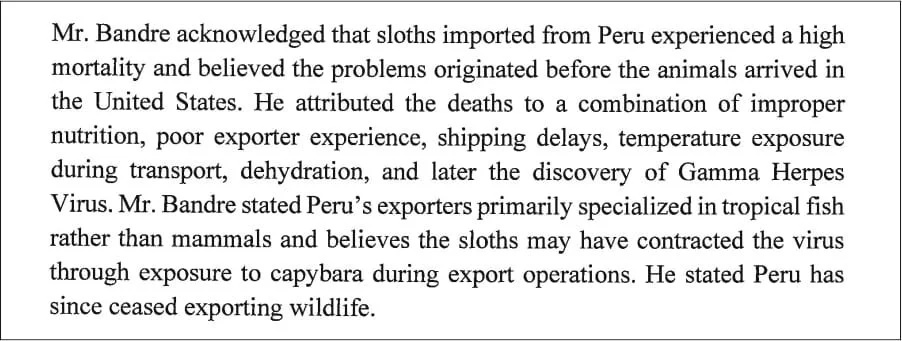
Several people interviewed during the investigation pointed toward exporters and conditions before the animals ever reached Florida. The report contains testimony suggesting that some animals may have already been compromised before importation.
It describes concerns involving animals arriving in poor condition, possible inappropriate diets before export, dehydration, nutritional deficiencies, young sloths potentially being separated from their mothers too early, and animals being transported with existing health problems.
Bandre himself attributed some of the mortality associated with the Peruvian shipment to health problems that existed before the animals arrived.
But if this explanation is intended to reduce responsibility in Florida, it exposes another enormous problem instead.
If some of these problems started BEFORE the sloths reached Florida, that does not excuse the system that allowed them to be imported. It demonstrates why the international trade itself is so dangerous.
These were wild-caught animals removed from their countries of origin and transported internationally for commercial use in the United States.
If animals were already sick, malnourished, dehydrated, improperly fed, or otherwise compromised before reaching Florida, U.S. authorities have limited ability to control what happens throughout that supply chain.
U.S. authorities cannot guarantee how wild sloths are captured, how they are held or fed before export, whether dependent young animals are separated from their mothers, or whether the people handling them have the necessary expertise. They also cannot guarantee that sick or compromised animals will not enter the supply chain, or eliminate the physiological stress caused by capture and international transport.
If this is what can happen before wild sloths even reach U.S. soil, allowing this trade to continue is indefensible. Wild-caught sloths should not be imported into the United States for commercial entertainment in the first place.
There is a painful irony in the outcome of this investigation. OCSO determined that the evidence did not establish criminal conduct under the standards it applied.
But in reaching that conclusion, the investigation produced a detailed official record documenting many of the very problems we have been warning about.
At least 57 sloths are confirmed dead. If everything documented in this investigation can occur without criminal accountability, then the problem is bigger than Sloth World.
We will continue advocating for an end to the commercial importation of wild-caught sloths, stronger permitting and competency requirements, mandatory mortality and transfer reporting, meaningful inspections, greater traceability, and an end to direct-contact sloth encounters.
The official investigation documents repeated mortality, environmental failures, traumatic injuries, severe illness, husbandry concerns, emaciation, dehydration, and animals requiring intensive veterinary intervention.
The public deserves to understand how those facts were assessed against Florida’s animal cruelty laws.
Because if these circumstances do not meet Florida’s threshold for animal cruelty, we urgently need to ask: what does?
Get Involved
How You Can Help
The sloths that died at Sloth World cannot be brought back. But the way this county, this state, and this country treat wild animals is still being written, and right now, we have more power to shape it than we have ever had.
FUND THE FIGHT
USE YOUR VOICE
Sign our petition calling for a federal ban on importing wild sloths into the United States for commercial use