Florida Knew. They Did Nothing. Here’s What We Found.
August 5, 2026
The Sloth Protection Alliance
Florida Knew. They Did Nothing. Here's What We Found.
We have been working in sloth rescue and rehabilitation for years. We have held animals that came in from the wild, broken by stress. We have watched three-fingered sloths decline in ways that are quiet, fast, and devastating. We know what this species can and cannot survive.
So when a new investigation by Inside Climate News revealed that Florida wildlife regulators received their first warning about Sloth World Orlando on December 9, 2024, before a single sloth had even arrived in the country, and still did not visit the facility for eight more months, we were not just angry. We were not surprised.
This is the system working exactly as it was built.
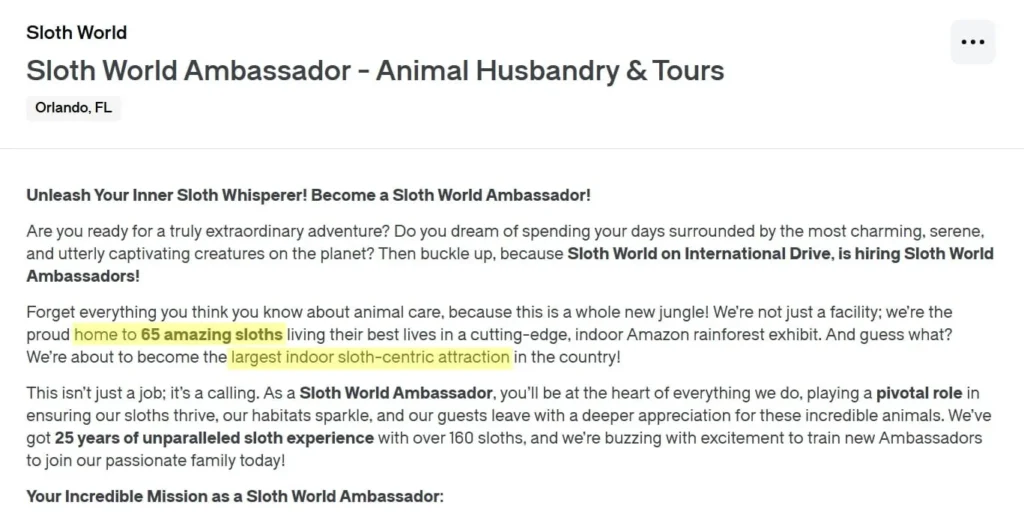
Job Advert at Glassdor
WHAT THE INVESTIGATION FOUND
Investigative journalist Katie Surma obtained months of internal emails through public records requests. What they reveal is a pattern of inaction that continued even as the death toll climbed.
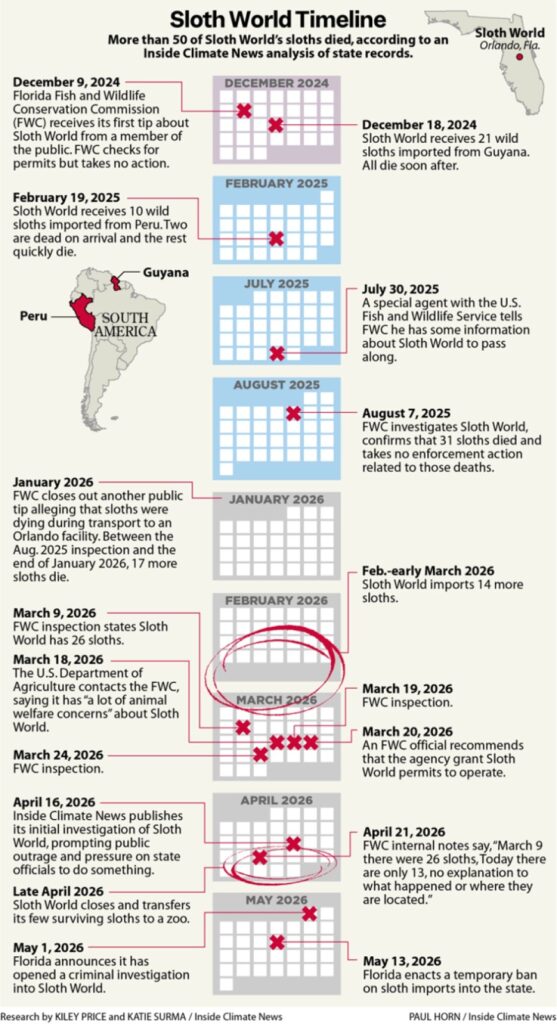
The first warning came from a member of the public who spotted Sloth World advertising job openings while preparing to receive its first sloth shipment, and flagged that no permits appeared to be associated with the business. An FWC employee forwarded the concern to an investigator with a single line: “just wanted to pass along to you.” The investigator did not visit until August 7, 2025, eight months later.
By then, at least 31 sloths had already died.
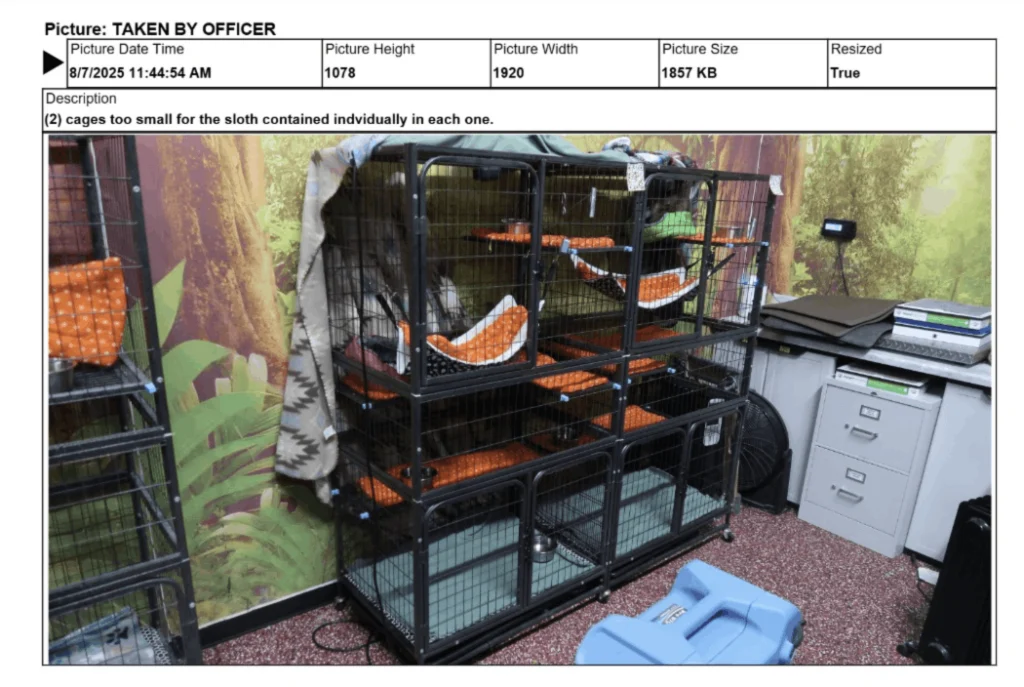
During that first inspection, the investigator documented that the facility had cycled through two veterinarians in under a year. Only six sloths were still alive.
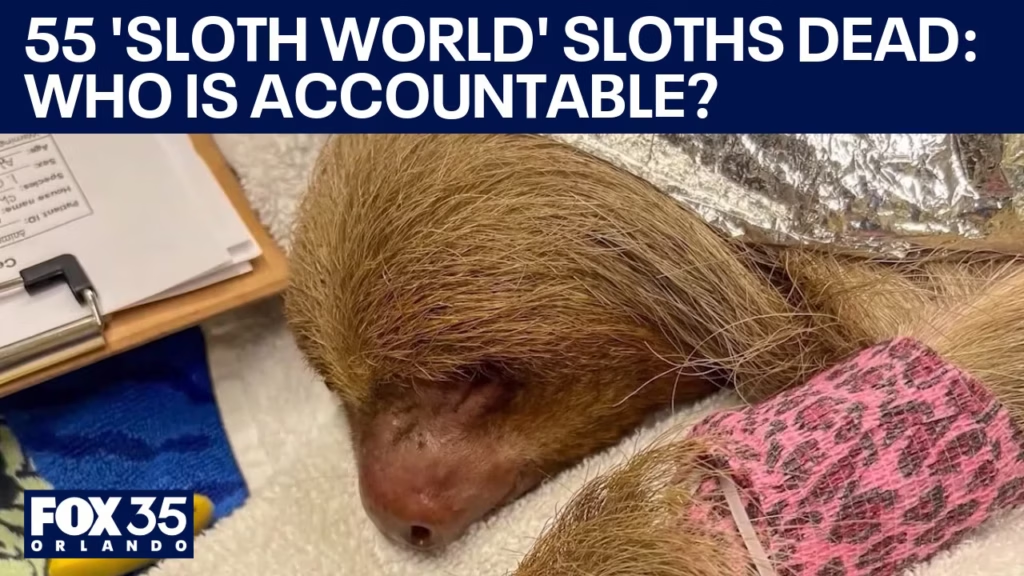
The necropsy reports filed on the animals that died documented diarrhea, severe weight loss, hair loss, suspected traumatic injuries, and conditions entirely consistent with extreme transport stress, the exact physiological profile we would predict from sloths removed from the wild and subjected to commercial handling. Pathologists also flagged the possibility of a previously unidentified virus and raised concerns about potential zoonotic disease risk.
Despite all this, the FWC concluded that the business’s actions did not meet the legal standard for animal cruelty under Florida law.
The warnings that went nowhere
The records show the warnings did not stop in December 2024. They kept coming.
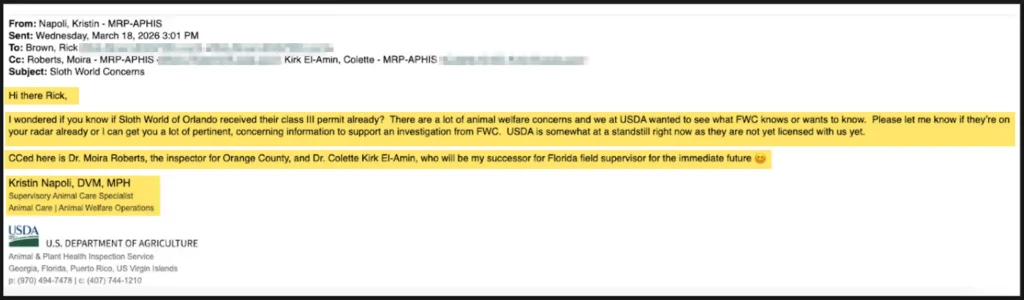
Veterinarians resigned. Former employees continued filing complaints about additional deaths. In March 2026, the USDA contacted the FWC directly, stating they had “a lot of animal welfare concerns” about Sloth World and wanted to share information to support a state investigation. In the same communication, a USDA veterinarian summarized allegations from a former employee that owner Benjamin Agresta had generated nearly half a million dollars through advance ticket sales and had allegedly suggested burning the body of a sick pregnant sloth to conceal a suspected virus.
The USDA also confirmed that it lacked the legal authority to intervene because Sloth World had not yet opened to the public.
In January 2026, investigators closed out a separate complaint alleging that roughly 80 sloths were being held at the Orlando facility and that animals were dying during transport.
The investigator’s note read: “Please close this complaint out. The agent recently learned of previous issues that have already been investigated and cleared.”
In April 2026, with 13 sloths remaining from a facility that had started with more than 60, another inspection concluded: “No Captive Wildlife, FWC violations observed.”
What this means for the animals...
We want to be direct about something that gets lost in the legal and regulatory language: every one of those deaths was a wild animal that was captured from a rainforest, shipped thousands of miles, and placed in conditions that were always going to kill it.
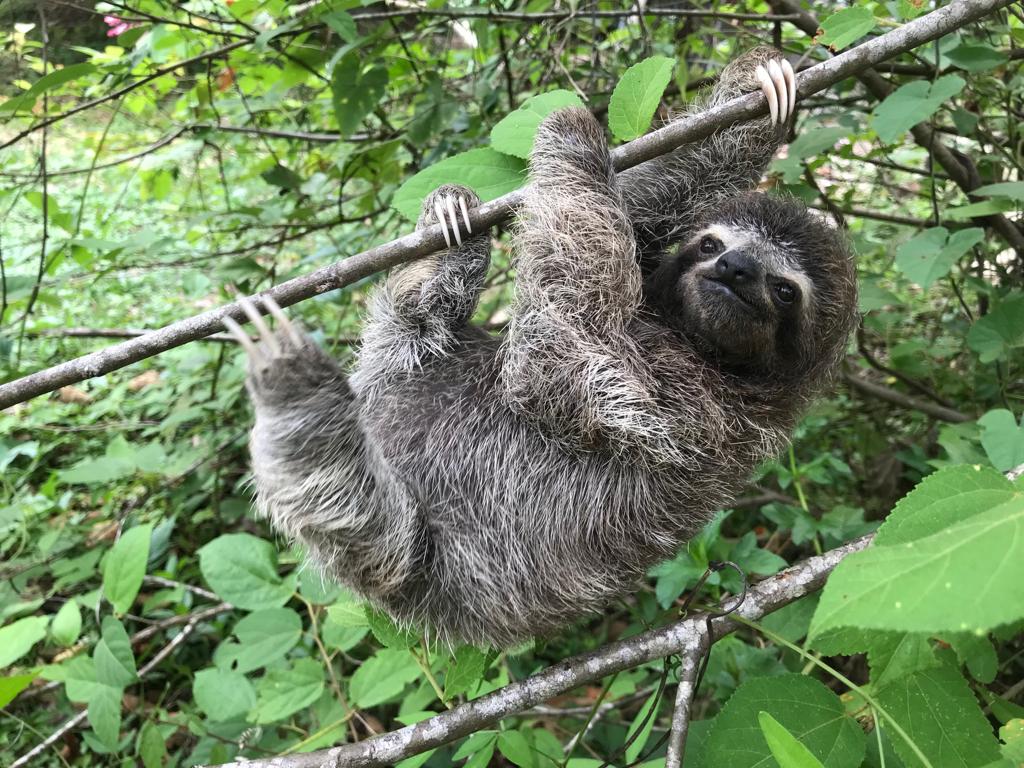
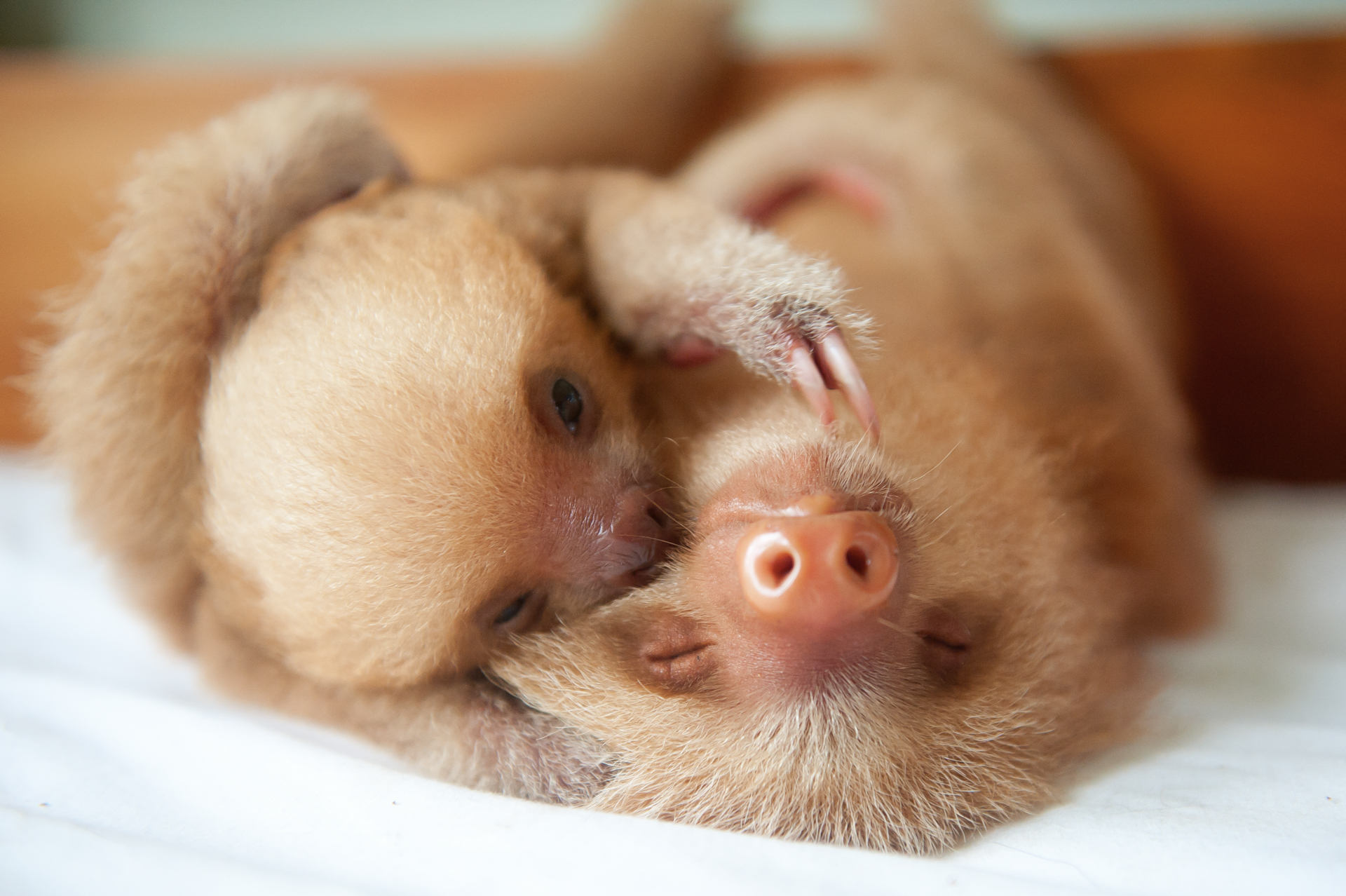
Three-fingered sloths do not adapt to captivity. They do not breed in captivity. They do not recover from the stress of being handled, moved, confined, or exposed to unfamiliar environments. We have the science on this. Regulators had access to this science. The system failed anyway.
More than 50 of Sloth World's sloths died, according to an Inside Climate News analysis of state records. Research by Kiley Price and Katie Surma for Inside Climate News.
What we are doing about it
Since January 2026, our team has been working alongside The Sloth Conservation Foundation, investigative journalists, former Sloth World employees, lawmakers, and scientific experts to document what happened and bring it to the people who have the power to change it.
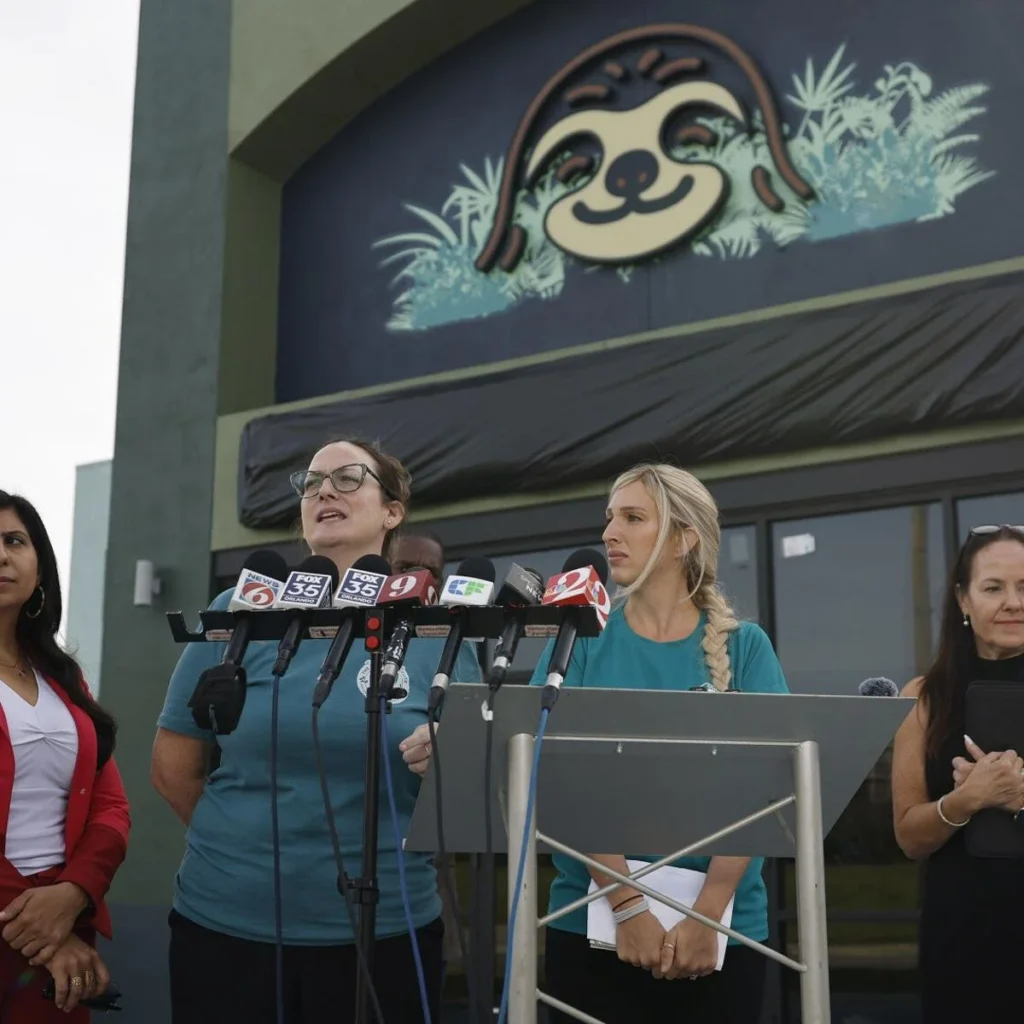
In May 2026, our co-founder, Sam Trull, traveled to Orlando with SloCo founder Dr. Rebecca Cliffe to meet directly with state and federal lawmakers, local officials, FWC commissioners, and wildlife agency representatives. We presented the scientific evidence on sloth physiology, stress vulnerability, and what the commercial trade actually does to these animals. Days later, Florida announced a temporary halt to all sloth imports, followed by a new requirement that every future sloth import obtain a dedicated wildlife import permit.