TODAY: Florida Is Proposing New Sloth Rules. We Need You to Speak Up - Right Now.
We are publishing this today because today is the day it matters.
September 9 at 5:30 PM ET, the Florida Fish and Wildlife Conservation Commission will hold a virtual public meeting to present proposed amendments to the rules governing sloth possession in Florida. This is the direct regulatory response to what happened at Sloth World Orlando.
The public gets to have a say, but only if they show up.
JOIN THE MEETING TONIGHT: SEPTEMBER 9, 2026 AT 5:30 PM ET
CAN’T ATTEND? SUBMIT YOUR WRITTEN COMMENTS DIRECTLY TO FWC:
YOU CAN READ THE PROPOSED 4-PAGE DRAFT HERE:
WHAT FWC IS PROPOSING AND WHY IT'S NOT ENOUGH
We want to be honest with you about where we stand. The proposed changes represent real progress. We are glad to see them. And we do not believe they go far enough.
The FWC proposal would require sloth-specific practical experience before issuing a permit, require facility inspections before granting authorization to possess sloths, and require corporations to have qualified personnel responsible for animal care. These are meaningful improvements. A facility should be fully prepared before any animal arrives, and Sloth World demonstrated with devastating clarity what happens when it is not.
But the proposal leaves critical gaps that we believe Florida must address if it is serious about preventing another Sloth World.
- It does not prohibit the commercial importation of wild-caught sloths. Florida can regulate what happens inside a permitted facility. It cannot regulate how a sloth was captured in Guyana or Peru, how it was fed or housed before export, whether a dependent juvenile was separated from its mother, or what the animal experienced during international transit. The most effective protection is not better regulation of the destination. It is stopping the supply chain at the source. Florida should prohibit the importation of wild-caught sloths for commercial exhibition and public encounter purposes entirely.
- It does not prohibit direct public contact with sloths. The proposed rule does not address hands-on sloth encounters, such as paying to hold, touch, or photograph a sloth. Scientific research on sloths used in wildlife tourism has documented behavioral stress responses during public handling. A sloth remaining still during an encounter is not evidence of comfort. It is a physiological response to a situation the animal cannot escape. Florida has an opportunity tonight to establish a clear standard: no direct public contact with sloths, full stop.
- It exempts existing facilities from the new experience requirements. The draft creates a carve-out for applicants who already held valid permits and documented possession of sloths before the rule takes effect. We understand the practical reasoning. We do not accept a permanent exemption as the solution. If sloth-specific experience is necessary to demonstrate competency, and it is, then it is necessary for every facility currently housing sloths, not only new applicants. There should not be two standards of competency for caring for the same animal.
- It does not require a veterinary care plan before sloths arrive. Listing a veterinarian’s phone number on a permit application is not veterinary preparedness. Sloths are physiologically complex animals. Their gastrointestinal biology, thermoregulation, and stress responses differ substantially from conventional domestic animals. A written veterinary care plan, covering quarantine, preventative care, emergency treatment, diagnostic testing, and mortality investigation, should be required and reviewed before any sloth enters a facility. Care should be part of preparation, not an emergency response.
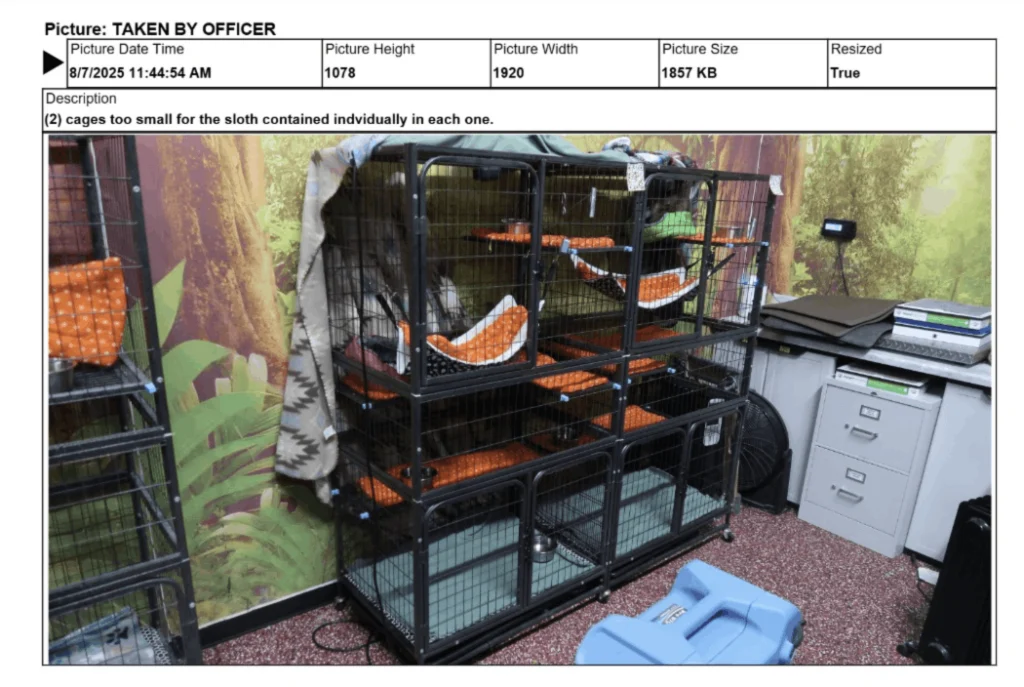
- The minimum housing standards have not been reviewed. Florida’s existing rule allows a minimum enclosure of just 4 feet by 6 feet by 8 feet high for one or two sloths. Sloths are arboreal mammals adapted to moving through complex three-dimensional forest canopies. Better inspections against inadequate standards are not sufficient protection. The standards themselves need a science-based review.
We have spent months presenting scientific evidence to lawmakers, wildlife agencies, and policymakers. Sam Trull traveled to Orlando. Our veterinary team analyzed necropsy reports. We have been at the table every step of the way.
But what happens in a public comment period is different. FWC commissioners hear from the public tonight. They read the comments submitted online. The volume and quality of public engagement shape what the final rule looks like.
Fifty-seven sloths are dead. The Orange County Sheriff’s Office found no criminal neglect. The State Attorney’s Office is still reviewing the case. And tonight, Florida is deciding what standard of protection sloths will have going forward.
We are asking you to show up for this moment in whatever way you can.
Attend the meeting at 5:30 PM ET tonight. Or submit written comments to FWC if you cannot attend. Tell them the proposed rules are a start. Tell them wild-caught sloths should not be imported for commercial entertainment. Tell them direct public contact with sloths should end. Tell them existing facilities should not be permanently exempt from the new experience requirements.
Join tonight’s meeting: Register here
Submit written comments: myfwc.com/license/captive-wildlife/public-comments
How You Can Help
FUND THE FIGHT
USE YOUR VOICE
Sign our petition calling for a federal ban on importing wild sloths into the United States for commercial use