





Sloth FactsSloth Science
THE SLOTH SCIENCE JOURNALSLOTH FACTS
Why Do Sloths Poop on the Ground? The Surprising Reason Behind One of Nature’s Riskiest Behaviors
One of the most famous sloth behaviors is also one of the most puzzling: sloths climb down from the safety of the rainforest canopy to poop on the ground.
At The Sloth Institute, this is one of the questions we get asked most often. Why would an animal built for life in the trees willingly descend to the forest floor, where it becomes far more vulnerable to predators?
While we continue to study this behavior, we believe the answer may actually come down to safety.
Why Do Sloths Come to the Ground?
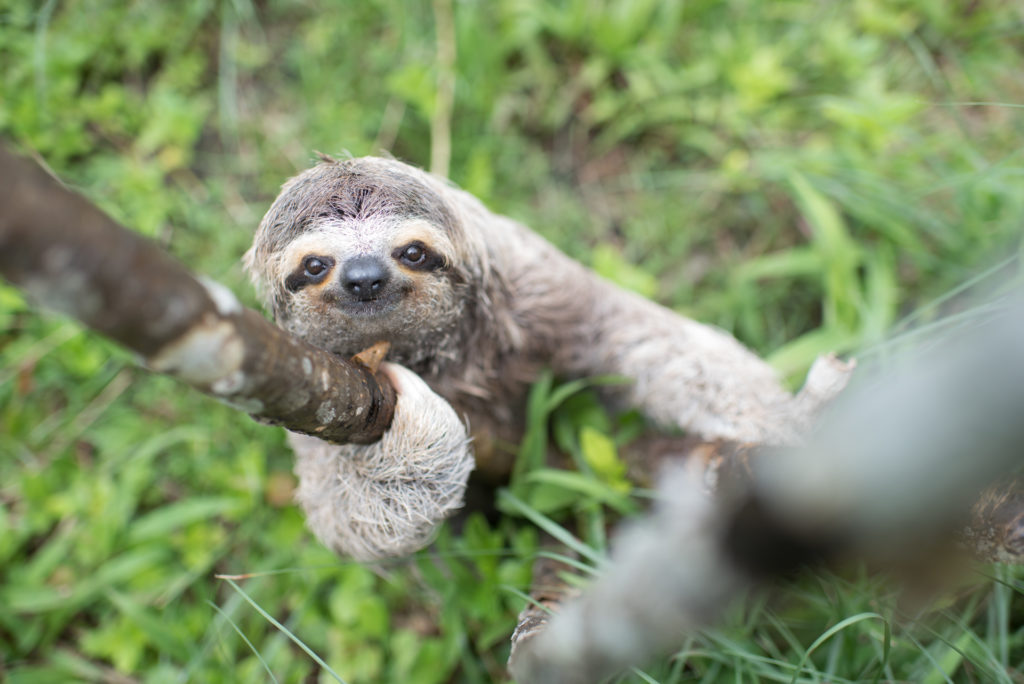
Despite what many people think, sloths do not avoid the ground entirely. Sloths come down whenever they need to, especially when crossing gaps in the canopy where trees are disconnected.
But the most well-known reason sloths descend is to defecate.
Most sloths only poop about once every week, making the journey from the canopy to the forest floor a major event in their routine. According to both The Sloth Institute and The Sloth Conservation Foundation, this behavior remains one of the great mysteries of sloth biology.
Why Not Poop From the Trees?
One theory we strongly consider at The Sloth Institute is that pooping on the ground may actually help sloths stay hidden from predators.
Although sloths are masters of camouflage, they are still vulnerable to predators like snakes, ocelots, and harpy eagles. Their survival depends heavily on remaining undetected.
Urine and feces falling from high in the canopy would create significant noise and movement below, potentially revealing a sloth’s location to predators that rely on sound and sight to hunt.
By quietly descending to the ground to relieve themselves, sloths may actually reduce the chances of attracting attention.
For an animal that survives by avoiding detection, silence can be incredibly important.
A Risky but Calculated Behavior
Coming to the ground is still dangerous for sloths. Their bodies are perfectly adapted for climbing and hanging in trees, not moving quickly across land.
However, sloths are highly specialized survivors, and behaviors that seem strange to us often serve an important evolutionary purpose.
Other scientific theories suggest sloths may also poop on the ground to:
- Communicate through scent
- Fertilize preferred trees
- Support the moth and algae ecosystems living in their fur
But regardless of the exact reason, one thing is clear: this behavior has persisted for millions of years because it provides some type of survival advantage.
Understanding Sloth Behavior Helps Protect Them
At The Sloth Institute, studying natural sloth behavior helps us better understand how these animals survive in increasingly fragmented habitats.
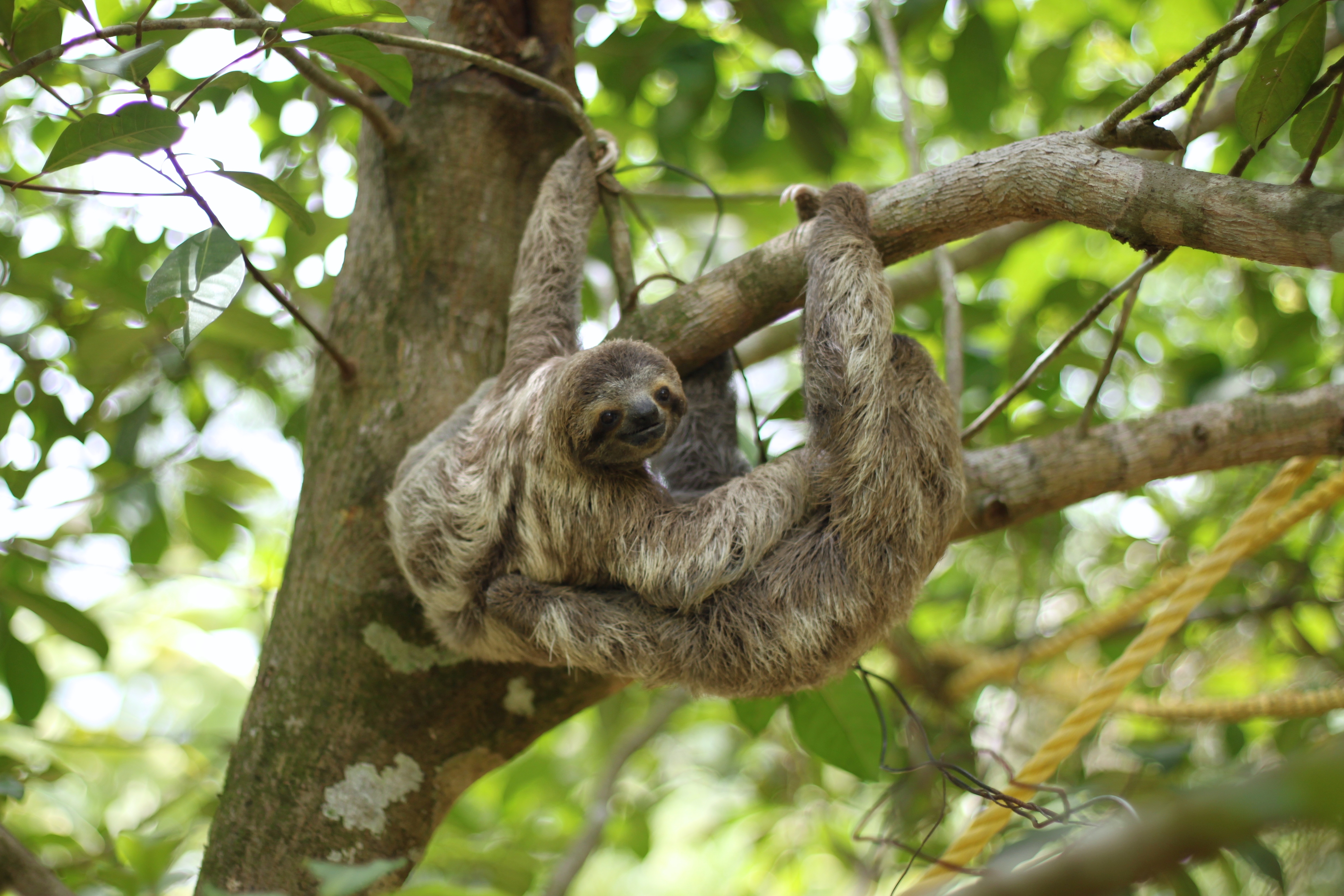
As deforestation and urbanization continue to break apart rainforest canopy systems, sloths are being forced to spend more time on the ground to move between trees. This dramatically increases their risk of injury from dogs, vehicles, and human infrastructure.
Protecting connected forest canopies remains one of the most important ways we can help wild sloths stay safe. The more we learn about behaviors like ground defecation, the more we understand just how specialized and vulnerable sloths truly are.



![IMG_6161[1]](https://www.theslothinstitute.org/wp-content/uploads/2017/02/IMG_61611-e1487092048869-840x690.jpg)