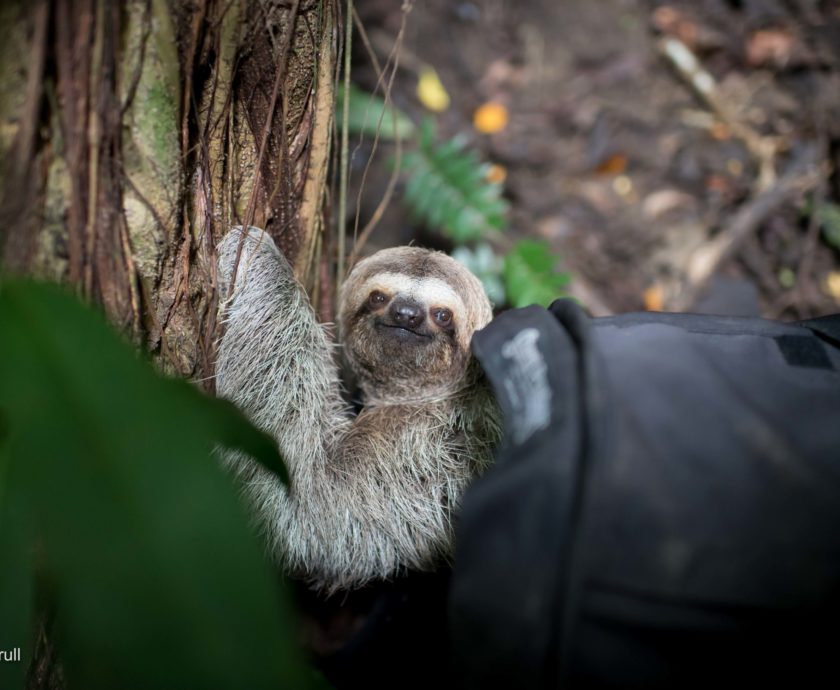
One of the most common misconceptions we hear at The Sloth Institute is that sloths have long “claws” like a cat or other mammals.
But sloth claws are not typical claws at all.
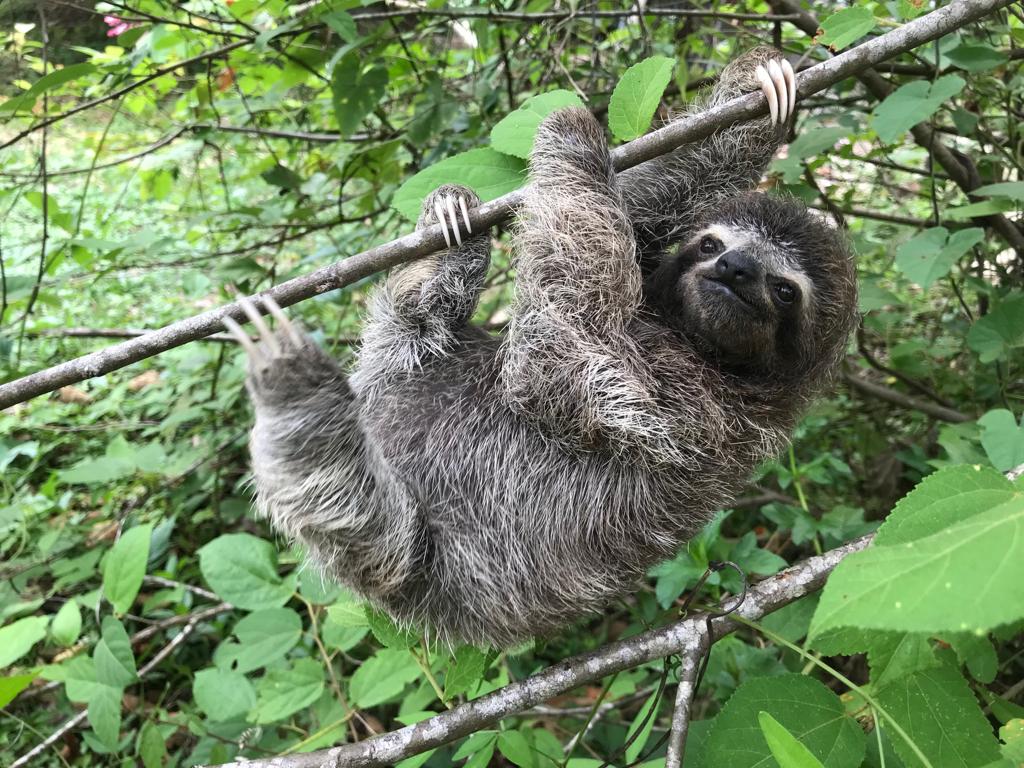
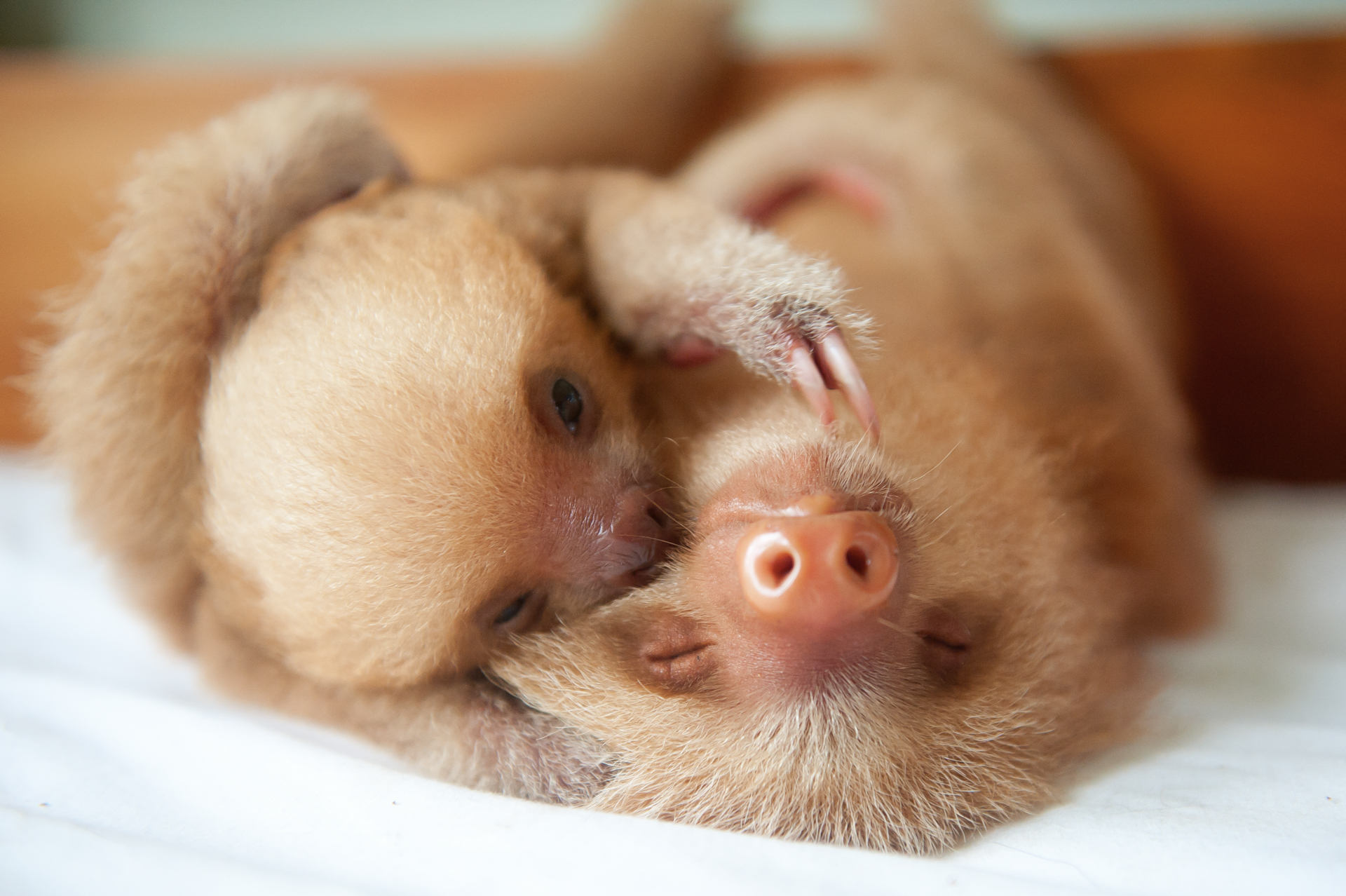
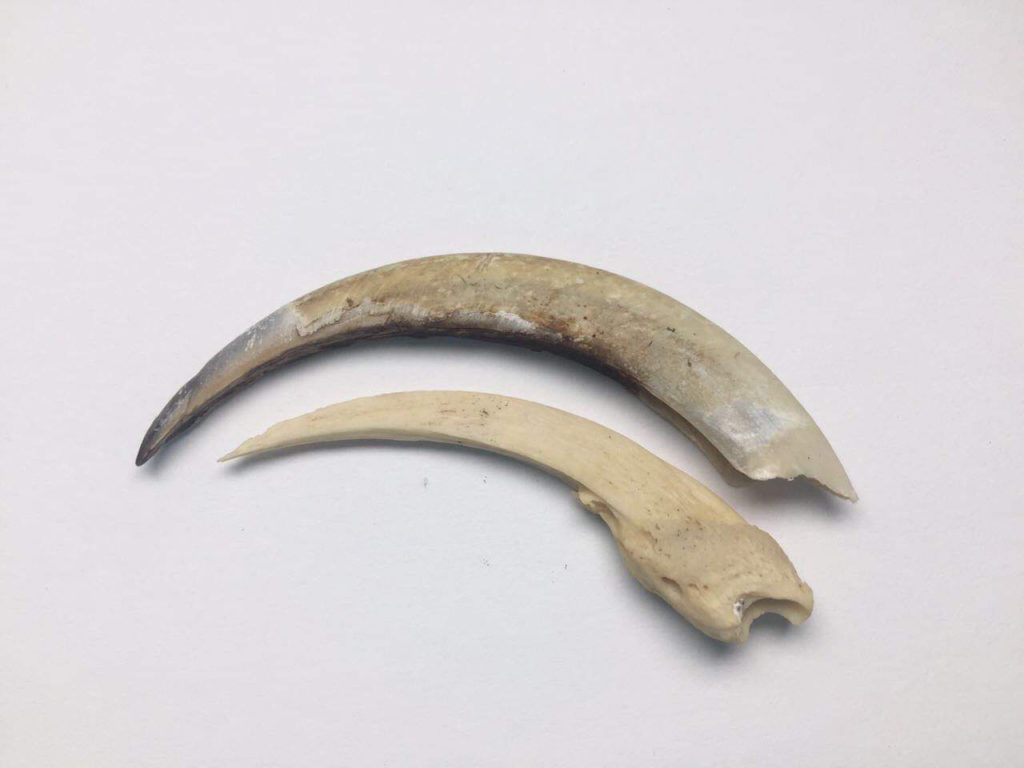
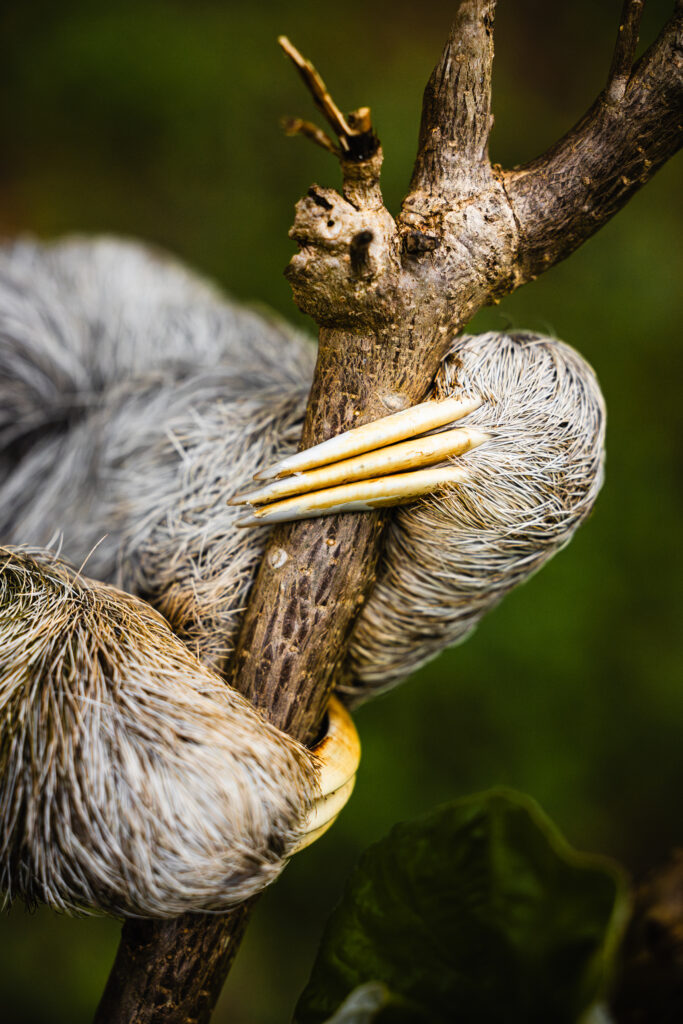
What you see extending from a sloth’s hands and feet is actually a keratin sheath covering the bones of their elongated fingers and toes. In other words, those iconic hooks are part of the sloth’s actual digits.
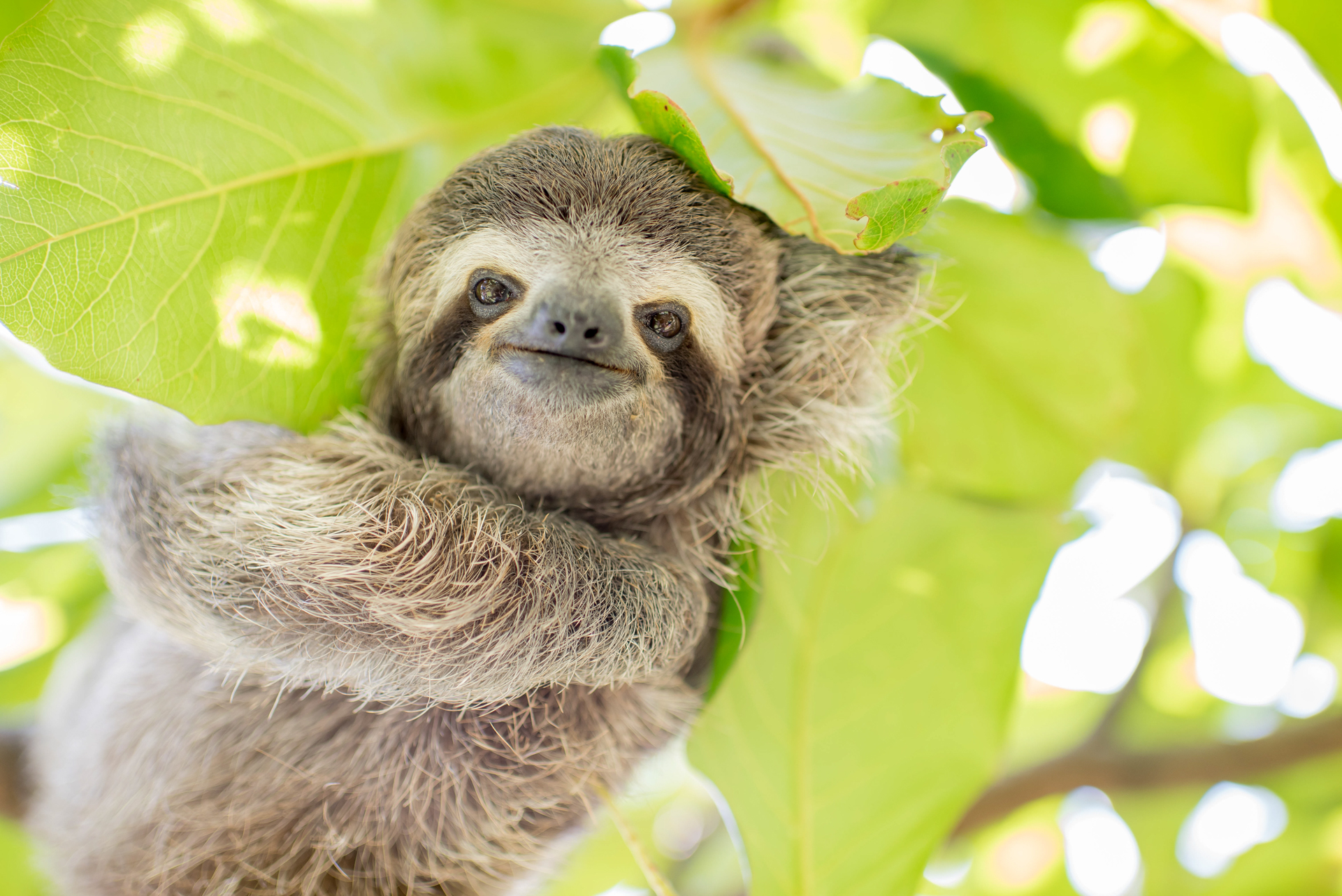
This unique anatomy is one of the many specialized adaptations that allow sloths to spend nearly their entire lives hanging upside down in the rainforest canopy.
Sloth “Claws” Are Different From Other Mammals
Unlike cats, dogs, or bears that have separate claws growing from the ends of their toes, sloths have highly elongated finger and toe bones that are permanently shaped into curved hooks.
The outer layer is made of keratin, the same protein found in human fingernails and hair, but underneath are the bones of the sloth’s digits themselves.
At The Sloth Institute, we often explain that sloth claws function more like built-in hanging tools than traditional claws. Sloths evolved these specialized fingers and toes to help them grip branches effortlessly for hours at a time while conserving energy.
Their curved digits act almost like natural hooks, allowing them to hang securely even while sleeping. This adaptation is so effective that sloths require very little muscular effort to remain suspended from trees. Their tendons and grip structure help lock them into place naturally.
For an animal with an extremely slow metabolism, conserving energy is essential for survival.
Why Sloths Struggle on the Ground
While these elongated digits are perfect for climbing and hanging, they make movement on the ground much more difficult.
Because their fingers and toes are permanently curved for arboreal life, sloths cannot walk normally like many mammals. Instead, they pull themselves forward using their forelimbs when forced onto the forest floor.
At The Sloth Institute, this is one reason we emphasize the importance of connected canopy habitat. Sloths are highly specialized for life in the trees, and time spent on the ground increases their vulnerability to predators, roads, and domestic animals.
Everything about a sloth’s anatomy is designed for a very specific lifestyle, including its fingers and toes. What may look unusual to us is actually the result of millions of years of evolution shaping an animal perfectly adapted for hanging, climbing, and surviving high in tropical rainforest canopies.
At The Sloth Institute, we believe understanding these adaptations helps people see sloths not as lazy animals, but as remarkable specialists uniquely built for life in the rainforest.