
Why do Sloths Eat Dirt?
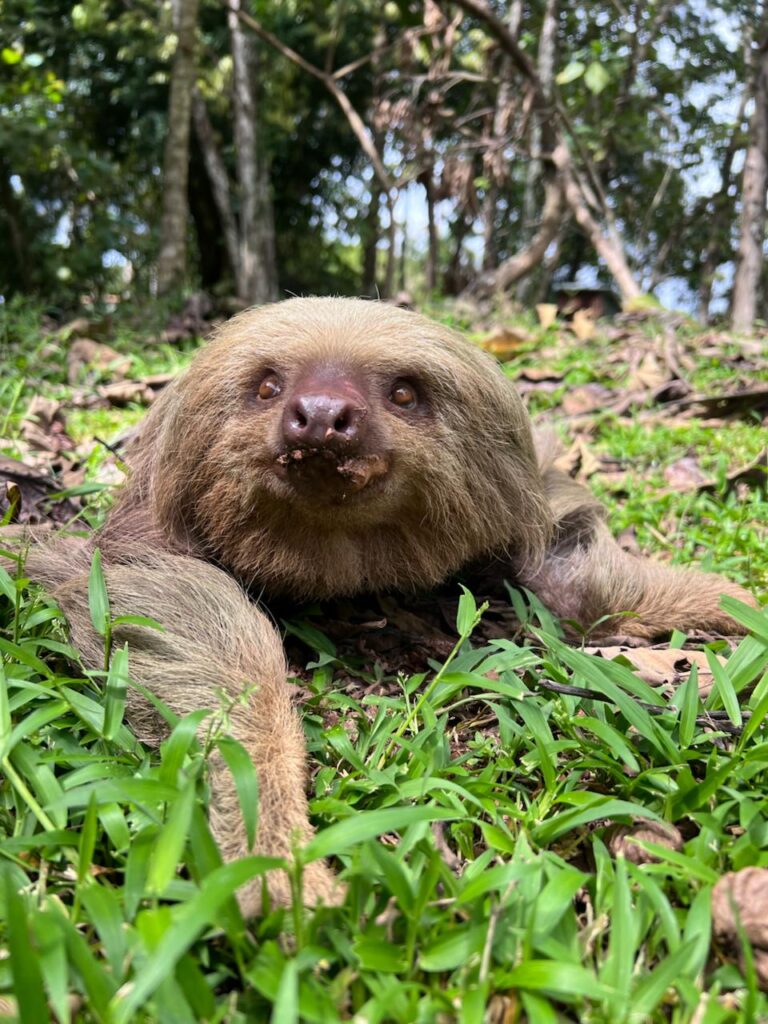
You may have come across videos of sloths eating dirt straight from the forest floor, or maybe you’ve even spotted one doing it in the wild. It might seem a little strange, especially when we’re used to seeing sloths eating leaves high up in the trees! So, why exactly would a sloth eat soil?
What Is Geophagy?
Geophagy is the scientific term for when animals intentionally eat soil, clay, or other earthy materials. This behavior is found in many animals, especially plant-eaters in tropical environments, such as macaws, parrots, toucans, capybaras, and tapirs. Scientists think it may help animals get important minerals, support digestion, or reduce the effects of toxins in their food.
When Does It Happen?
Sloths spend most of their lives in the forest canopy, but they climb down about once a week to poop on the ground. While they are on the ground, they may occasionally swallow small amounts of soil or tiny stones.
Is Eating Dirt Beneficial?
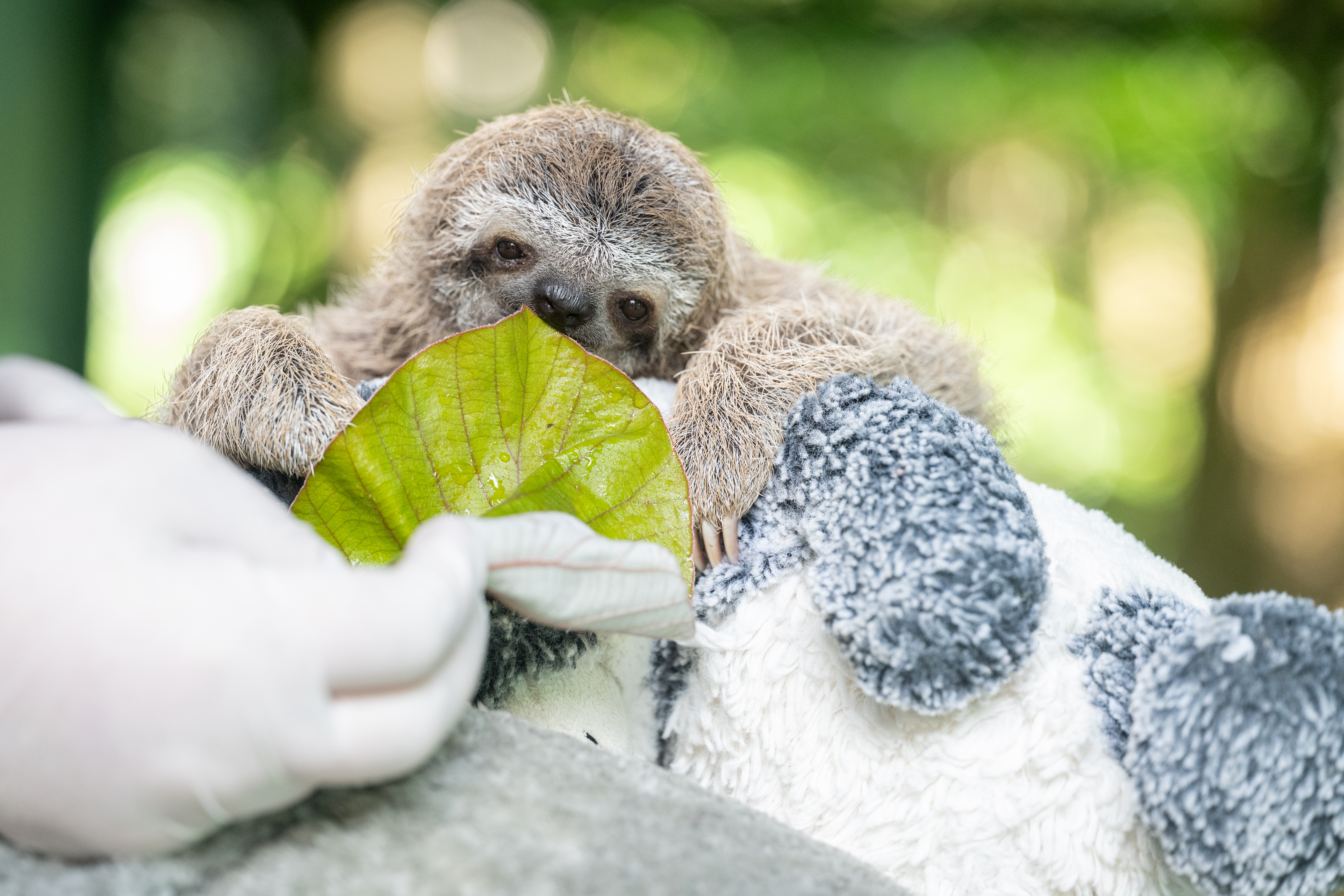
Rainforest leaves may not provide all the minerals sloths need. Eating soil could help supplement nutrients that are missing from their leafy diet. However, scientists are still learning exactly how these benefits apply to sloths (Blake et al., 2011).
How Does It Help Digestion?
Chaverri et al. (2025) suggest that sloths have a slow digestive process that helps them break down tough plant material. Some researchers suggest that eating soil or small stones may influence digestive conditions, including stomach acidity.
Which Sloths Do It?
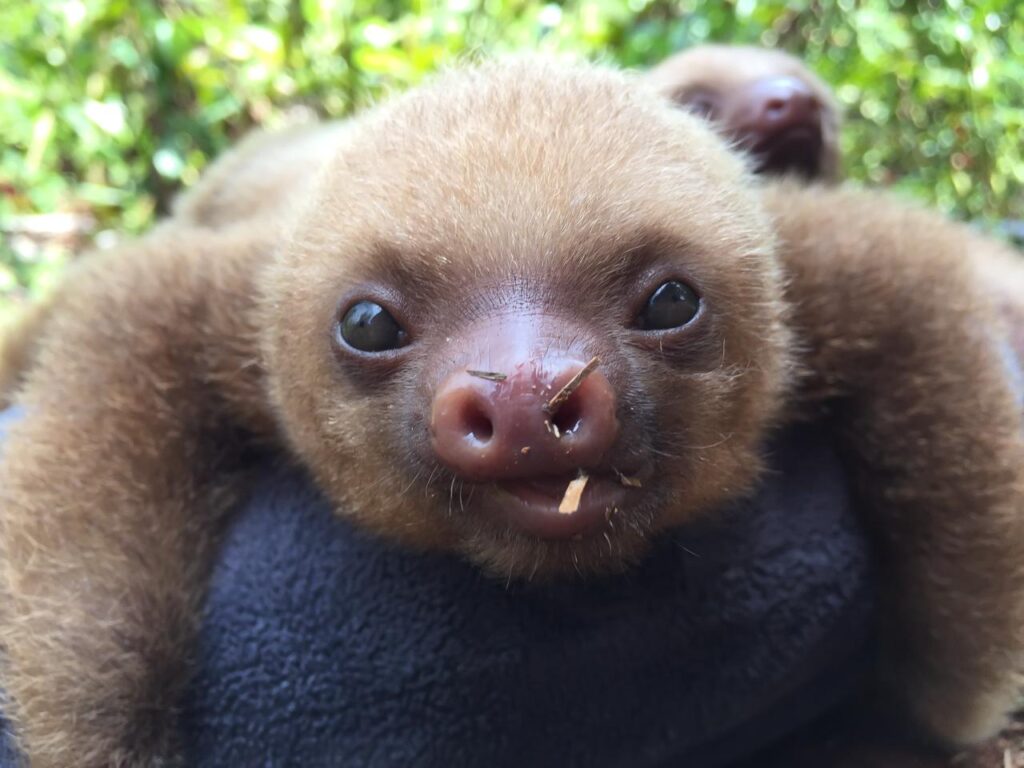
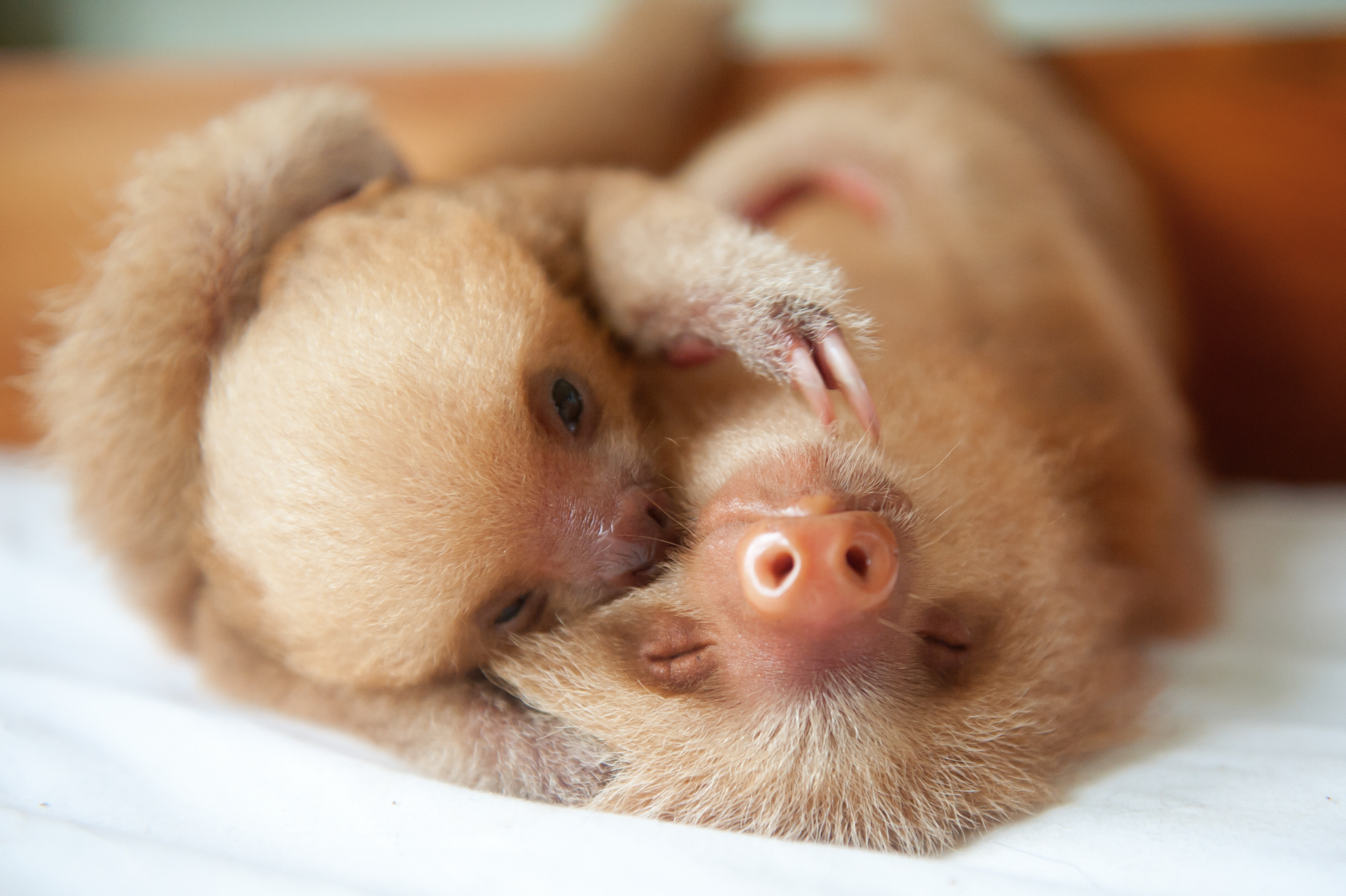
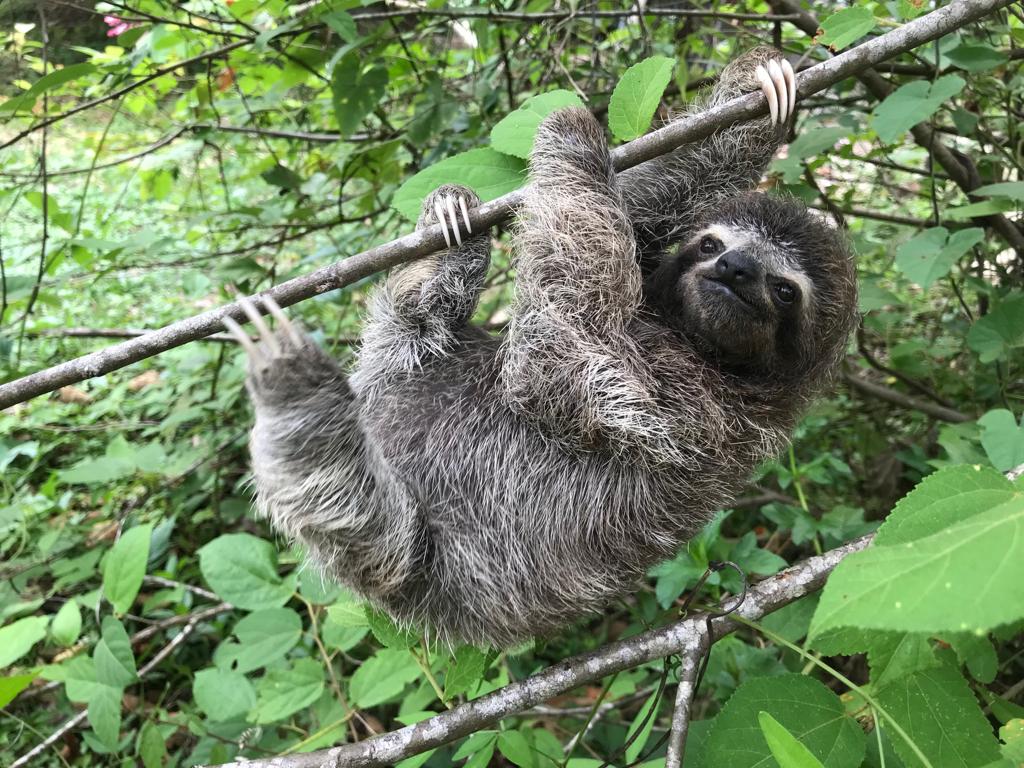
Geophagy has been documented more often in two-fingered sloths (Choloepus) than in three-fingered sloths (Bradypus). Two-fingered sloths also have a more varied diet, although both groups primarily eat plant material. Scientists still have much to learn about why this behavior occurs and how it benefits different sloth species (Chaverri et al., 2025).
Written by Noa Rahat, Conservation Marketing Intern | Peer-reviewed by Dra. Ana María
References
Blake, J. G., Mosquera, D., Guerra, J., Loiselle, B. A., Romo, D., & Swing, K. (2011). Mineral Licks as Diversity Hotspots in Lowland Forest of Eastern Ecuador. Diversity, 3(2), 217-234. https://doi.org/10.3390/d3020217
Chaverri, P., Escudero-Leyva, E., Mora-Rojas, D. et al. Differential Microbial Composition and Fiber Degradation in Two Sloth Species (Bradypus variegatus and Choloepus hof manni). Curr Microbiol 82, 327 (2025). https://doi.org/10.1007/s00284-025-04303-0