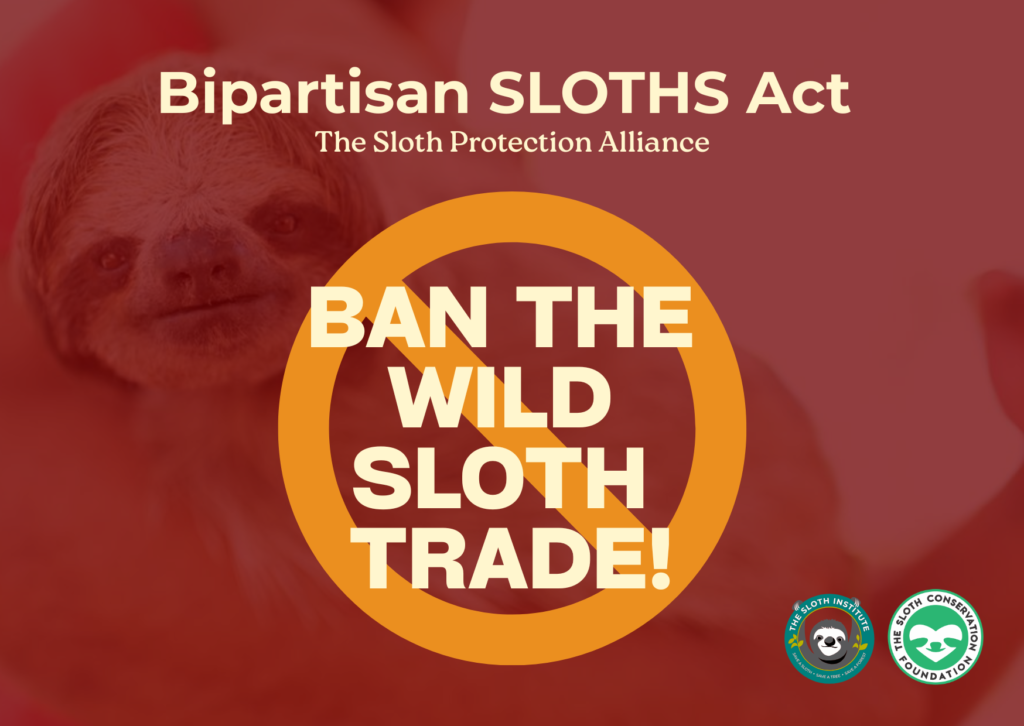

Bipartisan SLOTHS Act Introduced to Permanently End the Importation of Sloths into the United States
The Stopping Legalized Organized Trafficking and Harm to Sloths Act of 2026, or the SLOTHS Act, is the result of months of close collaboration between the Sloth Protection Alliance, a coalition formed by The Sloth Conservation Foundation and The Sloth Institute, and U.S. lawmakers.
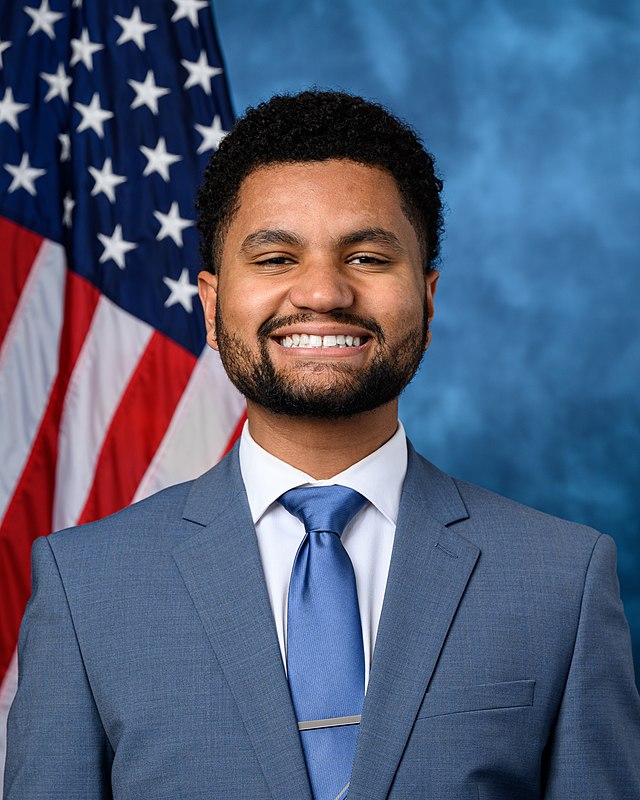
WASHINGTON, D.C. / COSTA RICA | Today, October 20, International Sloth Day, U.S. Representatives Maxwell Alejandro Frost (D-FL) and Laurel M. Lee (R-FL) introduced the Stopping Legalized Organized Trafficking and Harm to Sloths Act of 2026, or the SLOTHS Act, a bipartisan bill that would prohibit the importation of sloths into the United States.
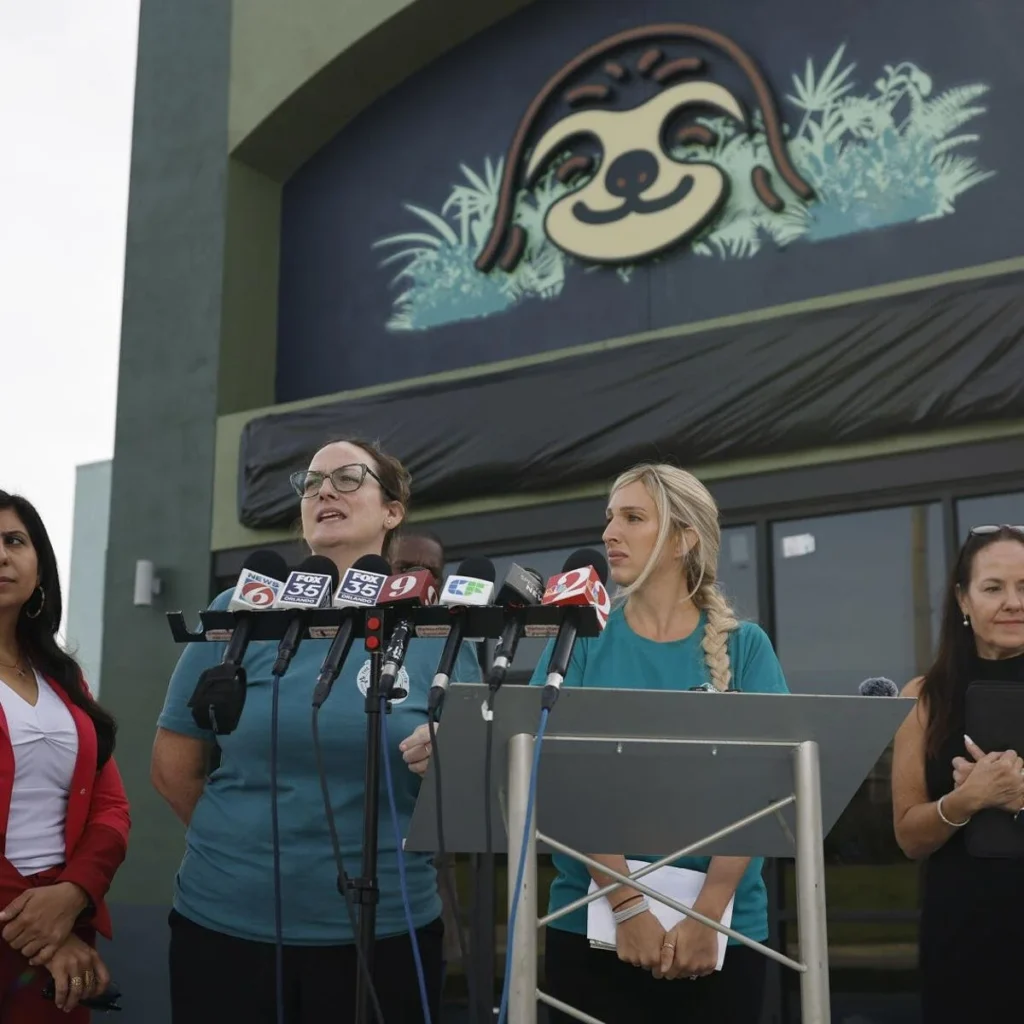
The proposed legislation follows the deaths of 58 sloths connected to Sloth World Orlando and growing concern over the commercial trade in wild-caught sloths.
The SLOTHS Act culminates work led by the Sloth Protection Alliance, which worked alongside U.S. lawmakers to develop the legislation and bring it to Congress. Once enacted, the bill will permanently end the importation of wild-caught sloths into the United States, closing the supply route that brings these animals from the rainforest into commercial exhibitions for hands-on encounter experiences and the pet trade.
Dr. Rebecca Cliffe
Founder and Executive Director, The Sloth Conservation FoundationAfter the deaths of 58 sloths at Sloth World, we made a promise to do everything in our power to make sure something like this could never happen again - and we meant it. But Sloth World was just the tip of the iceberg. It exposed a cruel and unnecessary trade in which hundreds of wild sloths are captured and sold as commodities every year, despite a mortality rate of up to 90%.
The SLOTHS Act is an opportunity to finally draw a line and say that this is not acceptable. By closing the door on the importation of wild-caught sloths into the United States we can stop this cruelty at its source.
We cannot undo the suffering of the sloths already caught up in the trade, but we can make sure their suffering was not in vain. We made a promise, and we will not stop fighting until the sloth trade is brought to an end.
The United States is a major documented market for wild-caught sloths. An analysis by The Sloth Institute of U.S. Fish and Wildlife Service trade records found that 1,146 live sloths were imported between 2011 and 2021, of which 1,141 were recorded as wild-caught. Approximately 97 percent originated in Guyana.
The SLOTHS Act would close the import route supplying the U.S., which would, in turn, reduce demand and protect sloths in their countries of origin.
Sam Trull, MSc
Co-founder and Executive Director, The Sloth InstituteAs sloths have grown more popular, so has their suffering at the hands of an industry that claims to celebrate them. Across the country, sloth lovers are paying to touch, hold, or feed sloths, unaware that they are contributing to the animals’ suffering. The vast majority of sloths used in these roadside zoo and pet shop encounters were captured directly from the wild. From 2011 to 2021, more than 1,100 wild-caught sloths were shipped into the United States for commercial purposes. Once climbing freely through the rainforest canopy, they are ripped from the trees, shipped across borders, and left to endure inadequate living conditions and diets that often lead to painful deaths.
The tragedy at Sloth World pulled back the curtain on this cruel supply chain, but with the SLOTHS Act, we can make sure the suffering finally stops. When I first learned about the commercial trade in wild sloths more than a decade ago, I could only dream of one day helping introduce a bill like this: legislation with a single goal that is both simple and comprehensive, to end the removal of sloths from the wild for commercial import into the United States. Sloths are wild animals that deserve to live in peace where they belong, and the American people deserve to stop being misled about where these animals come from.
The SLOTHS Act would prohibit the importation of sloths into the United States, with limited exceptions for deceased sloths imported for documented research purposes and eligible captive sloths transferred to institutions accredited by the Association of Zoos and Aquariums as part of breeding programs. Sloths taken from the wild after the bill’s enactment would not qualify for the captive-transfer exception.
Violations could result in civil penalties of up to $20,000, criminal fines of up to $100,000 for knowing violations, cancellation of applicable federal authorizations, and forfeiture of illegally imported sloths.
By restricting imports, the legislation aims to address the problem at its source by reducing the demand that drives the trade in wild sloths.
Bipartisan Action for Lasting Protection
The bipartisan introduction of the SLOTHS Act reflects growing recognition across party lines that existing wildlife laws have failed to adequately protect sloths entering the United States and that stronger federal protections are urgently needed.
The SLOTHS Act focuses specifically on importation. It would not prohibit owning or exhibiting sloths already in the United States. The Sloth Protection Alliance will continue advocating for stronger welfare standards, an end to hands-on sloth encounters, more transparency regarding animal deaths in commercial facilities, and greater accountability throughout the captive wildlife industry.
Following its introduction, the SLOTHS Act is expected to be referred to the House Committee on Natural Resources, which oversees wildlife policy, international wildlife matters, the U.S. Fish and Wildlife Service, and the Lacey Act.
The Sloth Protection Alliance urges committee leaders and members to consider the bill promptly, schedule a hearing, and bring it forward for markup so it can advance to the full House of Representatives.
The SLOTHS Act is endorsed by the Sloth Institute, the Sloth Conservation Foundation, the Association of Zoos and Aquariums, the Animal Welfare Institute, the Animal Legal Defense Fund, and the International Fund for Animal Welfare.
ABOUT THE SLOTH PROTECTION ALLIANCE
The Sloth Protection Alliance is a collaboration between The Sloth Conservation Foundation and The Sloth Institute, bringing together expertise in wild sloth research, conservation, rescue, rehabilitation, husbandry, and release. The Alliance works to end the commercial importation of wild-caught sloths into the United States, strengthen protections for sloths already in captivity, and end hands-on sloth encounters. Its advocacy combines scientific evidence, investigations, public education, and collaboration with policymakers.
About the Organizations:
The Sloth Institute (TSI) is a licensed non-profit organization based in Manuel Antonio, Costa Rica. TSI advances sloth conservation and welfare through rescue, rehabilitation, research, and education, while leading innovative conservation initiatives, including strategic reforestation and habitat connectivity programs. TSI collaborates with governments, accredited wildlife institutions, universities, and conservation professionals to protect sloths and their habitats worldwide.
The Sloth Conservation Foundation (SloCo) is a non-profit organization based in Costa Rica working to protect sloths through scientific research, habitat restoration, community programs, and policy advocacy. SloCo collaborates with universities, governments, Indigenous groups, and international partners to safeguard sloths across their natural range.
Media Contacts:
SloCo: Dr. Rebecca Cliffe, contact@slothconservation.org, www.slothconservation.org
TSI: Sam Trull MSc, sam@theslothinstitute.org, www.theslothinstitute.org