A Growing Problem: U.S. Sees Spike in Imports of Wild-Caught Sloths
November 22, 2025
The Sloth Institute Costa RicaPress Release
Analysis of U.S. Federal Wildlife Data Reveals Surge in Imports of Wild-Caught Sloths into the United States
The Sloth Institute has analyzed a decade of federal LEMIS (Law Enforcement Management Information System) data on the importation of sloths from 2011 to 2021. Records show that more than one thousand wild-caught sloths entered the United States during this period. These findings—obtained through a Freedom of Information Act (FOIA) request to the U.S. Fish and Wildlife Service (USFWS)—highlight a rapidly expanding and poorly regulated wildlife trade that poses serious risks to animal welfare and conservation.
Concerns regarding the international sloth trade are intensified by the limited scientific understanding of wild sloth populations. Comprehensive population censuses and genetic analyses across the range countries are largely lacking.
Key Findings from the LEMIS Data (2011–2021)
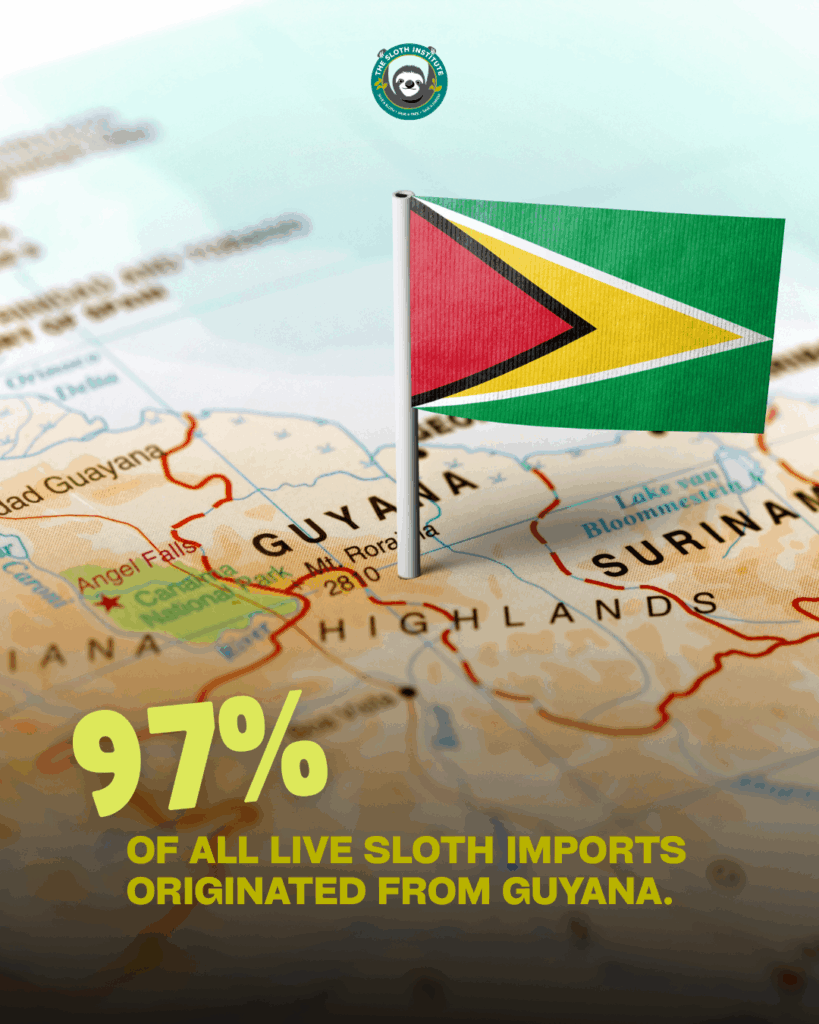
97% of all live sloth imports originated from Guyana.
1,141 of the 1,146 live sloths imported were wild-caught; only five were recorded as captive-bred.
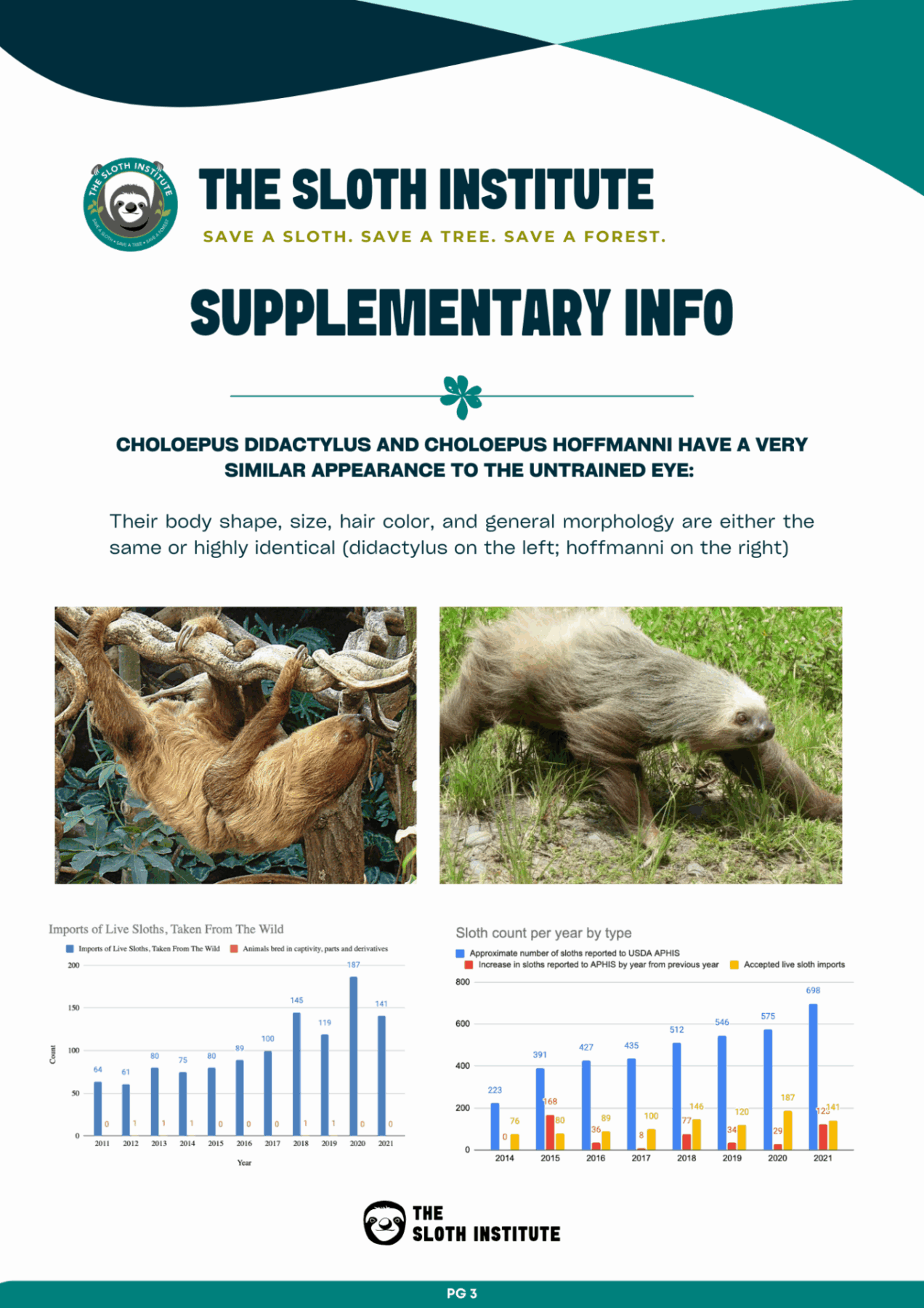
Live sloth imports more than doubled over the decade, peaking in 2020.
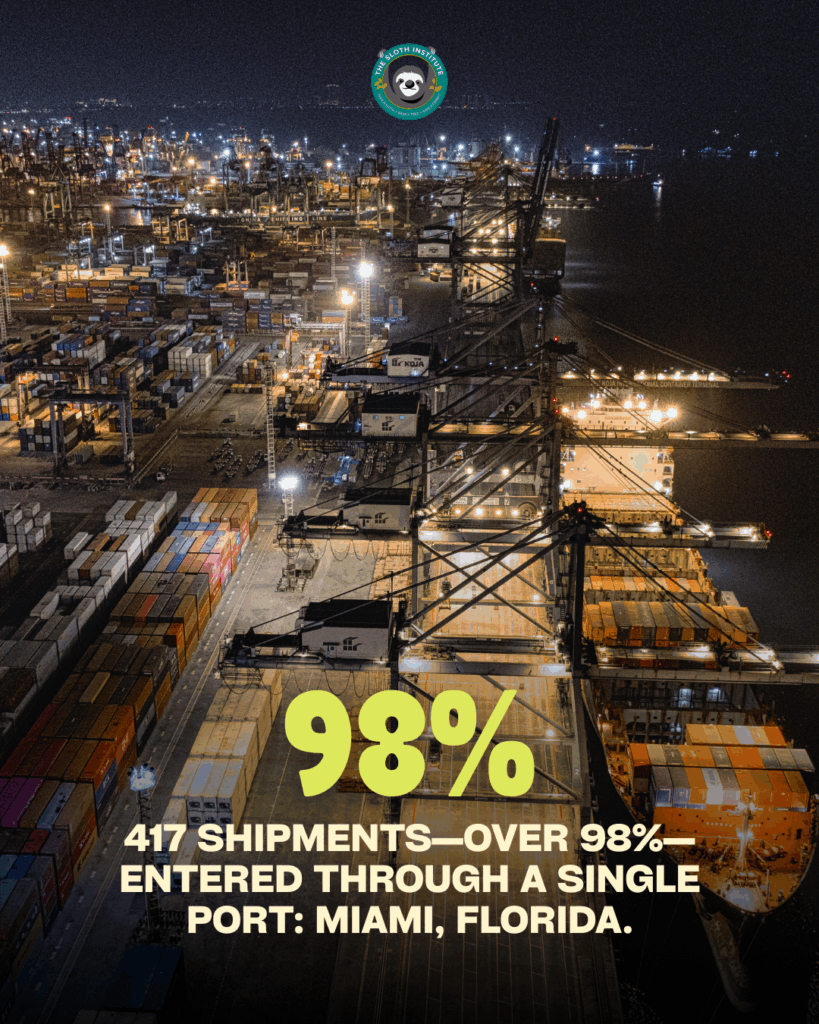
417 shipments—over 98%—entered through a single port: Miami, Florida.
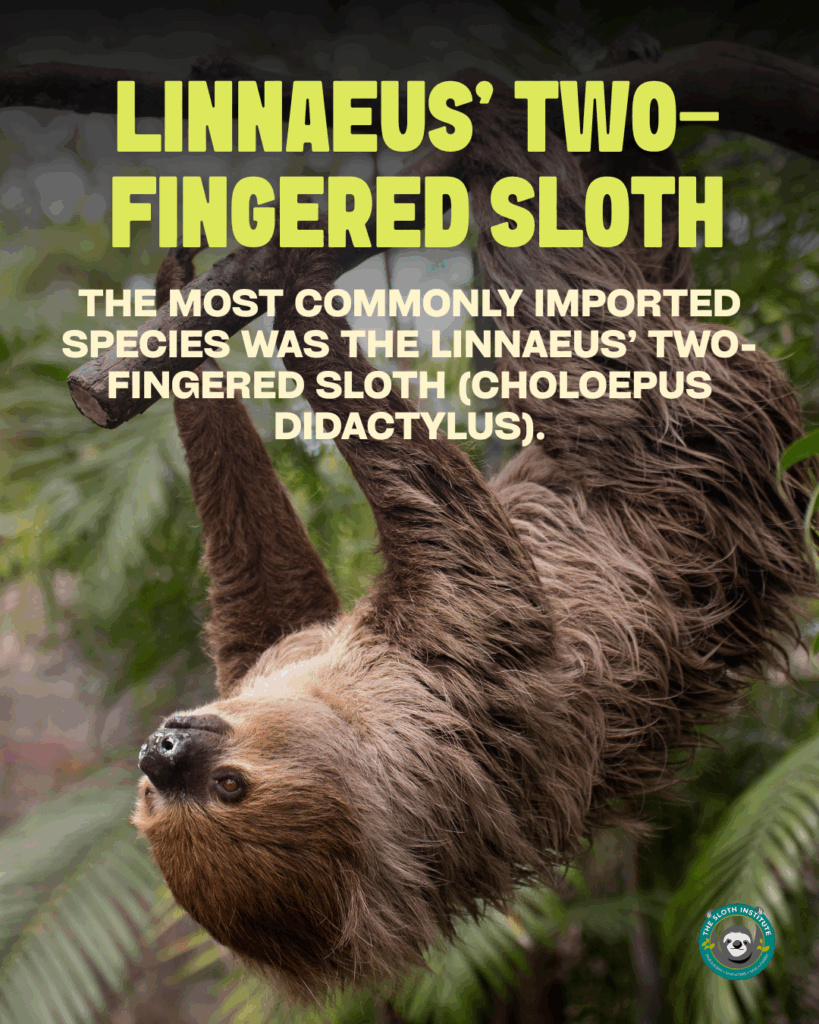
The most commonly imported species was the Linnaeus’ two-fingered sloth (Choloepus didactylus).
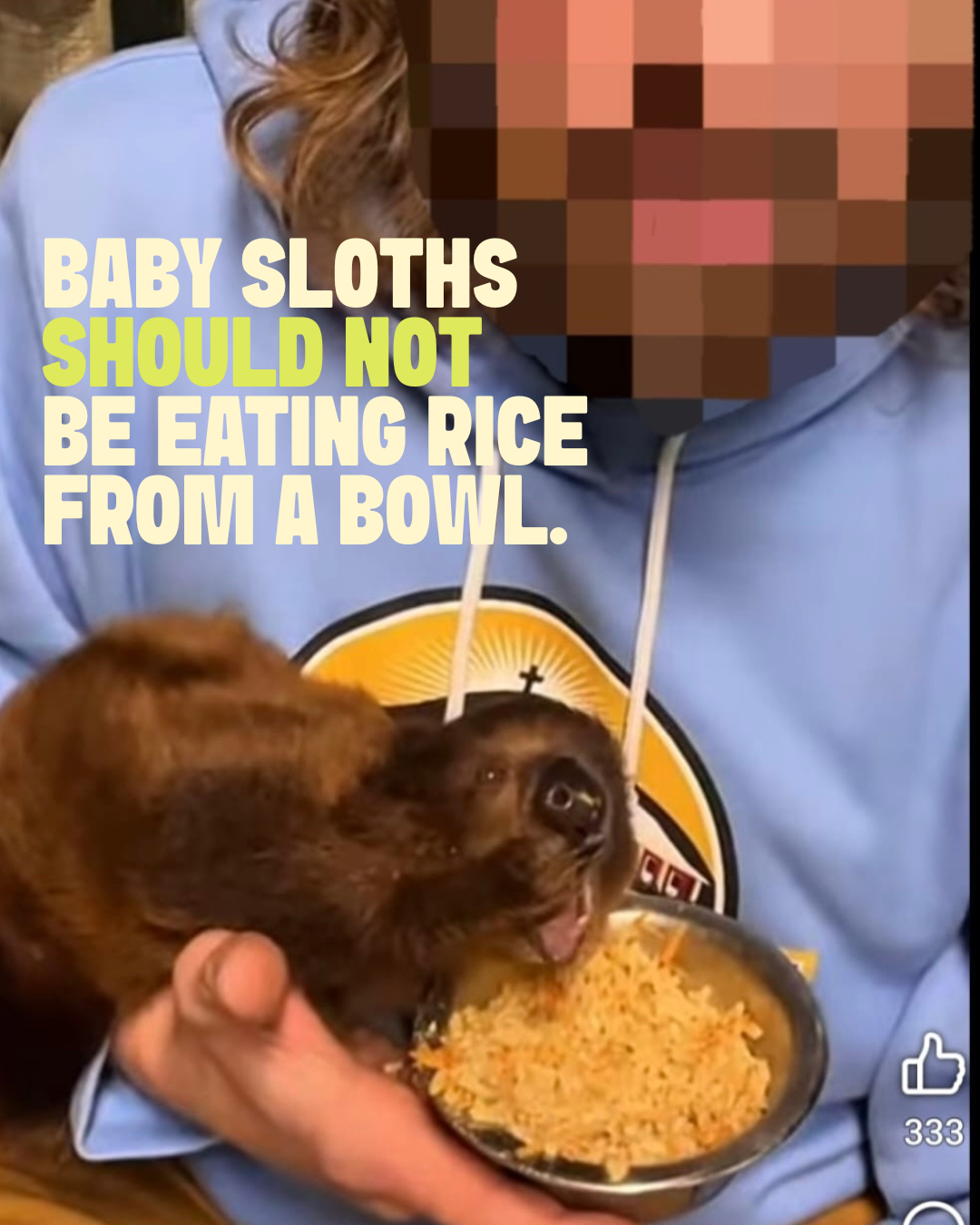
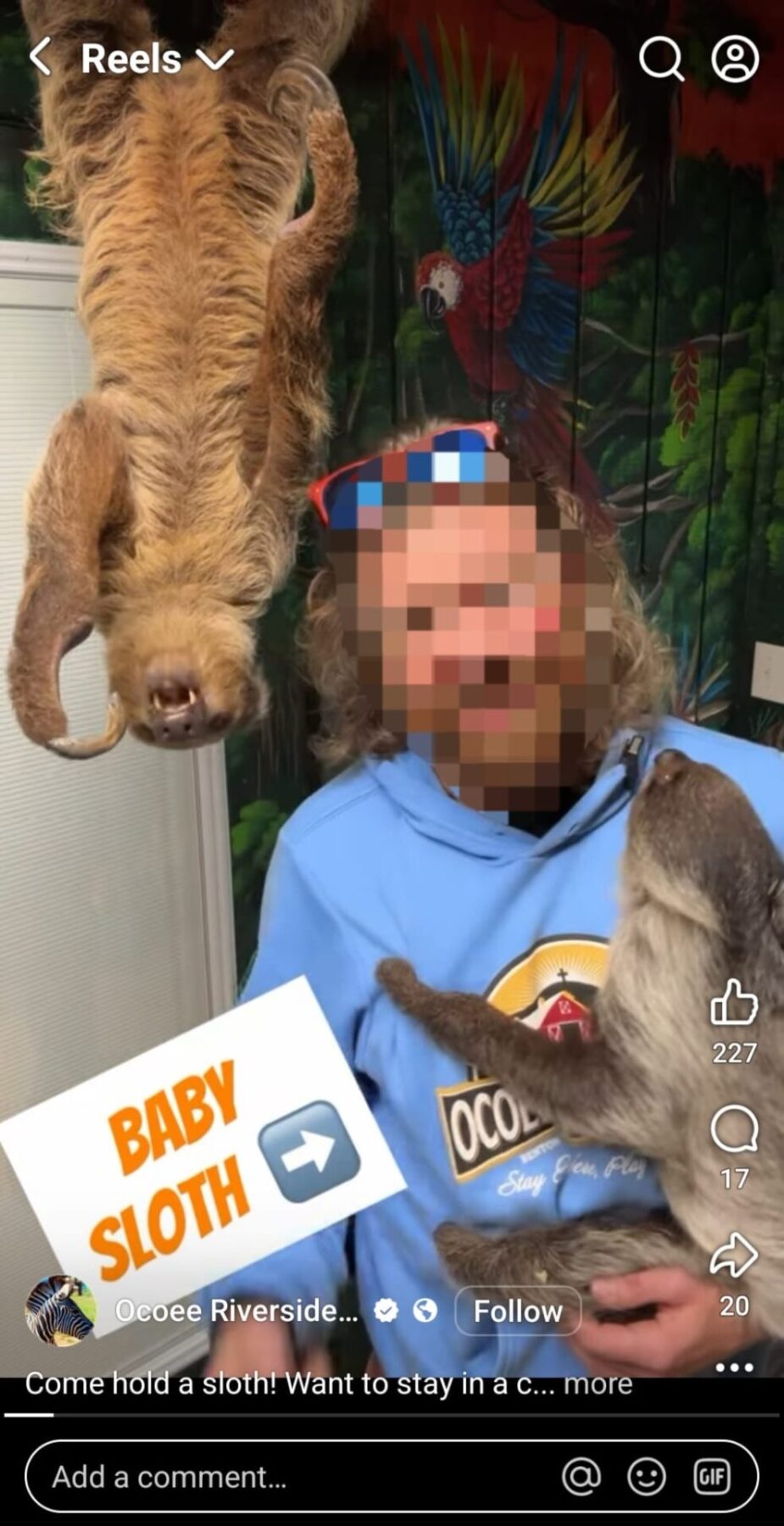
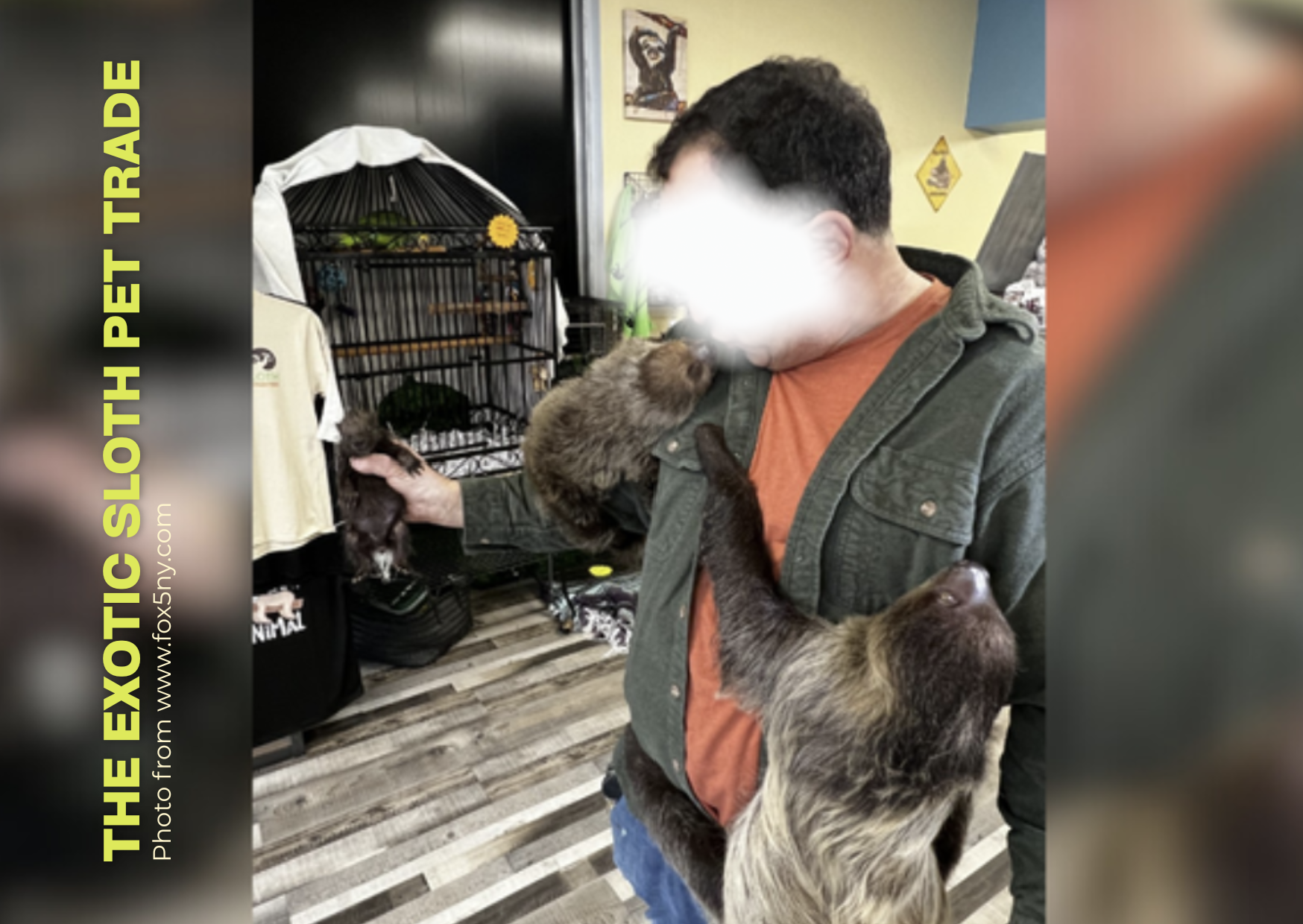
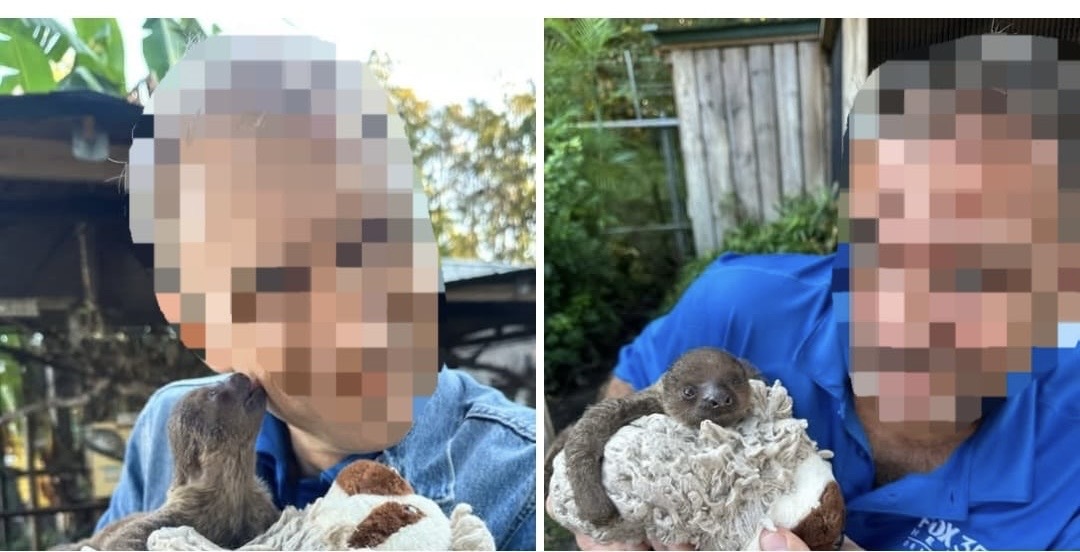
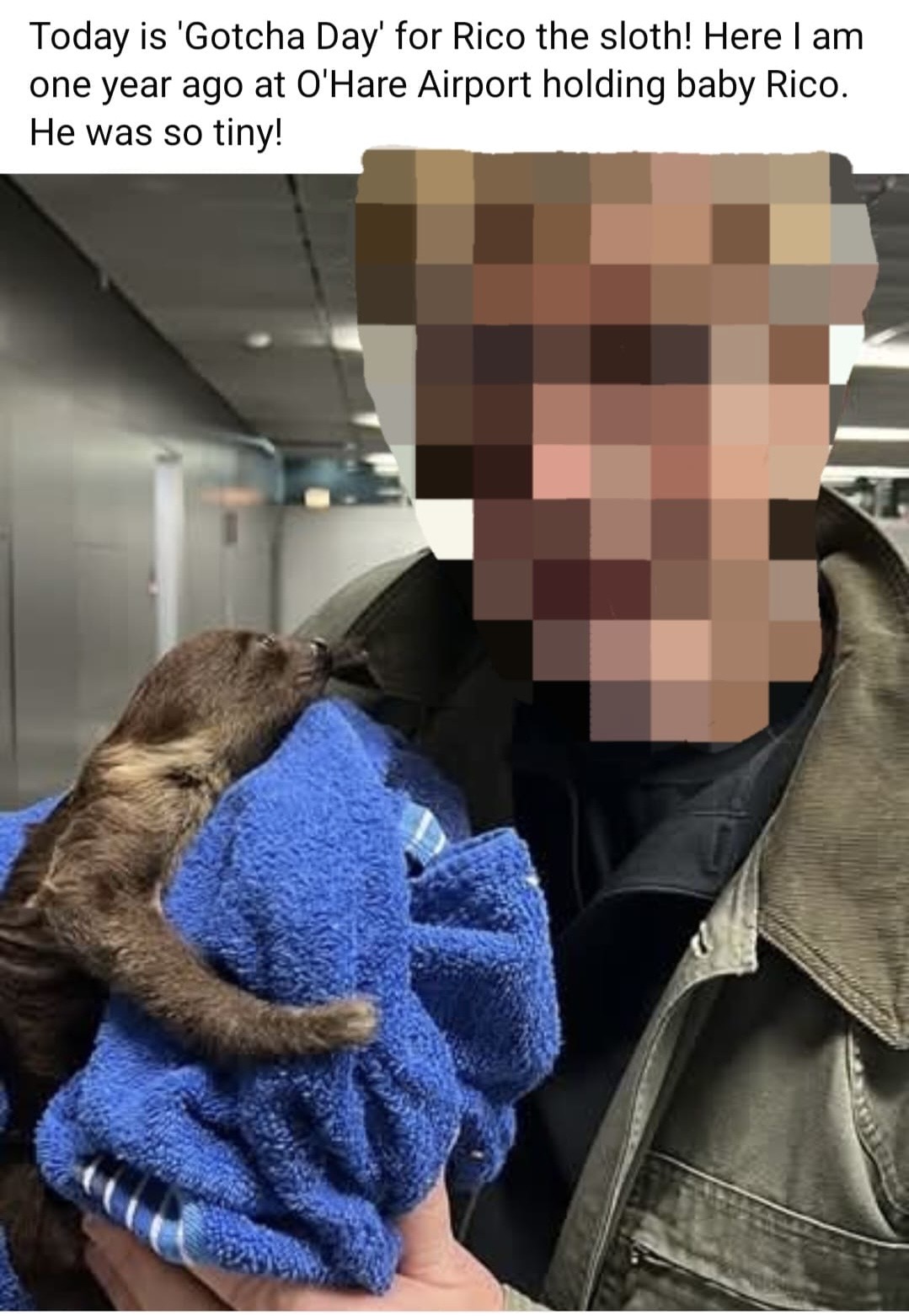
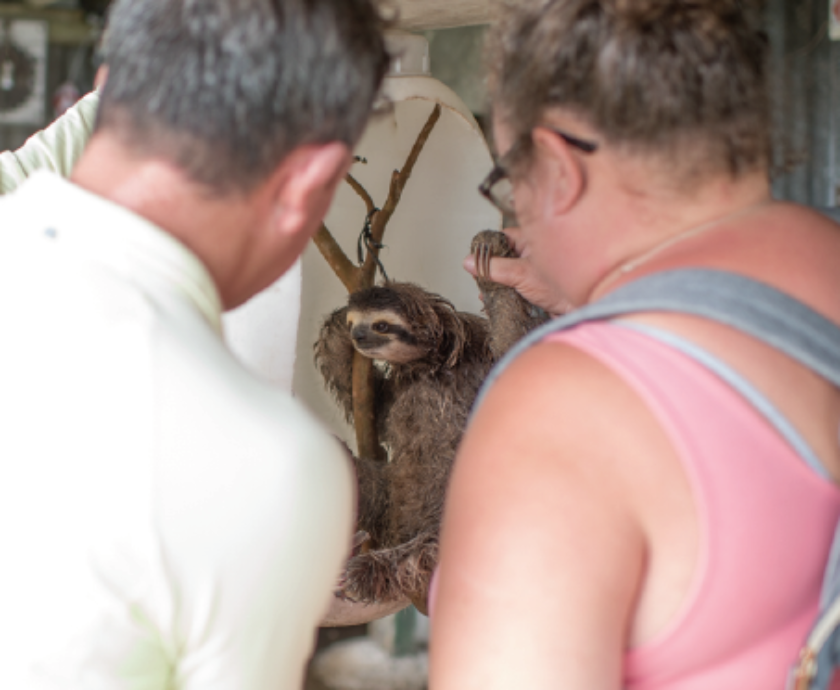
These data reveal a concentrated and rapidly expanding trade pipeline that overwhelmingly depends on the removal of sloths from the wild. Many Americans are unaware that sloths seen on social media, in roadside zoos, or in private collections often originate from live capture. This trade threatens fragile and understudied wild populations and imposes enormous stress on animals with specialized ecological needs.*New information submitted by Brazil show that this trade pacehas continued into 2023.*
The analysis further shows that nearly all live sloth imports are for commercial purposes. Meanwhile, inspection records from the U.S. Department of Agriculture (USDA) demonstrate no correlation between periods of high importation and population increases within regulated facilities. This discrepancy suggests low survival rates among imported sloths and rising demand in the unregulated private exotic-pet market, where documentation is minimal or nonexistent.
Additionally, the Sloth Institute warns that sloths are frequently misidentified in federal records. A comparison of USDA inspection reports with sloth photos on facility websites revealed widespread inaccuracies:
Out of 233 USDA-reporting facilities reviewed by TSI sloth experts in 2022:
45 facilities displayed species that did not match USDA records.
138 facilities had photos consistent with the species identified by USDA inspectors.
50 facilities had no identifiable sloth photos on their websites.
Overall, at least 19% of sloths were misidentified by USDA inspectors.
Currently,Bradypus variegatusandBradypus pygmaeusare the only sloth species listed in the CITES Appendices. The Sloth Institute therefore urges that both species of two-fingered sloths (Choloepus hoffmanniandCholoepus didactylus) be added to CITES Appendix II to ensure proper documentation and monitoring of their international trade.
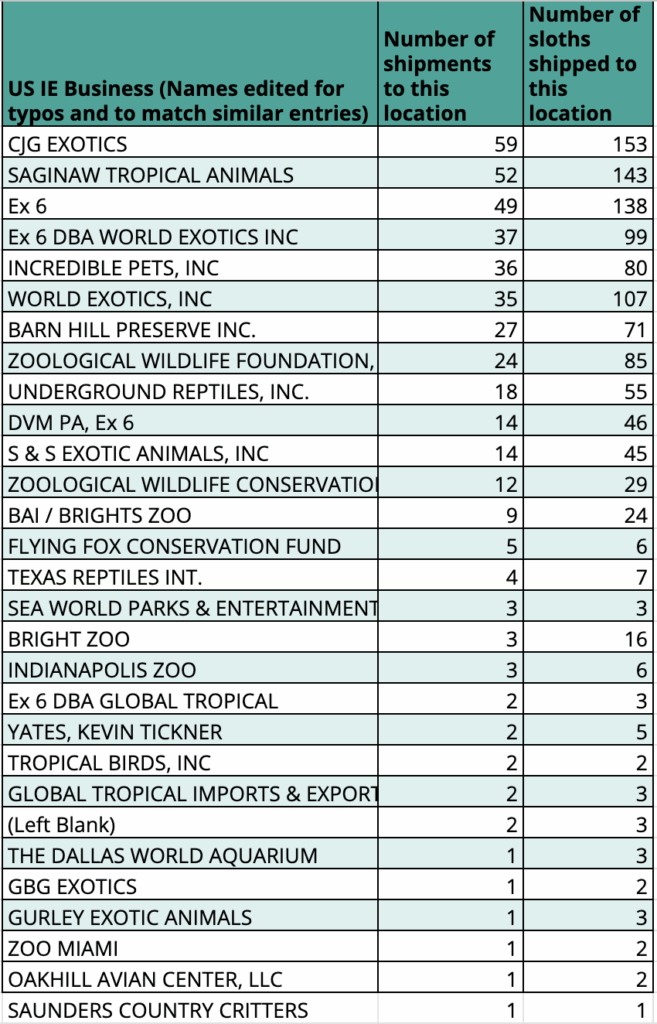
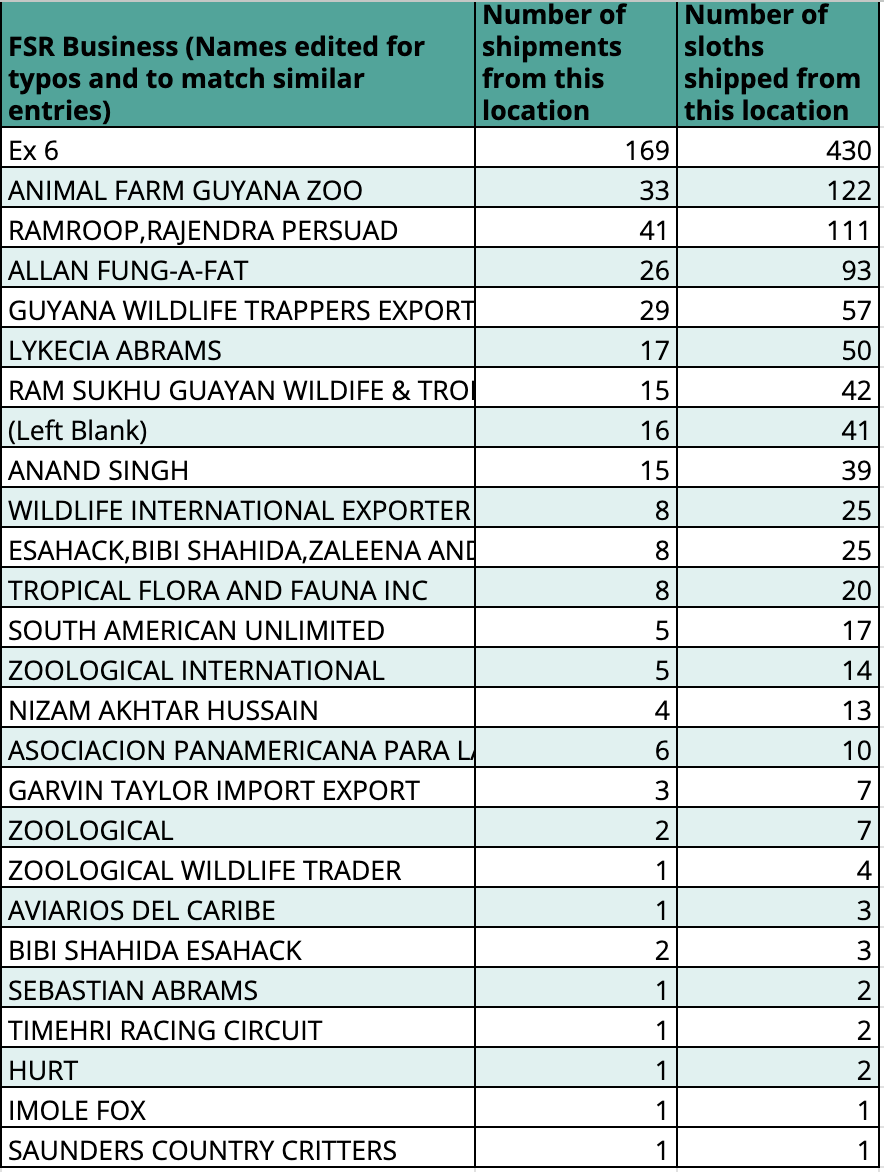
Companies that Imported (left) or Exported (right) wild caught Sloths into the U.S. from 2011-2021
Data from https://www.foia.gov/faq.html
*The above list does not include the resale of sloths within the US – for example, businesses that import large numbers of sloths are supplying other facilities and private owners for a profit. This trade is not necessarily monitored by the US government*
IFAW Petition
Don’t let sloths become the next victims of a cruel and exploitative industry.
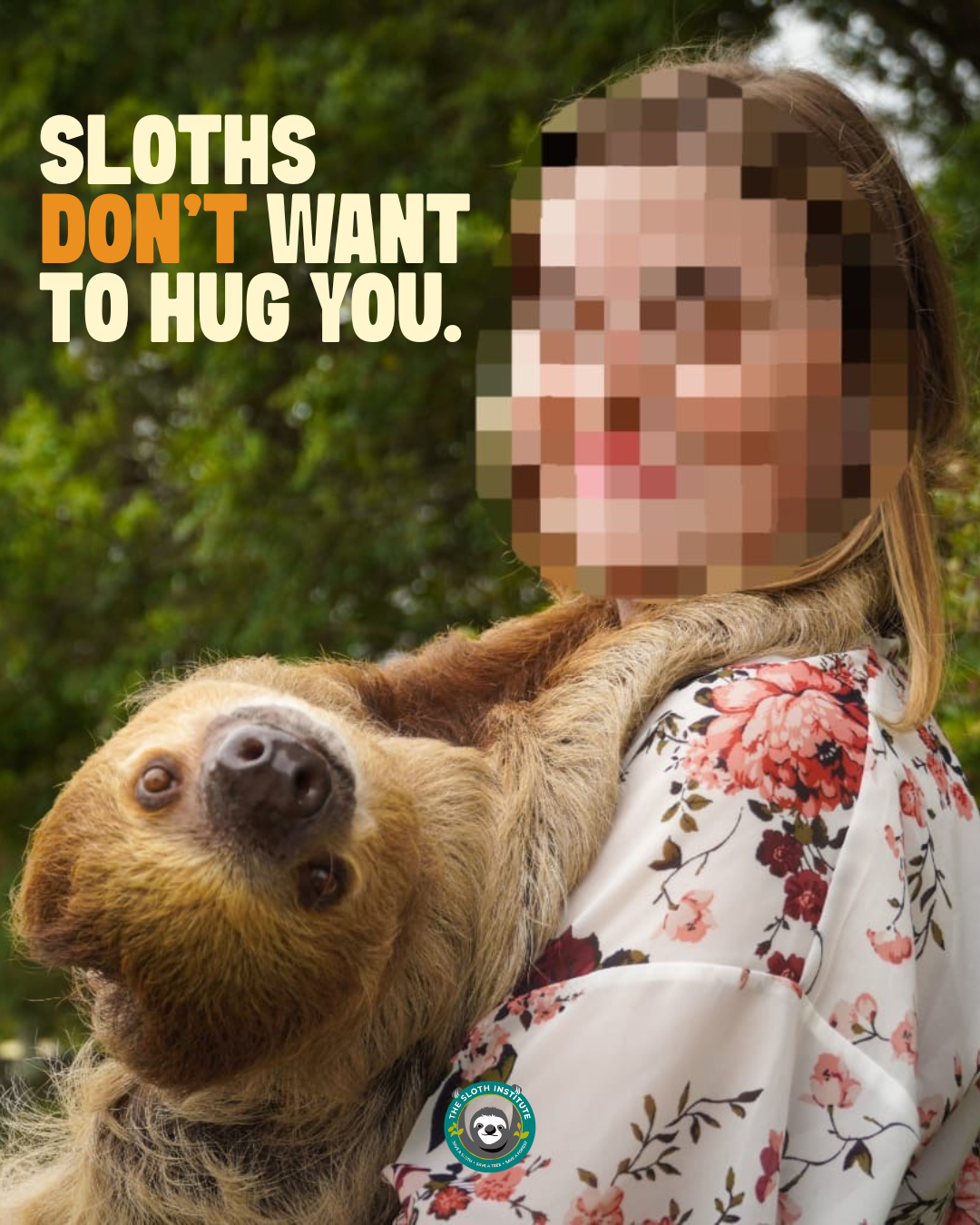
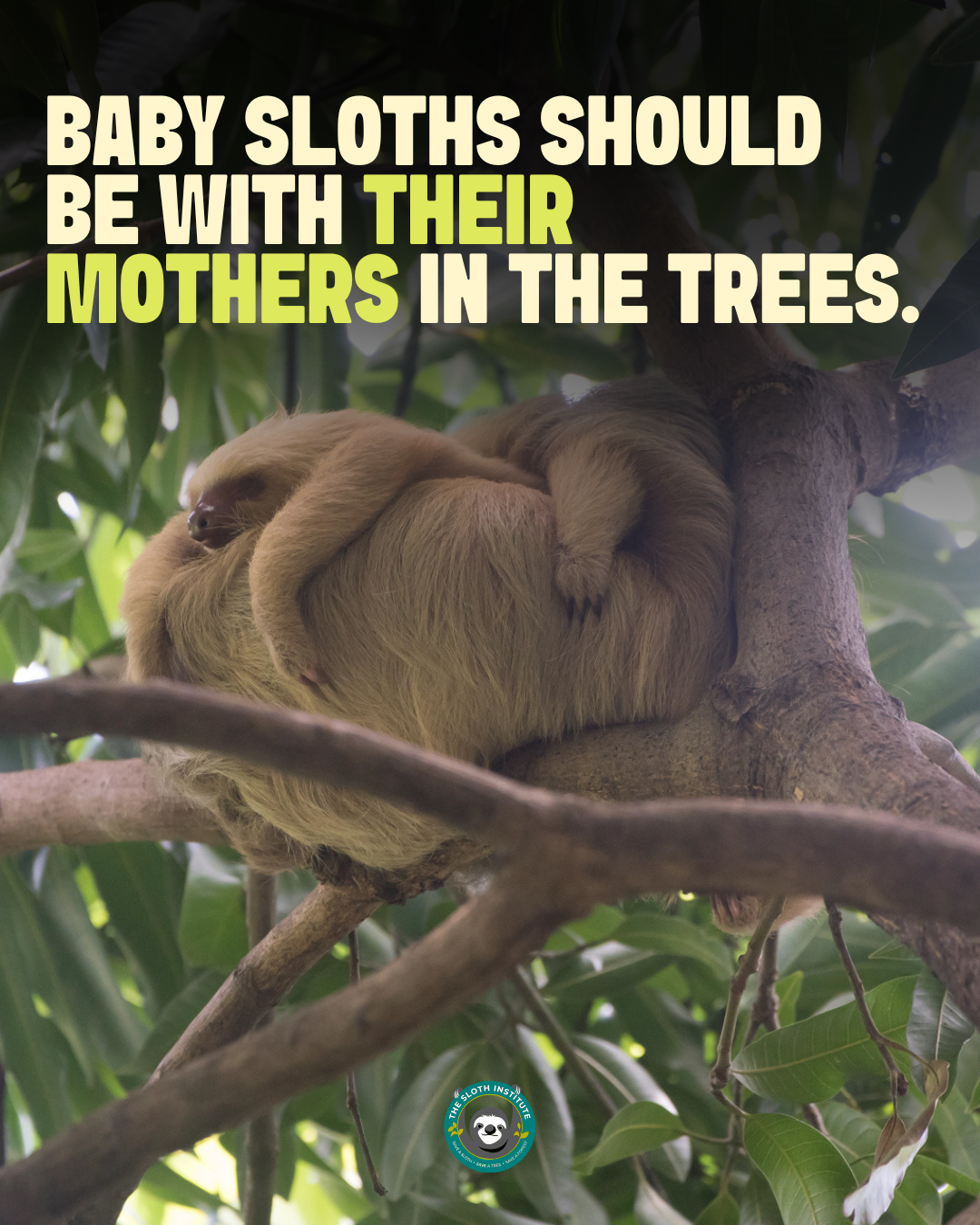
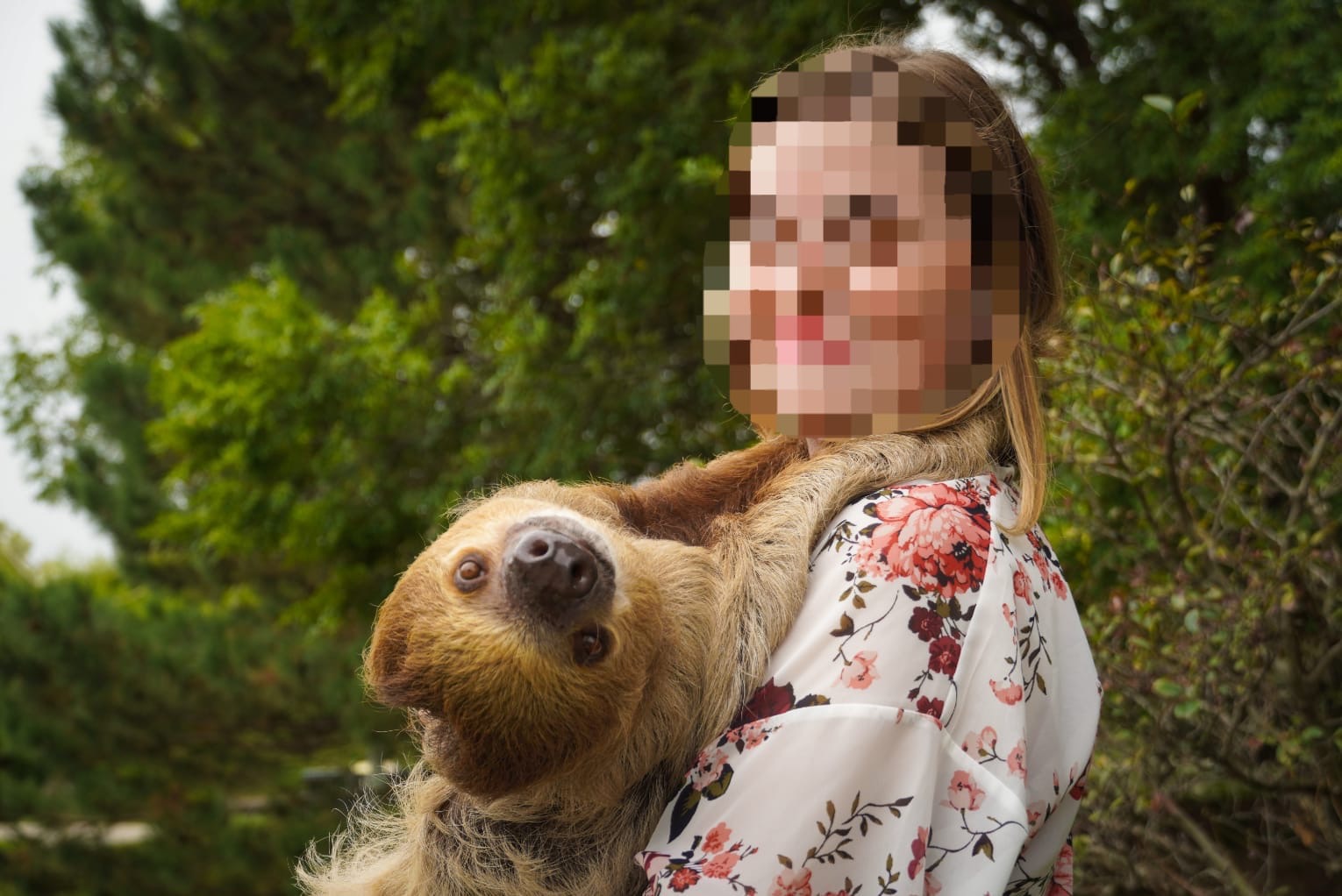
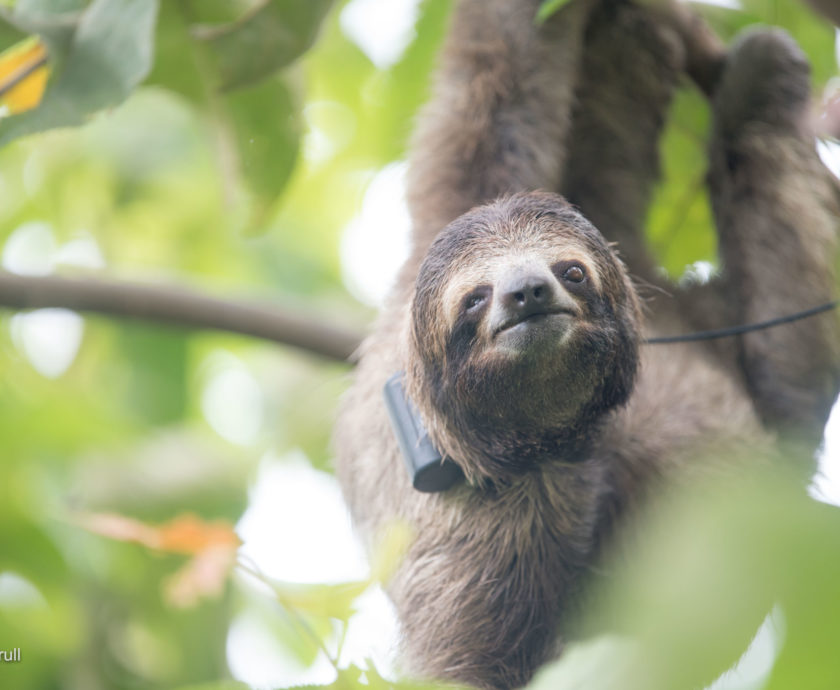
Sloths belong in the trees, not in people’s homes, or at a roadside zoo for selfies.
Join Team Sloth as we attend the CITES (COP20) conference this November, where countries will vote on a proposal to strengthen sloth protection in international trade. A “yes” vote will provide governments with the power to intervene before this cruel trade spirals out of control.
FIVE Questions to ask yourself before visiting a sloth in captivity in the US:
Is this an accredited institution? Do they have AZA accreditation? If that is NO, then do not support. This level of accreditation is the bare minimum for ethical animal welfare guidelines.
Are baby sloths separated from their moms for interactions? Baby two-fingered sloths live with their moms for up to a year, nursing the entire time. Roadside zoos often separate babies from their mothers at a young age to alter their natural behavior to ‘tolerate’ human contact.
Where did their sloths come from? As this article highlights, sloths are being removed from the wild for tourist interactions. This is unethical.
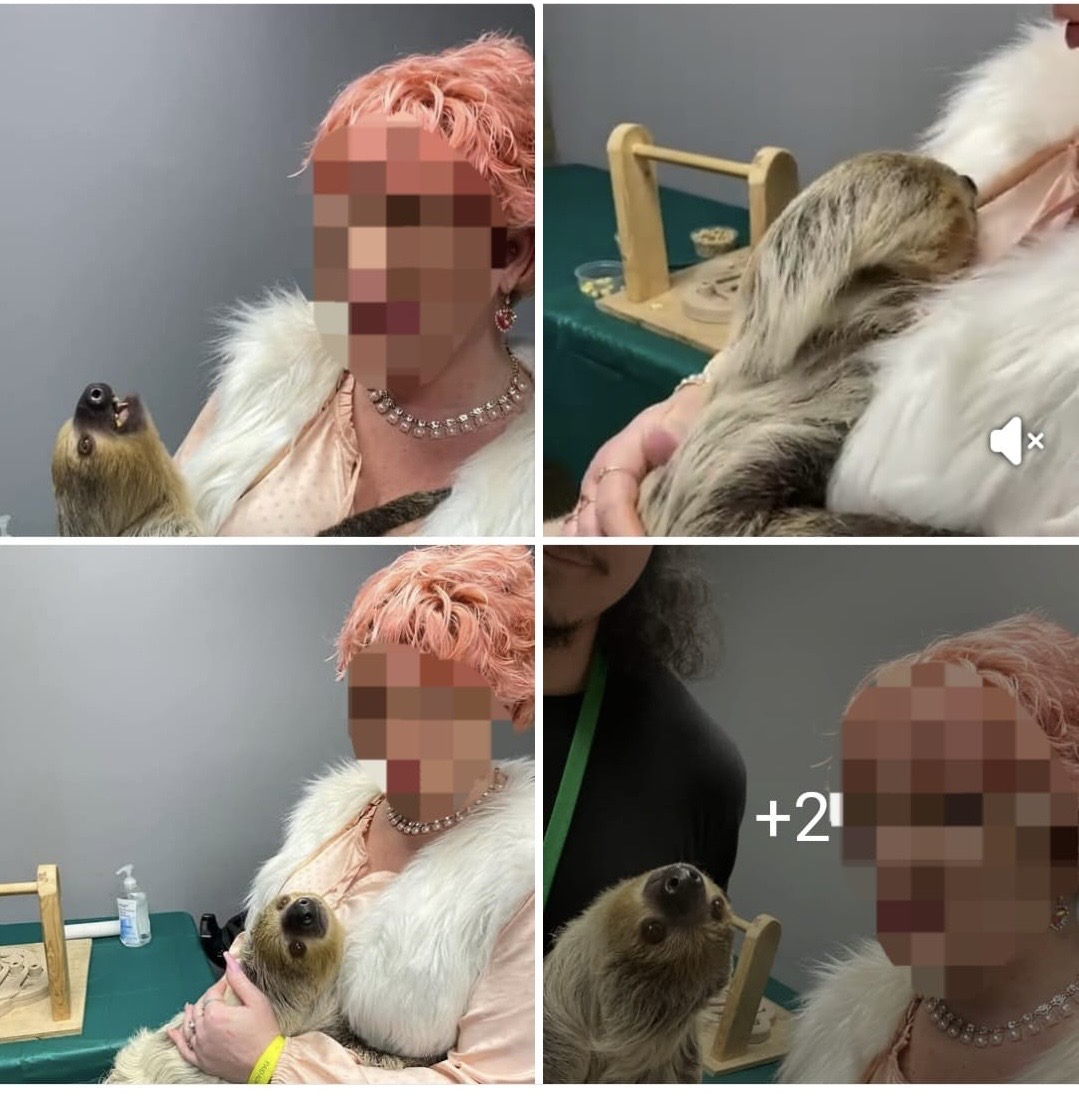
Does this event ‘feel’ unnatural and exploitative, i.e., Yoga with Sloths, sloths and beer, and so forth – if the sloth has been moved to another location and is not enjoying its own habitat during the encounter, then it’s unethical.
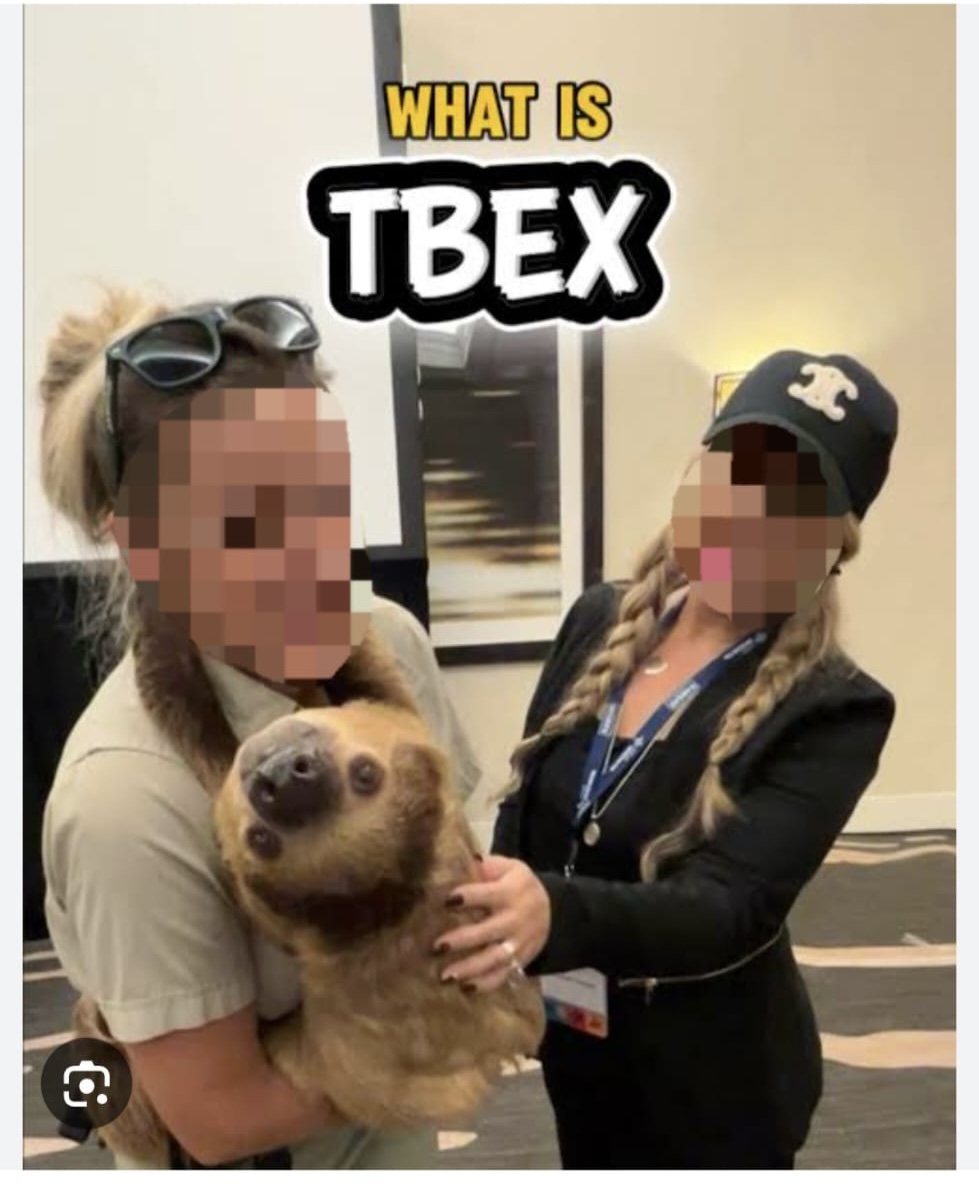
Is the sloth being treated like a hot potato? Being passed around so everyone can hold them? This is not ethical.
About The Sloth Institute
The Sloth Institute is a licensed non-profit organization based in Manuel Antonio, Costa Rica, dedicated to enhancing the welfare and conservation of sloths through rescue, rehabilitation, and release, as well as research, education, and reforestation initiatives.